Animals That Can Pause Their Metabolism
Interactive passage with audio narration, comprehension questions, and printable PDF.
By completing this purchase you agree to our Terms of Use and Privacy Policy. Your subscription renews automatically until you cancel. You can cancel anytime from your account settings. All sales are final and non-refundable. Digital content is available for download in your account immediately upon purchase.
What's included
Animals That Can Pause Their Metabolism preview and details
About this printable Animals That Can Pause Their Metabolism science reading passage, NGSS-aligned (Grade 6)
Sample passage and quiz from Animals That Can Pause Their Metabolism
Reading passage and comprehension quiz preview
Animals That Can Pause Their Metabolism
Imagine being able to hit a 'pause' button on your body when conditions get tough. For some animals, this isn't science fiction – it's a real and powerful survival strategy. They have the incredible ability to slow down or even pause their metabolism. Metabolism is the set of chemical processes that happen in your body to keep you alive, like turning food into energy and maintaining body temperature. When animals pause this process, they use much less energy, helping them survive when food is scarce or the weather is extreme.
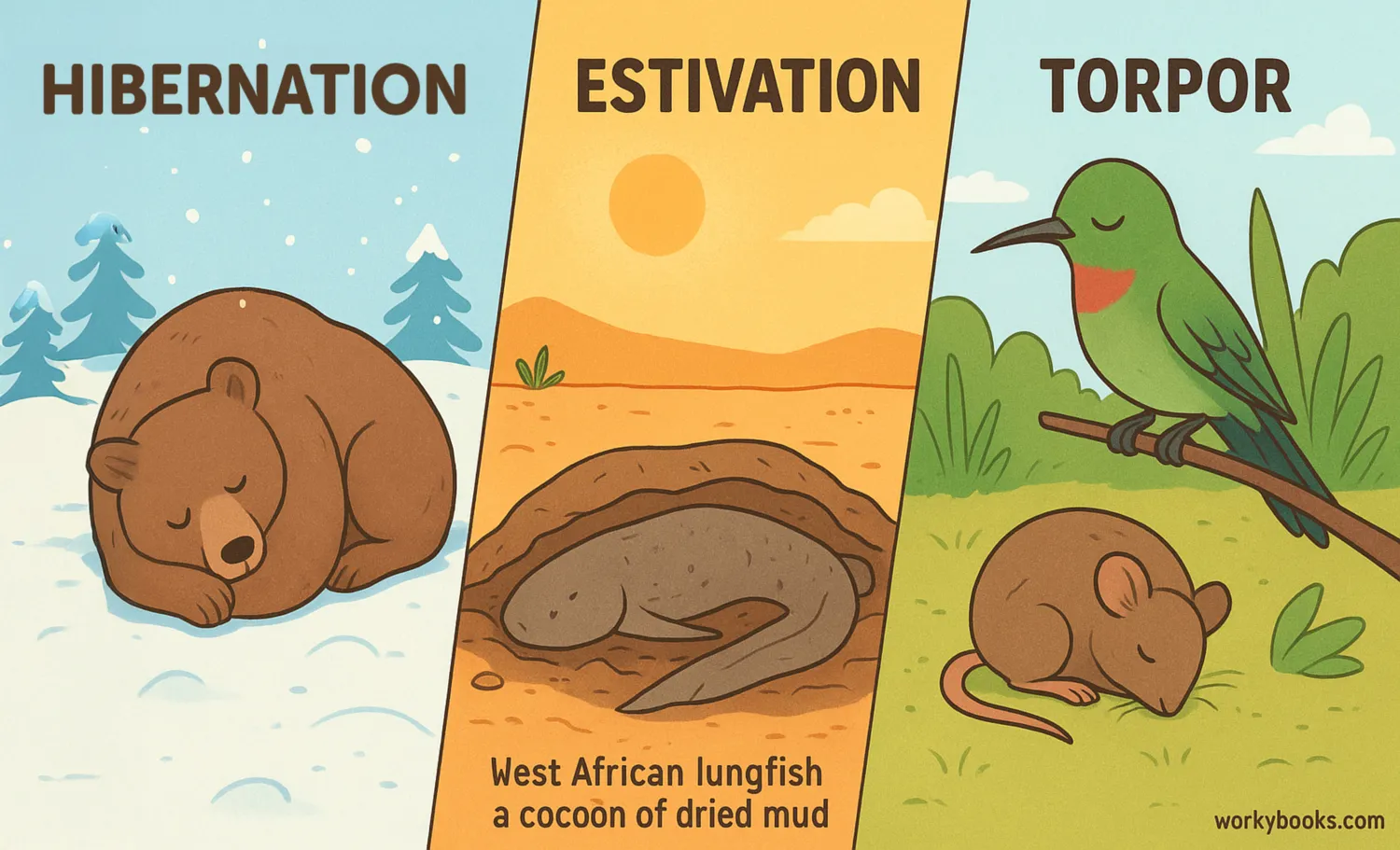
One common way animals pause their metabolism is through hibernation. You might think of bears hibernating, and you're right! During hibernation, animals enter a deep sleep-like state. Their heart rate slows down, their breathing becomes very shallow, and their body temperature drops significantly. This isn't just a nap; it's a carefully controlled shutdown that conserves energy. Bears, for example, can go months without eating or drinking during the cold winter, relying on stored fat. Other hibernators include groundhogs, bats, and some types of squirrels.
But what about hot, dry environments? Animals facing intense heat and drought also have a solution: estivation. This is similar to hibernation but happens during hot seasons. Certain frogs, salamanders, and even some fish can burrow into the mud or sand and enter a dormant state. They slow their metabolism, reduce water loss, and wait for cooler, wetter conditions to return. The West African lungfish, for instance, can encase itself in a cocoon of dried mud and survive without water for years!
A less extreme form of metabolic pause is called torpor. While hibernation and estivation can last for weeks or months, torpor usually lasts for shorter periods, like a few hours or a day. Hummingbirds, for example, have very high metabolisms and need constant energy. If food is scarce during the night, they can enter torpor to save energy. Their body temperature drops, and their heart rate slows, allowing them to survive until morning when they can find food again. Some mice and bats also use torpor daily.
These amazing adaptations show how organisms use energy and matter to regulate their internal conditions, allowing them to thrive in changing environments. By pausing their metabolism, these animals demonstrate incredible resilience and a masterful control over their own bodies.
Interesting Fact: Arctic ground squirrels can lower their body temperature during hibernation to below freezing, yet still survive without their cells freezing solid, thanks to special biological antifreeze properties.
Comprehension quiz (10 questions)
1. What is the primary purpose of an animal pausing its metabolism?
2. Which of these animals is mentioned as using estivation?
3. True or False: Torpor lasts for longer periods than hibernation.
4. Which term describes the body's chemical processes for life?
5. How does hibernation help animals survive winter?
6. Why might a hummingbird enter torpor at night?
7. What is a key difference between hibernation and torpor?
8. What condition would lead an animal to estivate?
9. If an animal's environment rapidly changed from cold to hot, which adaptation would it likely switch to?
10. A scientist observes a new animal that slows its heart rate and breathing for a few hours each day during food shortages. This is most like:
Perfect for the way you teach
- Build comprehension skills
- Auto-graded quiz
- Differentiated reading
- Read together at home
- Improve fluency
- Quiet reading time
- Reading curriculum support
- Independent practice
- Track Lexile growth