Ashoka the Great: India's Emperor — Reading Comprehension
Rate this
Premium Resource
Present
Present in classroom. No work saved
Assign
Classroom with student accounts, Track progress
Quick Play
No student accounts, assign with a link
Grades
6
7
8
PRINT+DIGITAL RESOURCE
This learning resource is available in interactive and printable formats. The interactive worksheet can be played online and assigned to students. The Printable PDF version can be downloaded and printed for completion by hand.
This passage explores the life and legacy of Ashoka the Great, emperor of the Mauryan Empire in ancient India. Discover how Ashoka transformed from a powerful conqueror to a promoter of nonviolence and Buddhism after witnessing the devastation of war. The reading covers Ashoka's rise to power, his use of edicts to spread his new values, and the long-term impact of his reign on Indian civilization and world history. Students will analyze primary evidence, cause-and-effect relationships, and historical significance, while mastering academic vocabulary. The passage is accompanied by a glossary, a simplified version for accessibility, a Spanish translation, a multiple-choice quiz, explanatory writing prompts, and graphic organizers. This resource aligns with HSS 6.5.3 and CCSS RI.6.3, making it ideal for history and literacy classrooms. Includes read aloud audio and Spanish translation for multilingual support.
Ashoka was the third ruler of the Mauryan Empire in India, reigning from about 268 BCE to 232 BCE. He is remembered as one of the most influential leaders in ancient history, especially for promoting nonviolence and the spread of Buddhism after years of war. Ashoka’s reign marked a turning point for India and left a legacy that continues to shape the region today.
When Ashoka came to power, the Mauryan Empire was already vast, stretching from Afghanistan to the Bay of Bengal. Ashoka wanted to make his empire even larger and stronger. In 261 BCE, he launched a brutal military campaign to conquer the kingdom of Kalinga, located on the eastern coast of India. The war was devastating—ancient sources, like Ashoka’s own edicts, claim that over 100,000 people died and many more were wounded or displaced. The suffering witnessed during the Kalinga War had a profound impact on Ashoka. He described his regret in his inscriptions, stating, “Even a hundredth or a thousandth part of those who were killed or died would be considered very many by me.”
After the Kalinga War, Ashoka experienced a transformation. He publicly renounced further conquests and adopted the teachings of Buddhism, which emphasizes compassion, tolerance, and respect for all living things. Ashoka became a patron of Buddhist institutions, building monasteries and stupas—large dome-shaped structures for meditation and worship—across his empire. He sent missionaries as far as Sri Lanka and Central Asia to spread Buddhist ideas. Instead of using violence, Ashoka now governed by moral example, encouraging his subjects to practice dhamma (righteous living).
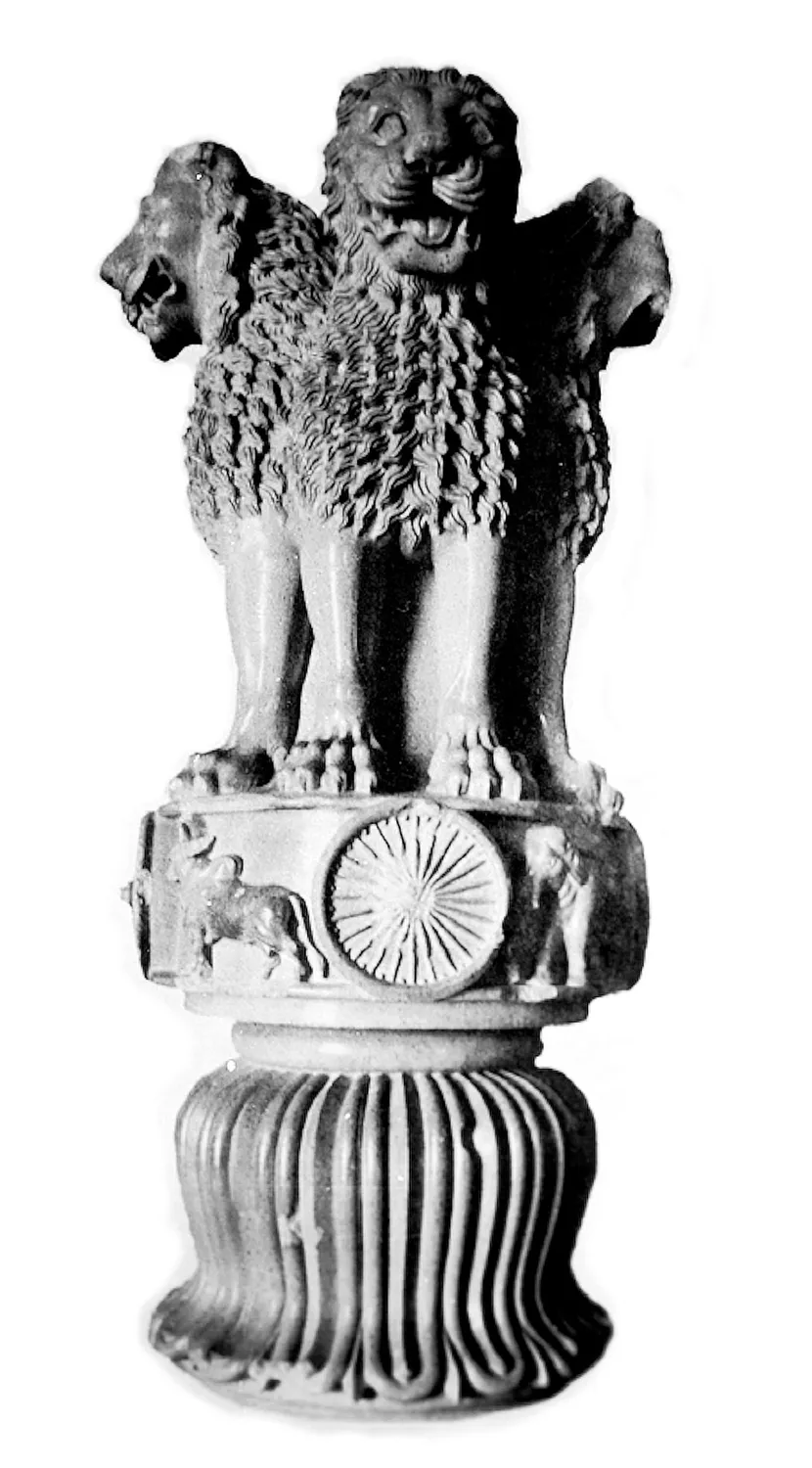
One of Ashoka’s most important achievements was his use of edicts—official messages carved into stone pillars and rocks throughout his empire. These inscriptions, written in local languages, explained his policies of nonviolence, kindness, and religious tolerance. Archaeologists have found many of these edicts, providing direct evidence of Ashoka’s thoughts and rule. For example, the famous Lion Capital at Sarnath not only served as an imperial symbol but is now the national emblem of India.
Ashoka’s transformation from conqueror to peaceful ruler changed Indian society. His support for Buddhism helped it grow across Asia. Although later rulers did not always follow his policies, Ashoka’s legacy as a ruler who valued morality and human welfare influenced leaders for generations. His reign is an example of how a leader’s choices can shape the destiny of a civilization.
Learning about Ashoka connects to broader themes of leadership, change over time, and the relationship between power and values in world history.
Interesting Fact: The wheel on the Indian flag, called the Ashoka Chakra, comes from a sculpture Ashoka built over 2,000 years ago.
Who was Ashoka?
Emperor of the Mauryan EmpireA Roman generalA Chinese philosopherA Greek king
What did Ashoka do after the Kalinga War?
Adopted BuddhismExpanded his armyBuilt the Taj MahalMoved to Kalinga
What are Ashoka’s edicts?
Stone messages of his policiesBuddhist prayersCoinsHindu temples
What is the Lion Capital?
A sculpture from Ashoka’s empireA city in KalingaA Buddhist textA war leader
Why did Ashoka change his policies?
Witnessed war’s sufferingLost the battleNeeded more landWanted to build temples
How did Ashoka spread Buddhist values?
Sent missionariesWrote poemsStarted warsTraveled to China
Ashoka ruled the Mauryan Empire. True or false?
TrueFalse
What does dhamma mean?
Righteous or moral livingA type of languageA battle strategyA Buddhist temple
Perfect For:
👩🏫 Teachers
• Reading comprehension practice
• Auto-graded assessments
• Literacy skill development
👨👩👧👦 Parents
• Reading practice at home
• Comprehension improvement
• Educational reading time
🏠 Homeschoolers
• Reading curriculum support
• Independent reading practice
• Progress monitoring
Reading Features:
📖
Reading Passage
Engaging fiction or nonfiction text
❓
Comprehension Quiz
Auto-graded questions
📊
Instant Feedback
Immediate results and scoring
📄
Printable Version
Download for offline reading
🔊
Read Aloud
Voice-over with word highlighting
Reviews & Ratings
No reviews yet. Be the first to share your experience!
Related Content
Geography of Ancient India
This passage explores the geography of Ancient India and its impact on the rise of civilization along the Indus River. L...
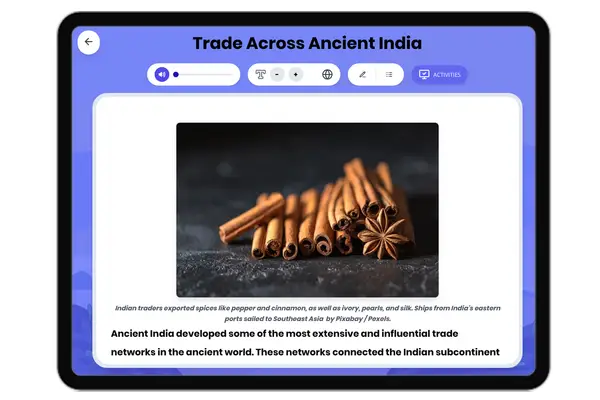
Trade Across Ancient India
This history reading passage explores Ancient India's trade networks and their impact on global connections. Students wi...
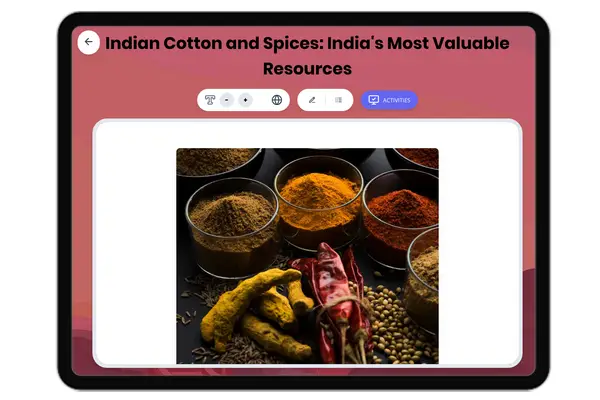
Cotton and Spices of Ancient India
This detailed passage explores the significance of cotton and spices as two of ancient India's most valuable resources. ...
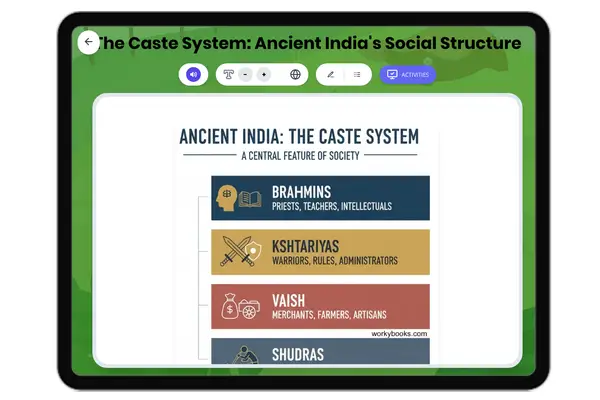
The Caste System in Ancient India
This passage explores the origins, structure, and impact of the caste system in Ancient India, a hierarchical social ord...
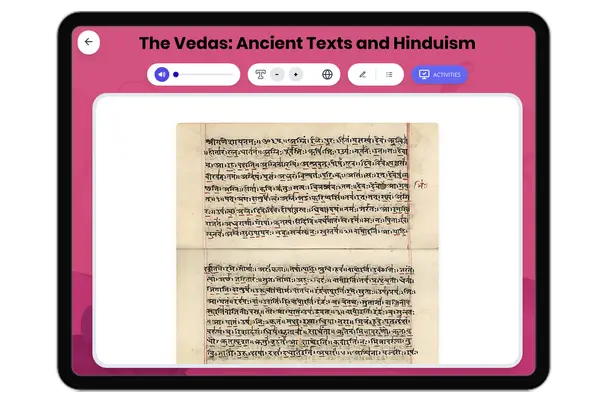
The Vedas: Ancient Texts
This passage explores the Vedas, ancient texts from India that form the foundation of Hinduism. Students will learn abou...
Sanskrit and Indian Literature
This engaging passage explores Sanskrit, the classical language of ancient India, and its impact on culture, literature,...
Evidence in Ancient History
This engaging history reading passage investigates how archaeologists and historians discover clues about how ancient pe...
Indian Mathematician Invent Zero
This engaging history reading passage explores the invention of zero by ancient Indian mathematicians, focusing on the c...
Indian Science, Math, and Art
This engaging history reading passage explores the enduring achievements of Ancient India in science, mathematics, and a...
Ancient Literature
This passage explores the importance of ancient stories and poems from civilizations such as Greece, India, and Israel. ...
Ancient Philosophy
This reading passage takes students on a journey through the philosophical traditions of ancient Greece, India, and Chin...
The Delhi Sultanate and Islam in India
Explore the rise of the Delhi Sultanate and the arrival of Islam in India with this engaging history reading passage. St...
The Chola Empire Rules Southern India
This passage explores the achievements and legacy of the Chola Empire, which ruled Southern India from the 9th to 13th c...
Ancient Theocracy
This engaging history reading passage explores the concept of theocracy in ancient civilizations, where priests and reli...
Ancient Canaan
This educational passage explores the land of Canaan, the historical homeland of the ancient Israelites. Students will l...
Ancient Science and Medicine
This comprehensive reading passage explores the development of science and medicine in ancient civilizations, including ...
Geography of Ancient Israel
This passage explores the rich geography of Ancient Israel, focusing on how landforms, climate, and natural resources sh...
Ancient Writing Systems
This engaging history reading passage explores the origins and evolution of ancient writing systems, including cuneiform...
Ancient Agriculture Farming
This passage explores the transformative impact of farming on ancient societies, examining how the Neolithic Revolution ...