This learning resource is available in interactive and printable formats. The interactive worksheet can be played online and assigned to students. The Printable PDF version can be downloaded and printed for completion by hand.
This passage explores the Vedas, ancient texts from India that form the foundation of Hinduism. Students will learn about the origin, composition, and significance of the Vedas, including the Rigveda, Sama Veda, Yajur Veda, and Atharva Veda. The passage highlights the role of Sanskrit, the social hierarchy of Vedic society, and archaeological evidence of early religious practices. Connections are made to the Aryan migration, the Indus Valley civilization, and the lasting impact of Vedic traditions on Indian culture. Key vocabulary is integrated throughout, and the passage is aligned to CA HSS 6.5 and CCSS RH.6-8.1, RH.6-8.2. Activities include a multiple-choice quiz, writing prompts, graphic organizers, and a Spanish translation. Read aloud audio is available, supporting diverse learners and fostering historical thinking.
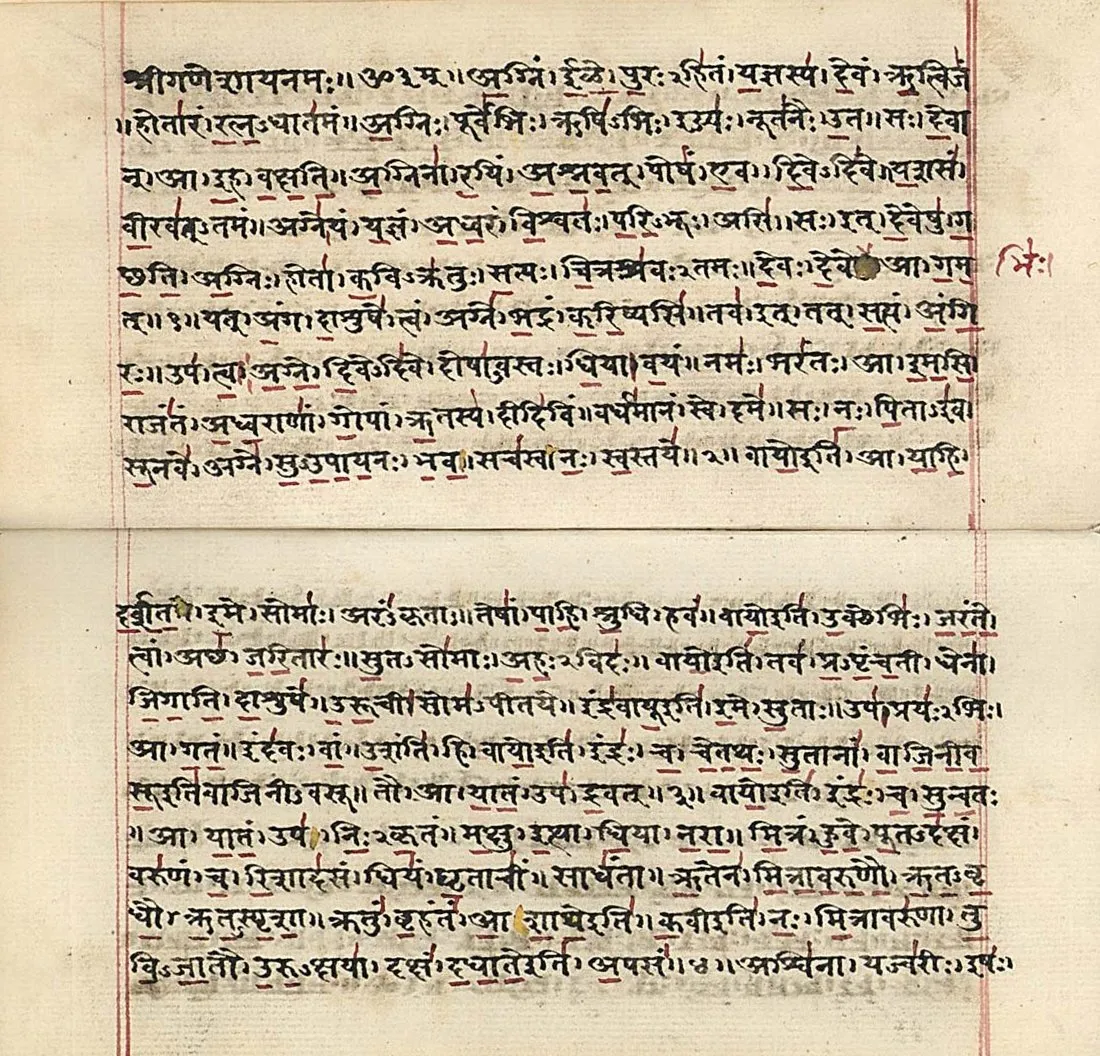
The Vedas are a collection of ancient Indian texts written in the Sanskrit language. They are considered the oldest sacred scriptures of Hinduism and have shaped Indian culture for thousands of years. Historians believe the Vedas were composed between about 1500 BCE and 500 BCE in northern India, during a period known as the Vedic Age.
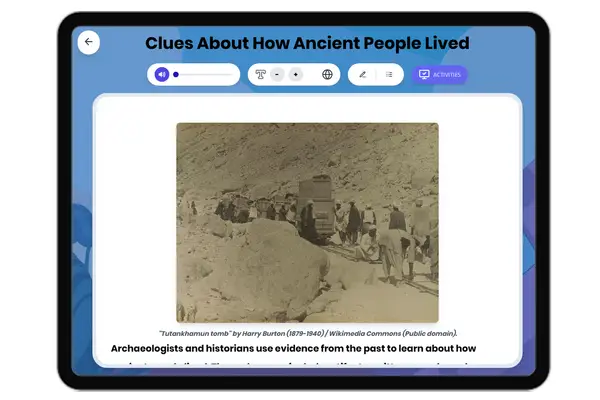
The Vedas consist of four main texts: the Rigveda, Sama Veda, Yajur Veda, and Atharva Veda. The Rigveda is the oldest, dating to around 1500 BCE. It contains over 1,000 hymns dedicated to various deities, such as Agni (the fire god) and Indra (the warrior god). These hymns were originally recited aloud by priests during religious rituals. Archaeological evidence, like ancient fire altars found at Kalibangan in the Indus Valley region, supports the idea that fire rituals were central to Vedic religion. The Yajur Veda and Sama Veda include instructions for ceremonies and chants, while the Atharva Veda contains spells and practical advice for daily life.
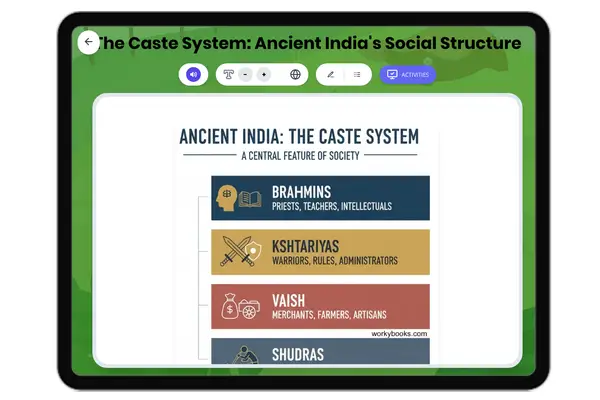
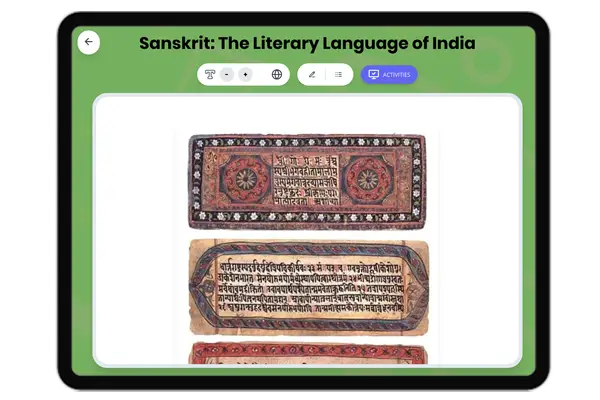
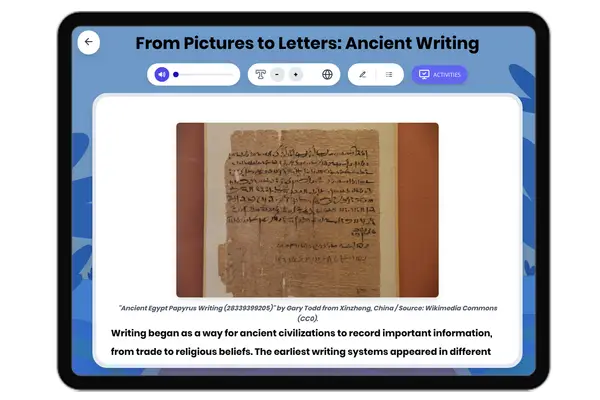
The Vedas were passed down orally before being written on palm leaves and birch bark. This oral tradition required great memorization skills. The language used, Sanskrit, became an important tool for communication and record-keeping. The society described in the Vedas was organized by a strict social hierarchy, or varna system. This system divided people into groups: priests (Brahmins), warriors (Kshatriyas), farmers and merchants (Vaishyas), and laborers (Shudras). The Aryans, a group of Indo-European-speaking people, are thought to have brought many Vedic traditions to northern India after migrating from Central Asia. However, some scholars debate how much these traditions blended with the earlier Indus Valley civilization.
Over time, the teachings of the Vedas influenced the development of Hindu beliefs, such as the ideas of karma (action and its consequences) and reincarnation (rebirth of the soul). The Vedas also set the foundation for other important texts, like the Upanishads and the Mahabharata. Hindu rituals, festivals, and daily practices often trace their roots to Vedic hymns and customs, showing continuity through the centuries. Today, the Vedas are still respected and studied by Hindus and scholars around the world.
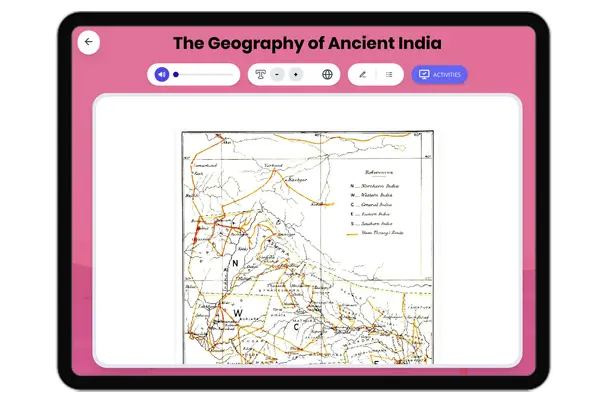
The Vedas are not only important religious texts but also valuable historical sources. They tell us about the beliefs, social structure, and daily life of ancient Indian society. By examining the Vedas, historians can better understand how geography, migration, and cultural exchange shaped South Asia.
The study of the Vedas reveals how early Indian civilization created lasting traditions and influenced the wider world. It also highlights the importance of written and oral records in preserving human history.
Interesting Fact: The word "Veda" comes from the Sanskrit root "vid," which means "to know"—showing that knowledge was deeply valued in ancient India.