Cotton and Spices of Ancient India
Interactive passage with audio narration, comprehension questions, and printable PDF.
By completing this purchase you agree to our Terms of Use and Privacy Policy. Your subscription renews automatically until you cancel. You can cancel anytime from your account settings. All sales are final and non-refundable. Digital content is available for download in your account immediately upon purchase.
What's included
Cotton and Spices of Ancient India preview and details
About this printable Cotton and Spices of Ancient India reading passage (Grades 5-8)
Sample passage and quiz from Cotton and Spices of Ancient India
Reading passage and comprehension quiz preview
Indian Cotton and Spices: India's Most Valuable Resources
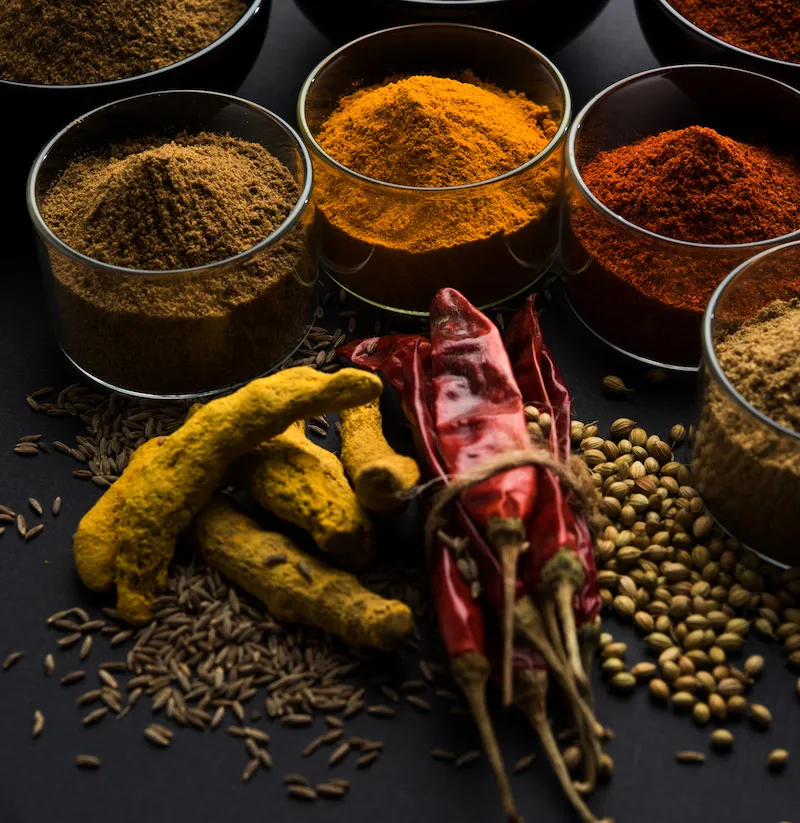
India’s cotton and spices were among the most valuable resources in the ancient world, shaping the history and economy of South Asia for thousands of years. The Indian subcontinent’s geography, with its fertile river valleys and tropical climate, enabled the growth of these agricultural products and connected India to distant lands through trade.
The cultivation of cotton in South Asia began as early as 3,000 BCE in the Indus Valley Civilization. Archaeologists have found cotton threads and cloth at sites like Mohenjo-Daro and Harappa, showing that people were spinning and weaving cotton for clothing and trade. Indian cotton was soft, durable, and comfortable, making it highly desirable in regions where wool or animal hides were the norm. By the first millennium BCE, Indian cotton textiles were exported to Mesopotamia, Egypt, and later the Roman Empire. The technology of spinning and weaving cotton spread from India to other regions, influencing global textile production.
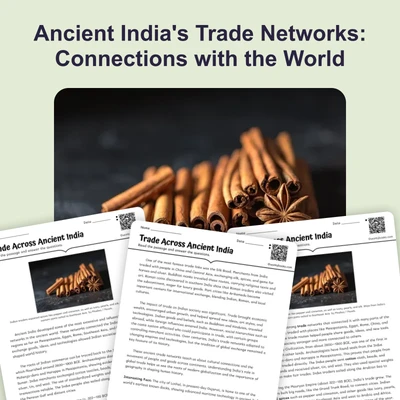
Spices such as black pepper, cardamom, cinnamon, and cloves also originated in India’s tropical forests and farmlands. These spices were not just used for flavoring food; they were prized for their medicinal properties and as preservatives. Ancient texts and trade records show that Indian spices reached the Middle East and Mediterranean as early as 2,000 BCE. The overland Silk Road and maritime Indian Ocean trade routes connected Indian ports like Muziris and Bharuch to Rome, Greece, and Arabia. Roman historian Pliny the Elder wrote about the high demand for Indian pepper, and Roman coins have been found at Indian coastal sites, confirming this trade.
The demand for Indian cotton and spices had profound effects on society. Farmers, merchants, and artisans formed a complex social hierarchy. Wealthy trading families gained influence in cities, while rural villagers cultivated fields and harvested crops. The monsoon winds, which blew across the Indian Ocean, played a crucial role in shaping trade patterns, allowing ships to travel safely between India, Arabia, and East Africa. Over time, new technologies such as the lateen sail and innovations in irrigation increased the scale of cotton and spice production, leading to greater economic prosperity.
Throughout history, the importance of cotton and spices remained constant, even as dynasties rose and fell. These resources made India a center of global exchange and cultural interaction. The legacy of Indian cotton and spices can still be seen today in the fabrics people wear and the spices used in kitchens worldwide.
Indian cotton and spices demonstrate how geography and human ingenuity combined to create valuable resources that influenced not only the local economy, but also world history. Their trade fostered cultural exchanges and technological advances, linking South Asia to a wider world.
Interesting Fact: Ancient Indian ships were so advanced that Greek and Roman sailors often hired Indian navigators to guide them across the Indian Ocean.
Comprehension quiz (8 questions)
1. Where did cotton cultivation start in India?
2. Which port exported Indian spices to Rome?
3. What role did monsoon winds play?
4. Why were Indian spices valuable?
5. What did Roman coins in India show?
6. How did new technology affect trade?
7. Cotton was only used in India. True or false?
8. Which word means 'goods sent abroad'?
Perfect for the way you teach
- Build comprehension skills
- Auto-graded quiz
- Differentiated reading
- Read together at home
- Improve fluency
- Quiet reading time
- Reading curriculum support
- Independent practice
- Track Lexile growth