This learning resource is available in interactive and printable formats. The interactive worksheet can be played online and assigned to students. The Printable PDF version can be downloaded and printed for completion by hand.
This reading passage takes students on a journey through the philosophical traditions of ancient Greece, India, and China, highlighting the lives and ideas of influential thinkers such as Socrates, Confucius, and the Buddha. Students will discover how these philosophers addressed questions about ethics, government, and the meaning of life. The text analyzes primary sources, shows cause-and-effect relationships, and compares different philosophical traditions. Activities include comprehension questions, explanatory writing, graphic organizers, and a timeline. The passage is aligned to CA HSS 6.4, 6.6, 6.23 and CCSS RH.6-8.1, making it ideal for world history studies. A Spanish translation and read aloud audio are included, supporting diverse learners and meeting key ELA and social studies standards.
CONTENT PREVIEW
Expand content preview
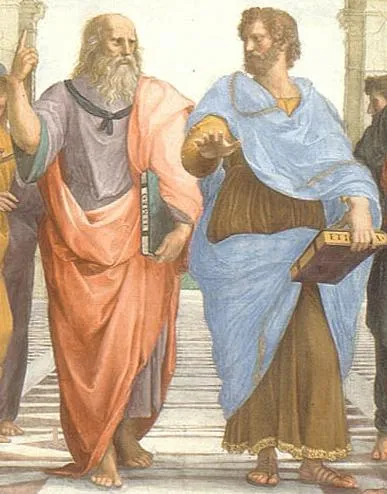
Plato and Aristotle in The School of Athens, by italian Rafael, Wikimedia Commons
Philosophy began in ancient civilizations as people searched for answers to life's biggest questions. In Greece, India, and China, philosophers developed ideas that shaped societies. Their teachings still influence our world today.
In ancient Greece, philosophers such as Socrates (470–399 BCE), Plato, and Aristotle explored topics like ethics, government, and knowledge. Socrates challenged people to question their beliefs through dialogue. He was known for asking, “What is justice?” and encouraging critical thinking. Plato, Socrates' student, wrote famous works like The Republic, describing his views on the ideal society. Aristotle, Plato's student, focused on logic and observation of the natural world, laying the groundwork for science and modern philosophy. Archaeological evidence, such as ancient manuscripts from the Library of Alexandria, shows the spread of Greek philosophical texts across the Mediterranean.
In India, the Buddha (Siddhartha Gautama, c. 563–483 BCE) taught about ending suffering and achieving enlightenment. His Four Noble Truths and Eightfold Path became the basis for Buddhism. Ancient texts like the Dhammapada, written in Pali, preserve his teachings. At the same time, Upanishadic thinkers asked questions about the soul (atman) and ultimate reality (Brahman), influencing Hindu philosophy. These ideas spread along trade routes and shaped Indian society’s view of duty and the afterlife.
In China, Confucius (Kong Fuzi, 551–479 BCE) focused on proper conduct, respect, and relationships. His Analects record his conversations and ethical teachings. Confucianism became the foundation for Chinese government exams and family life. Meanwhile, Daoist thinkers like Laozi emphasized harmony with nature and letting things flow naturally. Archaeologists have discovered bamboo texts from the Warring States period that reveal early Daoist and Confucian ideas.
These philosophical traditions show both continuity and change over time. Greek, Indian, and Chinese philosophies were influenced by their geographic context—city-states, empires, and river valleys. As societies faced new challenges, philosophers adapted old ideas and created new ones. Their work shaped social hierarchies, daily life, and government systems for centuries.
Studying ancient philosophers helps us understand how people in different times and places tried to make sense of the world. Their questions about right and wrong, truth, and how to live continue to inspire us today.
Interesting Fact: The word “philosophy” comes from Greek and means “love of wisdom.” Some of the earliest philosophical texts were written on bamboo, palm leaves, or clay tablets. This study connects to broader themes in world history, such as how ideas travel, adapt, and influence civilizations across time and place.
Who taught in Athens, Greece?
SocratesConfuciusBuddhaLaozi
Which book has Confucius’s sayings?
AnalectsUpanishadsThe RepublicDhammapada
What did Buddha teach about?
Ending sufferingDemocracyMathematicsTrade
Why did Socrates ask questions?
To encourage thinkingTo make lawsTo write poetryTo build temples
How did geography impact philosophies?
Ideas fit local societiesThey ignored geographyEveryone had same ideasPhilosophers moved often
What does 'continuity' mean?
Something stays the sameEverything changesGoing in circlesTraveling far
Daoism is about harmony with nature. True or false?
TrueFalse
Which word means 'study of big questions'?
PhilosophyHierarchyTradeGeography
Perfect For:
👩🏫 Teachers
• Reading comprehension practice
• Auto-graded assessments
• Literacy skill development
👨👩👧👦 Parents
• Reading practice at home
• Comprehension improvement
• Educational reading time
🏠 Homeschoolers
• Reading curriculum support
• Independent reading practice
• Progress monitoring
Reading Features:
📖
Reading Passage
Engaging fiction or nonfiction text
❓
Comprehension Quiz
Auto-graded questions
📊
Instant Feedback
Immediate results and scoring
📄
Printable Version
Download for offline reading
🔊
Read Aloud
Voice-over with word highlighting
Reviews & Ratings
No reviews yet. Be the first to share your experience!
Related Content
Ancient Civilizations and the Environment
This engaging history reading passage explores how ancient civilizations such as Mesopotamia, Egypt, and the Maya adapte...
Gender Roles in Ancient Civilizations
This engaging history reading passage explores the roles of men and women in various ancient civilizations, including Me...
Writing Prompts Ancient Civilizations
Step into the shoes of an archaeologist with this engaging worksheet focused on ancient civilizations. Students will be ...
W.5.2.A-2W.5.1.CW.5.1.D
Power and Authority in Ancient Civilizations
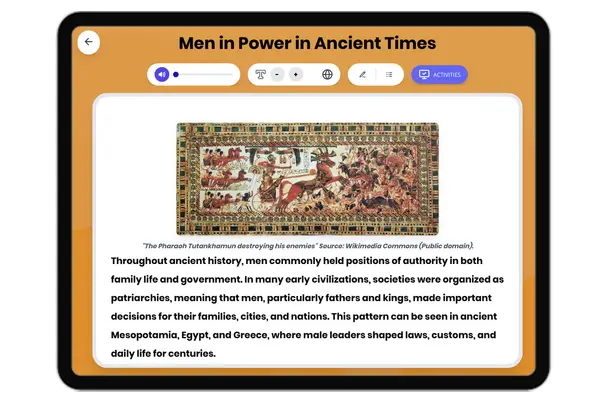
This passage explores the roles of men in positions of power within ancient civilizations, focusing on their authority i...
Ancient Monarchy
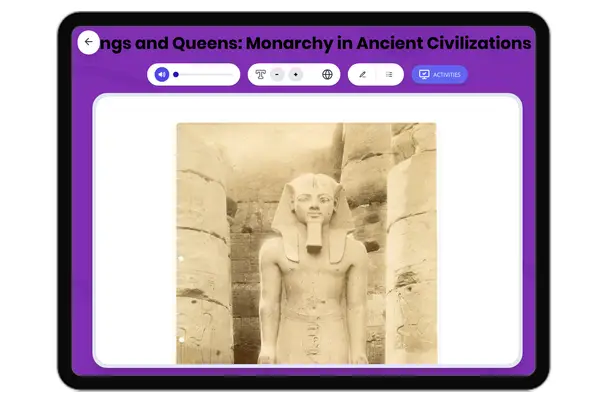
This reading passage explores the concept of monarchy in ancient civilizations, focusing on the origins, structure, and ...
Evidence in Ancient History
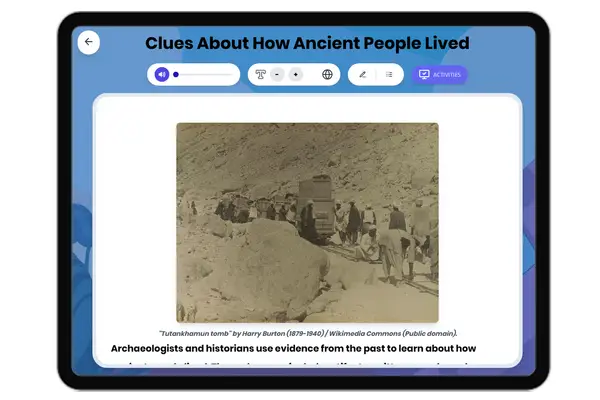
This engaging history reading passage investigates how archaeologists and historians discover clues about how ancient pe...
Ancient Theocracy
This engaging history reading passage explores the concept of theocracy in ancient civilizations, where priests and reli...
Ancient Mathematics
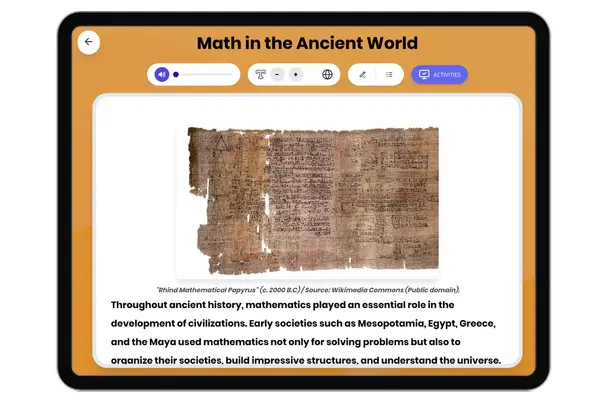
This passage explores the essential role of mathematics in ancient civilizations, including Mesopotamia, Egypt, Greece, ...
Ancient Canaan
This educational passage explores the land of Canaan, the historical homeland of the ancient Israelites. Students will l...
Ancient Money Barter
This passage explores the fascinating evolution from barter to the earliest coins in ancient civilizations, focusing on ...
Ancient Science and Medicine
This comprehensive reading passage explores the development of science and medicine in ancient civilizations, including ...
Ancient Literature
This passage explores the importance of ancient stories and poems from civilizations such as Greece, India, and Israel. ...
Ancient Agriculture Farming
This passage explores the transformative impact of farming on ancient societies, examining how the Neolithic Revolution ...
Ancient Writing Systems
This engaging history reading passage explores the origins and evolution of ancient writing systems, including cuneiform...
Geography of Ancient Israel
This passage explores the rich geography of Ancient Israel, focusing on how landforms, climate, and natural resources sh...
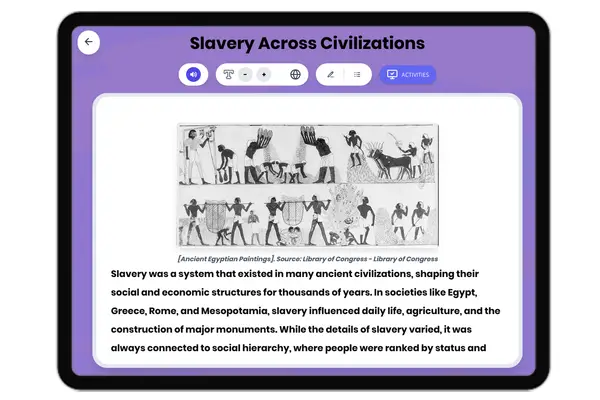
Slavery Across Civilizations
This detailed history reading passage explores the role and impact of slavery across several ancient civilizations, incl...
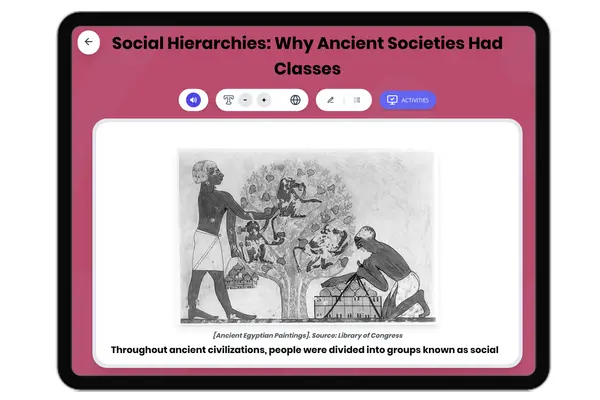
Social Classes in Ancient Societies
This passage explores the concept of social hierarchies in ancient civilizations, focusing on why societies such as Meso...
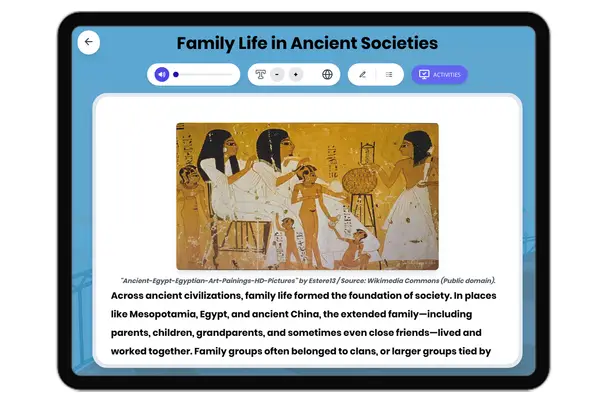
Social structures in Ancient World
This passage explores the organization and significance of family life in ancient societies, focusing on how extended fa...
Polytheism and Monotheism in Ancient Times
This passage explores the religious beliefs of ancient civilizations, focusing on the differences and similarities betwe...
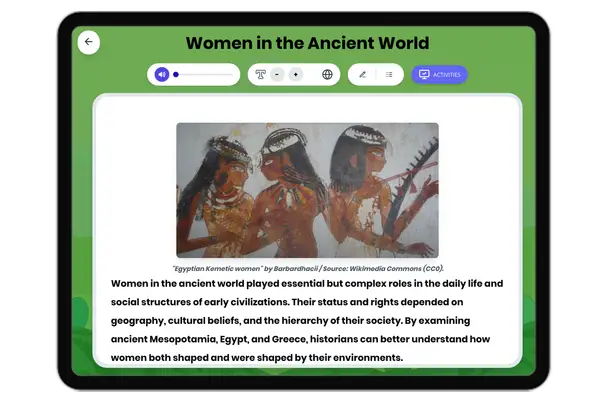
Women in Ancient Societies
This reading passage explores the complex roles of women in the ancient world, focusing on civilizations such as Mesopot...