Assyrian and Babylonian Empires
Interactive passage with audio narration, comprehension questions, and printable PDF.
By completing this purchase you agree to our Terms of Use and Privacy Policy. Your subscription renews automatically until you cancel. You can cancel anytime from your account settings. All sales are final and non-refundable. Digital content is available for download in your account immediately upon purchase.
What's included
Part of this bundle

Assyrian and Babylonian Empires preview and details
About this printable Assyrian and Babylonian Empires reading passage (Grades 5-8)
Sample passage and quiz from Assyrian and Babylonian Empires
Reading passage and comprehension quiz preview
Assyrian and Babylonian Empires
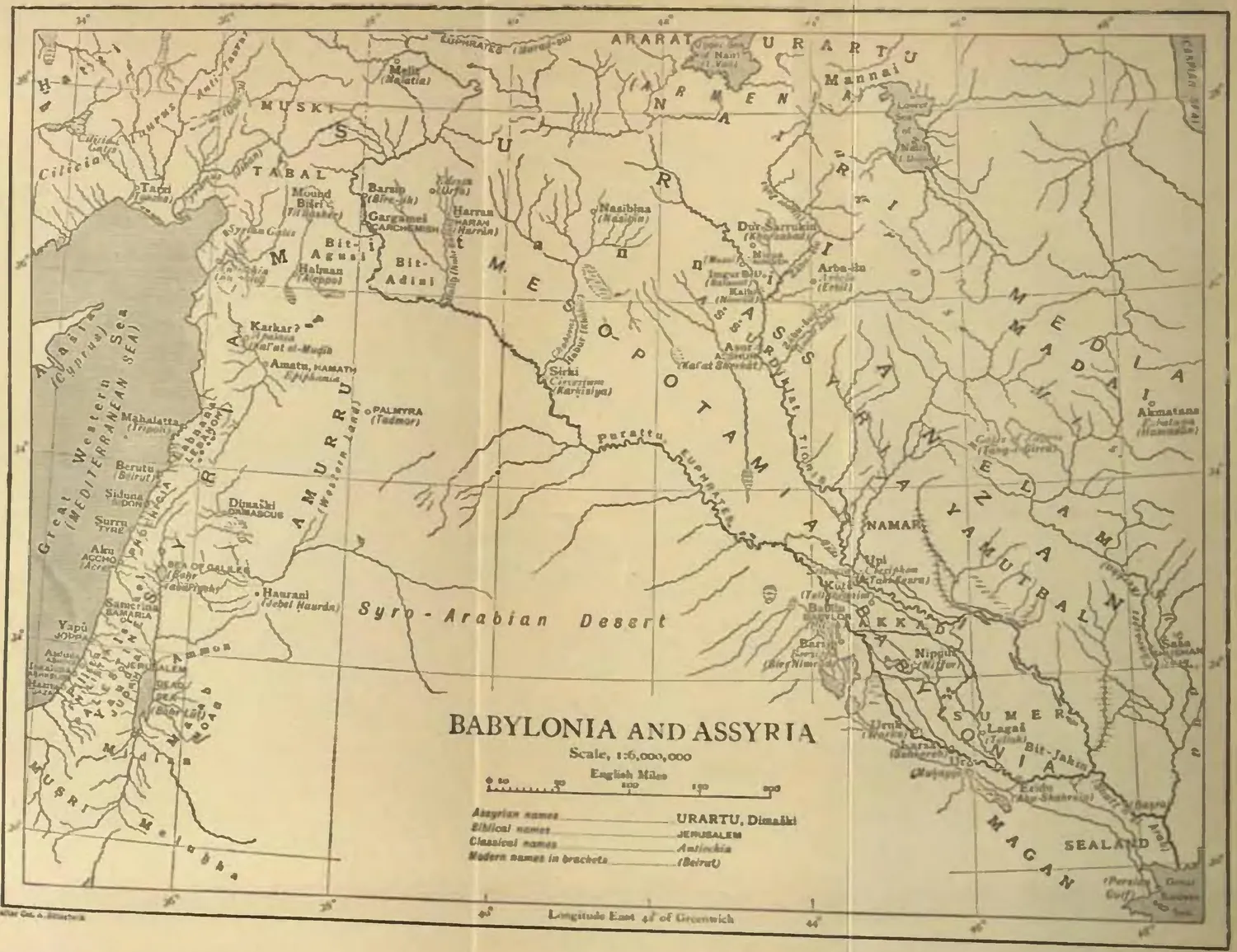
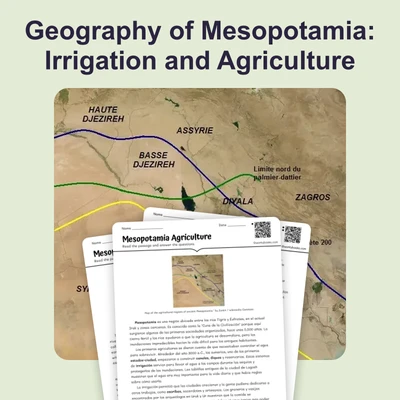
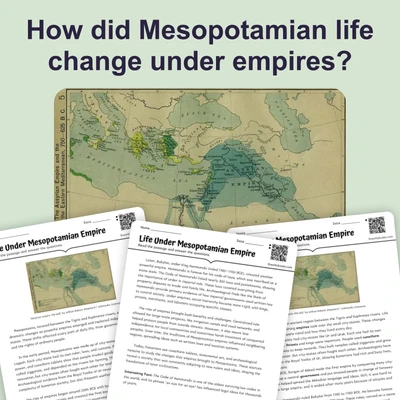
"Map of Babylonia and Assyria - from Myths of Babylonia and Assyria (page 26 crop)" by Donald Alexander Mackenzie/
Source: Wikimedia Commons (Public domain).
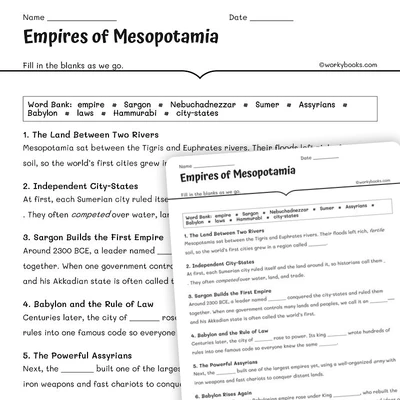
The region of Mesopotamia, located between the Tigris and Euphrates rivers, was home to several powerful empires, including Assyria and Babylon. These two empires shaped the course of ancient history through their military strength, cultural achievements, and influence on law and society.
The Assyrian Empire emerged as a dominant force around 900 BCE in northern Mesopotamia. Known for their advanced military tactics, the Assyrians built one of the largest empires of their time. They used iron weapons, well-organized armies, and siege engines to conquer neighboring lands. The city of Nineveh became their capital, famous for its vast library established by King Ashurbanipal. Archaeologists have discovered thousands of clay tablets at Nineveh, including royal decrees and epic literature like the "Epic of Gilgamesh." These findings provide evidence of the Assyrians' commitment to recordkeeping and learning.
Babylon, located further south, rose to prominence under King Hammurabi around 1792 BCE. Hammurabi is best known for creating one of the world's earliest written law codes, the Code of Hammurabi. This set of laws, inscribed on a stone pillar, established rules for justice, property, and daily life. It showed the importance of law in maintaining order and social hierarchy. Later, under King Nebuchadnezzar II (reigned 605–562 BCE), Babylon became a center of culture and engineering. The city boasted massive walls, the legendary Hanging Gardens (one of the Seven Wonders), and the Ishtar Gate, decorated with bright blue tiles and animal reliefs.
While both empires relied on strong leadership, their methods differed. Assyria ruled through fear and military power, often deporting conquered peoples and imposing tribute. Babylon focused on law, economic prosperity, and monumental architecture. However, both societies had clear class divisions. Kings and nobles held the most power, while artisans, merchants, farmers, and enslaved people formed the lower social ranks. Religion was central, with each city worshipping its own gods in grand temples called ziggurats. Trade and agriculture thrived due to the fertile river valleys, but frequent warfare also brought destruction and change.
Over time, both empires experienced periods of rise and decline. Assyria fell to a coalition of Babylonians and Medes in 612 BCE, while Babylon was later conquered by the Persian Empire in 539 BCE. Despite their eventual downfall, Assyria and Babylon left a lasting legacy in language, law, and art. Their achievements influenced later civilizations throughout the Middle East and beyond.
These stories of Assyria and Babylon connect to the broader theme of how geography, leadership, and innovation shape the development of civilizations in world history.
Interesting Fact: The famous blue-glazed bricks of the Ishtar Gate were so durable that parts of the gate still exist today, over 2,500 years later!
Comprehension quiz (8 questions)
1. Who built the famous library at Nineveh?
2. What is the Code of Hammurabi?
3. In which region did Mesopotamia exist?
4. Why did Assyria use military force?
5. What was a main focus of Babylon?
6. How did geography help these empires?
7. The Ishtar Gate still exists today. True or false?
8. What does 'hierarchy' mean?
Perfect for the way you teach
- Build comprehension skills
- Auto-graded quiz
- Differentiated reading
- Read together at home
- Improve fluency
- Quiet reading time
- Reading curriculum support
- Independent practice
- Track Lexile growth