Daily Life in Ancient Mesopotamia — Reading Comprehension
Rate this
Premium Resource
Present
Present in classroom. No work saved
Assign
Classroom with student accounts, Track progress
Quick Play
No student accounts, assign with a link
Grades
5
6
7
8
PRINT+DIGITAL RESOURCE
This learning resource is available in interactive and printable formats. The interactive worksheet can be played online and assigned to students. The Printable PDF version can be downloaded and printed for completion by hand.
This engaging history reading passage explores daily life in ancient Mesopotamia, focusing on the social structure, roles of families, farmers, and slaves, and the impact of geography on society. Students will analyze how the Tigris and Euphrates rivers shaped agriculture, the importance of cuneiform writing, and the evidence from archaeological discoveries such as clay tablets and ziggurats. The passage provides a detailed look at social hierarchy, work, and the experiences of different groups, including women and enslaved people. Activities include a multiple-choice quiz, explanatory writing prompts, and graphic organizers that help students connect cause and effect, and understand historical evidence. Spanish translations, a glossary of key terms, and a relevant public domain image support accessibility. This lesson aligns with CA HSS 6.2 and CCSS RH.6-8.1 standards and includes read aloud audio for further support.
CONTENT PREVIEW
Expand content preview
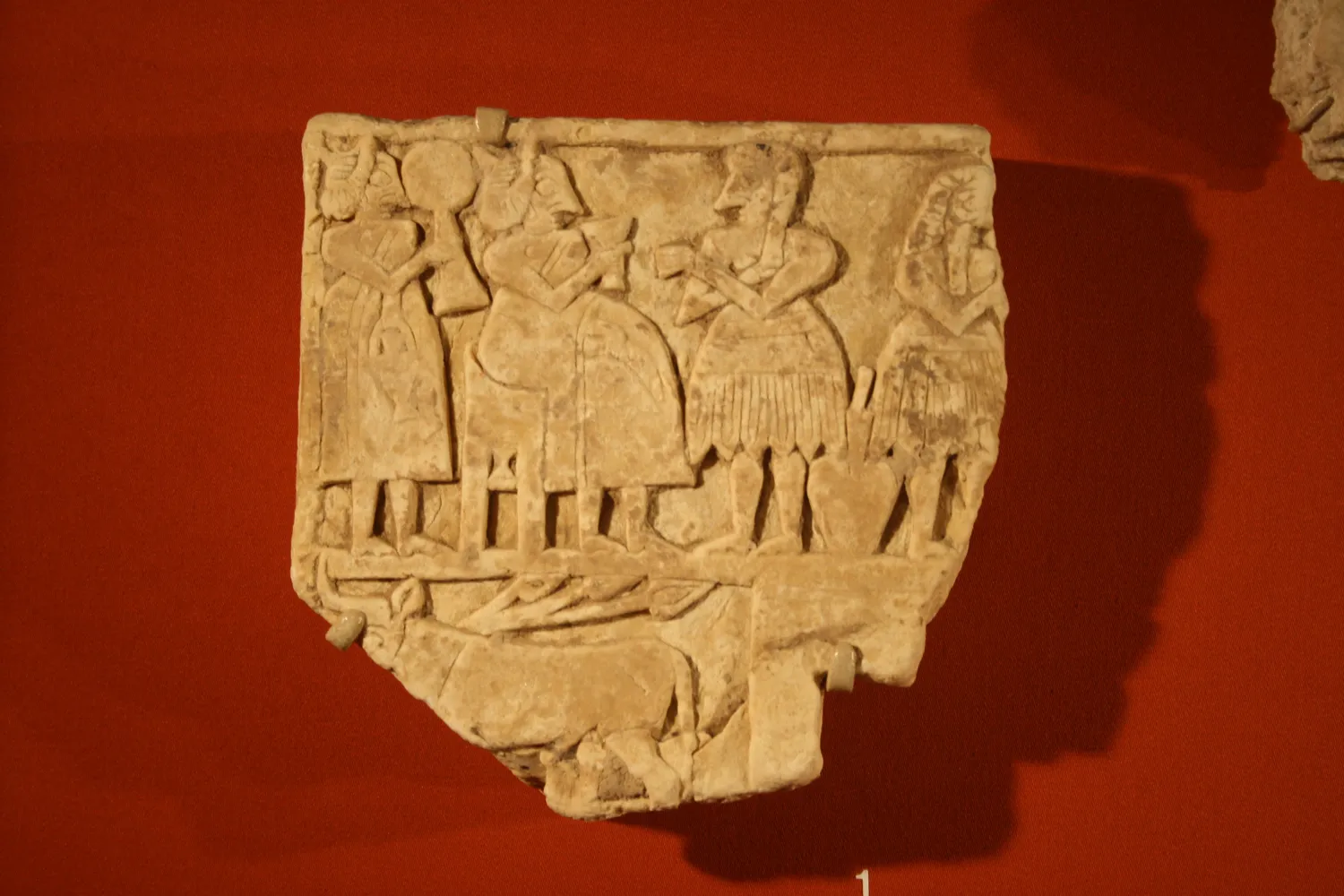
Daily Life in Mesopotamia Sumerian Banquet Scene, 2700-2350 BC, Egypt and Ancient Near East Galleries, Michael C. Carlos Museum, Atlanta, Georgia, USA Wikimedia Commons
Ancient Mesopotamia, located between the Tigris and Euphrates rivers, was one of the world’s first advanced civilizations. The region’s fertile land allowed people to develop organized **city-states** such as Sumer, Akkad, and Babylon, beginning as early as 3500 BCE. Mesopotamians built complex societies with clear social structures, specialized jobs, and written laws.
Daily life in Mesopotamia depended on social class. At the top were the **priests** and **nobles**, who controlled religious ceremonies and owned much of the land. Most people were **farmers**, working small plots along irrigation canals that brought water from the rivers. Farmers grew barley, wheat, and dates, using tools like the plow and the seeder. Archaeologists have found clay tablets showing lists of grain deliveries, which help us understand the importance of agriculture. Families often worked together, and even children helped with planting and harvesting. However, droughts or floods could destroy crops, leading to food shortages and hardship.
Another group in Mesopotamian society were **craftspeople** and **merchants**. Craftspeople made pottery, textiles, and metal tools, while merchants traded goods in the marketplace. Written records in **cuneiform**, the world’s first writing system, reveal contracts and business deals, indicating that trade was essential to city life. Women sometimes owned businesses or acted as priestesses, though most had fewer rights than men.
At the bottom of the social structure were enslaved people. Slavery in Mesopotamia was often a result of debt, war, or punishment. Enslaved people worked in households, on farms, or in temples. Some could eventually buy their freedom, but their lives were usually hard. Archaeological evidence, such as the Law Code of Hammurabi (around 1754 BCE), lists rules about the treatment of slaves and their legal rights. These laws show that slavery was a recognized part of society but also that there were limits on the power of masters.
Despite these differences, most Mesopotamians shared certain customs. They worshipped many gods and goddesses, built large **ziggurats** as religious centers, and gathered for festivals. The society’s organization reflected its geography: rivers supported agriculture, which in turn allowed cities and complex labor systems to develop. Over time, the roles of families, farmers, and slaves changed, but the basic structure of Mesopotamian society remained for centuries.
This study of Mesopotamian daily life helps us see how geography, technology, and social organization can shape civilizations—an important theme in world history.
Interesting Fact: Some Mesopotamian children went to tablet schools to learn how to write cuneiform, making them some of the earliest students in history!
Where was Mesopotamia located?
Between Tigris and EuphratesBy the Nile RiverNear the Mediterranean SeaIn South America
Which group was at the top of society?
FarmersCraftspeoplePriests and noblesSlaves
What crops did farmers mainly grow?
Barley and wheatRice and cornPotatoes and tomatoesApples and oranges
Why was cuneiform important?
It was a farming toolIt was a writing systemIt was a riverIt was a temple
What caused some people to become slaves?
War, debt, or punishmentOwning landLearning cuneiformBecoming a merchant
How did geography shape Mesopotamian society?
Rivers allowed farmingDeserts provided foodMountains helped tradeOceans gave water
There were no slaves in Mesopotamia.
TrueFalse
What is a ziggurat?
A cropA templeA trade goodA social class
Perfect For:
👩🏫 Teachers
• Reading comprehension practice
• Auto-graded assessments
• Literacy skill development
👨👩👧👦 Parents
• Reading practice at home
• Comprehension improvement
• Educational reading time
🏠 Homeschoolers
• Reading curriculum support
• Independent reading practice
• Progress monitoring
Reading Features:
📖
Reading Passage
Engaging fiction or nonfiction text
❓
Comprehension Quiz
Auto-graded questions
📊
Instant Feedback
Immediate results and scoring
📄
Printable Version
Download for offline reading
🔊
Read Aloud
Voice-over with word highlighting
Reviews & Ratings
No reviews yet. Be the first to share your experience!
Related Content
Trade Between Mesopotamian Cities
This history reading passage explores the development and significance of trade networks among ancient Mesopotamian citi...
Environmental Challenges in Mesopotamia
This reading passage explores the environmental challenges faced by ancient Mesopotamia, the 'land between the rivers.' ...
Mesopotamia Ziggurats
This engaging history reading passage explores the awe-inspiring ziggurats of ancient Mesopotamia, focusing on their con...
Mesopotamian Kings and Priests
This reading passage explores the complex relationship between power, religion, and patriarchy in Ancient Mesopotamia, f...
Mesopotamia Agriculture
This engaging reading passage explores how the geography of Mesopotamia shaped its civilization through innovative irrig...
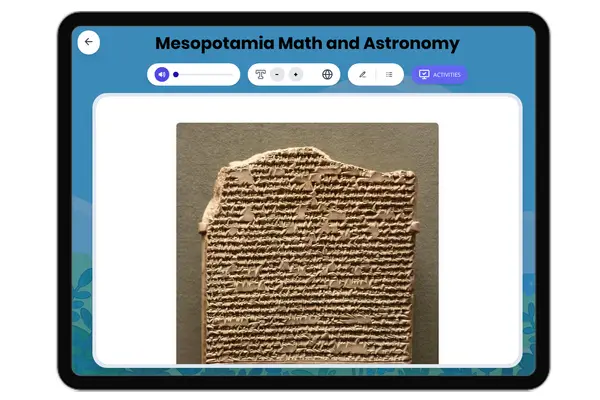
Math and Astronomy in Mesopotamia
This engaging passage explores the scientific achievements of ancient Mesopotamia, the region between the Tigris and Eup...
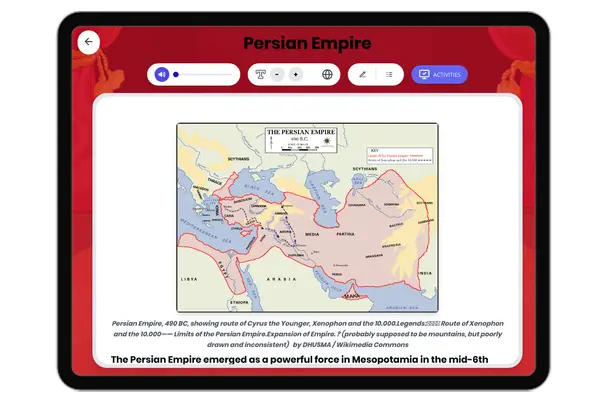
Persian Empire in Mesopotamia
This engaging passage explores the rise of the Persian Empire and its impact on Mesopotamia, aligning with CA HSS 6.2 an...
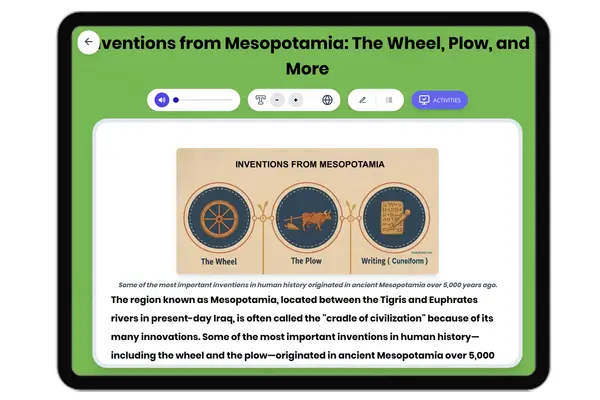
Mesopotamian Inventions: Wheel, Plow, and More
This passage explores the major inventions of ancient Mesopotamia, focusing on technological breakthroughs such as the w...
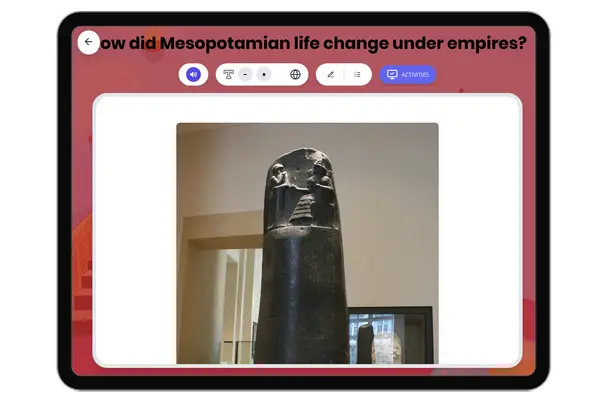
Life Under Mesopotamian Empire
This passage explores the transformation of Mesopotamian life under powerful empires, including Sargon’s Akkadian Empire...
Evidence in Ancient History
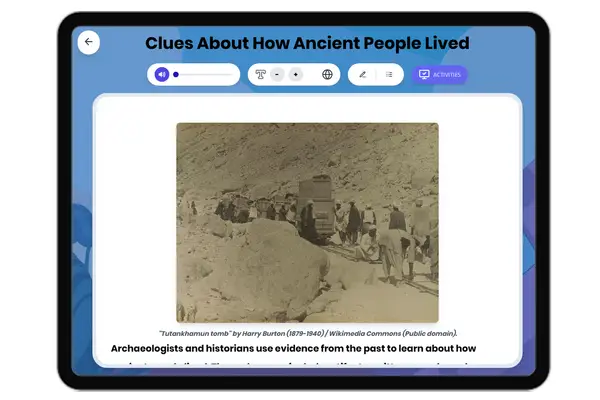
This engaging history reading passage investigates how archaeologists and historians discover clues about how ancient pe...
Assyrian and Babylonian Empires
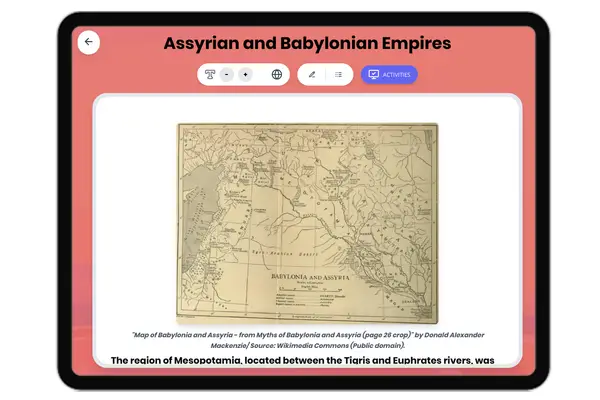
This comprehensive history reading passage explores the rise and fall of Assyria and Babylon, two great empires that rul...
The Tigris and Euphrates Rivers
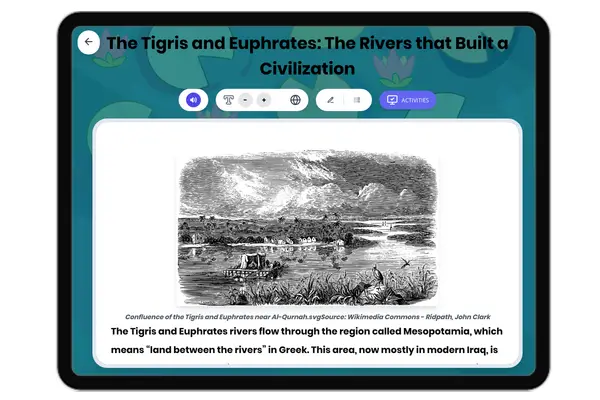
This engaging history reading passage explores the vital role of the Tigris and Euphrates rivers in the development of a...
Ancient Greek City-States
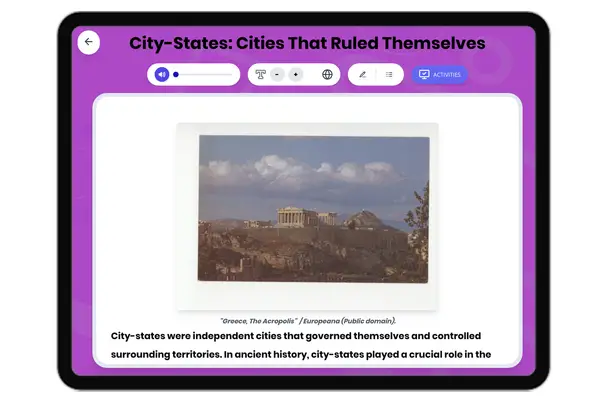
This history reading passage explores the development and significance of city-states in ancient civilizations, focusing...
Code of Hammurabi
This rigorous history reading passage explores Hammurabi's Code, one of the earliest and most influential legal codes in...
Ancient Agriculture Farming
This passage explores the transformative impact of farming on ancient societies, examining how the Neolithic Revolution ...
Epic of Gilgamesh
This engaging passage delves into The Epic of Gilgamesh, the oldest known epic poem and a key artifact from ancient Meso...
Ancient Mathematics
This passage explores the essential role of mathematics in ancient civilizations, including Mesopotamia, Egypt, Greece, ...
Women in Ancient Societies
This reading passage explores the complex roles of women in the ancient world, focusing on civilizations such as Mesopot...
Mesopotamia—Informatonal Text
This informational text on Mesopotamia is a great way to practice reading comprehension. Students will read the text the...