This learning resource is available in interactive and printable formats. The interactive worksheet can be played online and assigned to students. The Printable PDF version can be downloaded and printed for completion by hand.
This engaging history reading passage explores the awe-inspiring ziggurats of ancient Mesopotamia, focusing on their construction, religious significance, and impact on society. Students will discover how the Sumerians and Babylonians built these massive temples, what archaeological evidence reveals, and how ziggurats shaped religious and social hierarchies. The passage includes a glossary of key terms, differentiated reading levels, and a full Spanish translation. Activities support analysis of cause and effect, chronological development, and historical significance. Aligned with CA HSS 6.2 and CCSS RH.6-8.1, this resource also features a read-aloud option and visual aids, making it perfect for developing historical thinking and language skills in the classroom.
CONTENT PREVIEW
Expand content preview
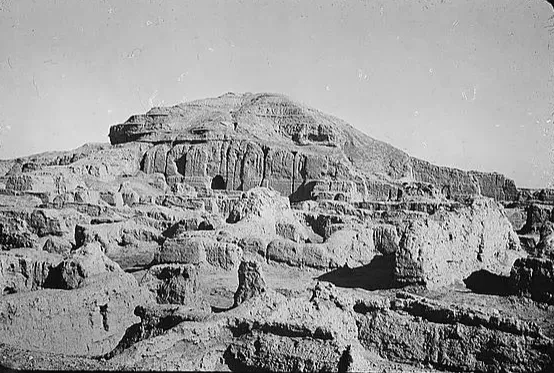
Ziggurat of Warka, Mesopotamia, Library of Congress.
Ziggurats were massive, stepped temples built in the heart of Mesopotamia’s ancient city-states. These towering structures, made of mud-brick and rising in stacked levels, symbolized both religious devotion and social organization in the world’s first urban civilizations.
The earliest known ziggurats appeared in Sumer, in southern Mesopotamia, around 2100 BCE. The Ziggurat of Ur, constructed during the reign of King Ur-Nammu, is one of the best-preserved examples. Archaeological evidence shows that ziggurats were not simply places of worship but also served as centers of administration and storage. Inscriptions found at Ur reveal that priests managed the temple’s goods, recorded in cuneiform tablets. The height of a ziggurat was meant to bring people closer to the gods, emphasizing the importance of religion in daily life.
A ziggurat typically featured several levels, or tiers, each smaller than the one below. At the top stood a small shrine dedicated to a city’s patron deity, such as Nanna, the moon god of Ur. Only priests and high officials could ascend the upper levels, demonstrating a clear hierarchy within society. Most people worshipped at the base, offering gifts and participating in festivals. The ziggurat’s central location reflected its role as the spiritual and political heart of the city-state.
Building a ziggurat required organized labor and advanced knowledge of engineering. Workers transported millions of mud bricks, and rulers supervised the construction as a sign of their power. The process united city residents in a common religious and civic purpose. Over time, ziggurats influenced later architecture in the region and became symbols of Mesopotamian identity. Some scholars believe that the biblical Tower of Babel was inspired by stories of ziggurats.
The significance of ziggurats lies in their role as both religious centers and symbols of social structure. They helped shape the development of writing, government, and urban planning in ancient Mesopotamia. Today, ruins like the Ziggurat of Ur help historians and archaeologists understand the beliefs and achievements of one of humanity’s earliest civilizations.
Ziggurats connect to broader themes of civilization, religion, and urban development, showing how architecture can reflect and reinforce social values.
Interesting Fact: The word “ziggurat” comes from the Akkadian language and means “to build on a raised area.”
Where were the first ziggurats built?
SumerEgyptGreeceChina
Who could enter the top shrine?
Priests and high officialsFarmersAll citizensMerchants
What was the Ziggurat of Ur made of?
Mud-brickMarbleWoodGranite
Why were ziggurats built tall?
To be closer to godsFor defenseTo store cropsTo attract traders
What evidence was found at Ur?
Cuneiform tabletsSilk clothGold coinsGlassware
How did ziggurats affect society?
Showed social hierarchyMade farming easierProvided fresh waterHelped trade with China
Ziggurats influenced later architecture.
TrueFalse
What does 'hierarchy' mean?
A ranking systemA type of foodA dance ritualA kind of brick
Perfect For:
👩🏫 Teachers
• Reading comprehension practice
• Auto-graded assessments
• Literacy skill development
👨👩👧👦 Parents
• Reading practice at home
• Comprehension improvement
• Educational reading time
🏠 Homeschoolers
• Reading curriculum support
• Independent reading practice
• Progress monitoring
Reading Features:
📖
Reading Passage
Engaging fiction or nonfiction text
❓
Comprehension Quiz
Auto-graded questions
📊
Instant Feedback
Immediate results and scoring
📄
Printable Version
Download for offline reading
🔊
Read Aloud
Voice-over with word highlighting
Reviews & Ratings
No reviews yet. Be the first to share your experience!
Related Content
Daily Life in Ancient Mesopotamia
This engaging history reading passage explores daily life in ancient Mesopotamia, focusing on the social structure, role...
Trade Between Mesopotamian Cities
This history reading passage explores the development and significance of trade networks among ancient Mesopotamian citi...
Environmental Challenges in Mesopotamia
This reading passage explores the environmental challenges faced by ancient Mesopotamia, the 'land between the rivers.' ...
Mesopotamian Kings and Priests
This reading passage explores the complex relationship between power, religion, and patriarchy in Ancient Mesopotamia, f...
Mesopotamia Agriculture
This engaging reading passage explores how the geography of Mesopotamia shaped its civilization through innovative irrig...
Math and Astronomy in Mesopotamia
This engaging passage explores the scientific achievements of ancient Mesopotamia, the region between the Tigris and Eup...
Persian Empire in Mesopotamia
This engaging passage explores the rise of the Persian Empire and its impact on Mesopotamia, aligning with CA HSS 6.2 an...
Mesopotamian Inventions: Wheel, Plow, and More
This passage explores the major inventions of ancient Mesopotamia, focusing on technological breakthroughs such as the w...
Life Under Mesopotamian Empire
This passage explores the transformation of Mesopotamian life under powerful empires, including Sargon’s Akkadian Empire...
Evidence in Ancient History
This engaging history reading passage investigates how archaeologists and historians discover clues about how ancient pe...
Assyrian and Babylonian Empires
This comprehensive history reading passage explores the rise and fall of Assyria and Babylon, two great empires that rul...
The Tigris and Euphrates Rivers
This engaging history reading passage explores the vital role of the Tigris and Euphrates rivers in the development of a...
Ancient Greek City-States
This history reading passage explores the development and significance of city-states in ancient civilizations, focusing...
Code of Hammurabi
This rigorous history reading passage explores Hammurabi's Code, one of the earliest and most influential legal codes in...
Ancient Agriculture Farming
This passage explores the transformative impact of farming on ancient societies, examining how the Neolithic Revolution ...
Epic of Gilgamesh
This engaging passage delves into The Epic of Gilgamesh, the oldest known epic poem and a key artifact from ancient Meso...
Ancient Mathematics
This passage explores the essential role of mathematics in ancient civilizations, including Mesopotamia, Egypt, Greece, ...
Women in Ancient Societies
This reading passage explores the complex roles of women in the ancient world, focusing on civilizations such as Mesopot...
Mesopotamia—Informatonal Text
This informational text on Mesopotamia is a great way to practice reading comprehension. Students will read the text the...