Mesopotamian Kings and Priests — Reading Comprehension
Rate this
Premium Resource
Present
Present in classroom. No work saved
Assign
Classroom with student accounts, Track progress
Quick Play
No student accounts, assign with a link
Grades
5
6
7
8
PRINT+DIGITAL RESOURCE
This learning resource is available in interactive and printable formats. The interactive worksheet can be played online and assigned to students. The Printable PDF version can be downloaded and printed for completion by hand.
This reading passage explores the complex relationship between power, religion, and patriarchy in Ancient Mesopotamia, focusing on the roles of kings and priests in shaping society. Students will learn how social hierarchy, gender, and religious authority intertwined to form the foundation of one of the world’s earliest civilizations. The passage examines primary sources such as the Code of Hammurabi and Sumerian temple records, highlighting cause-and-effect relationships and change over time. Students analyze how geography influenced the development of city-states and social structures. Included are a glossary, Spanish translation, multiple-choice quiz, writing activities, graphic organizers, and a timeline, all aligned to CA HSS 6.2 and CCSS RH.6-8. This resource is suitable for classrooms seeking rigorous yet accessible history content, with read aloud audio and Spanish translation provided for language learners.
CONTENT PREVIEW
Expand content preview
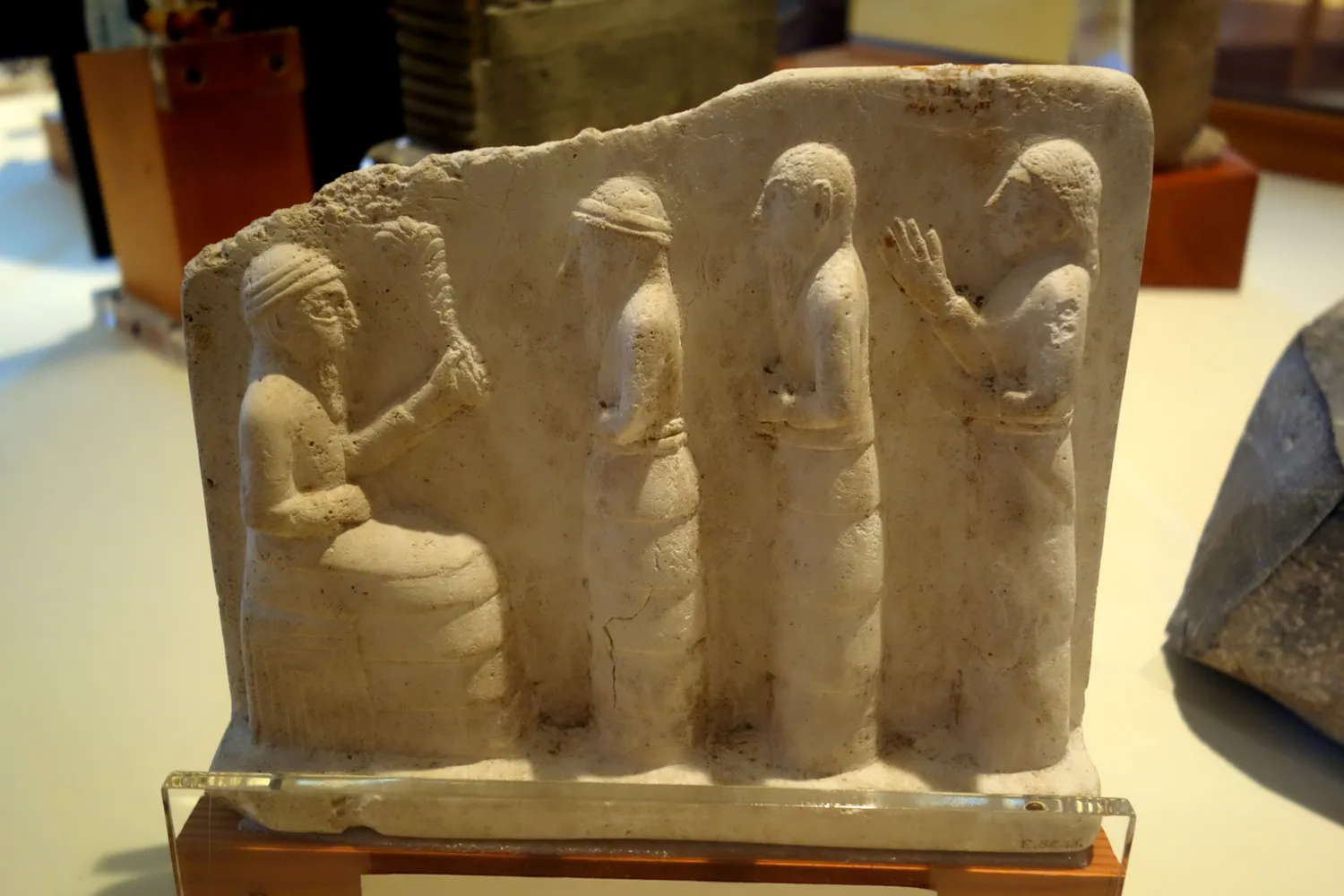
"Seated king or priest with subjects or worshippers, Sumeria, Mesopotamia, c. 2800-2400 BC - Otago Museum - Dunedin, NZ - DSC04838" by Daderot / Wikimedia Commons (Public domain).
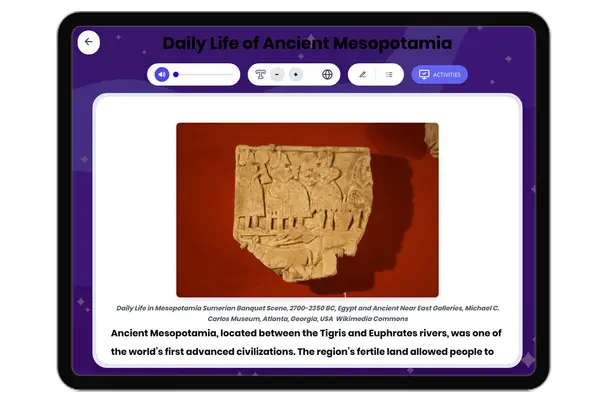
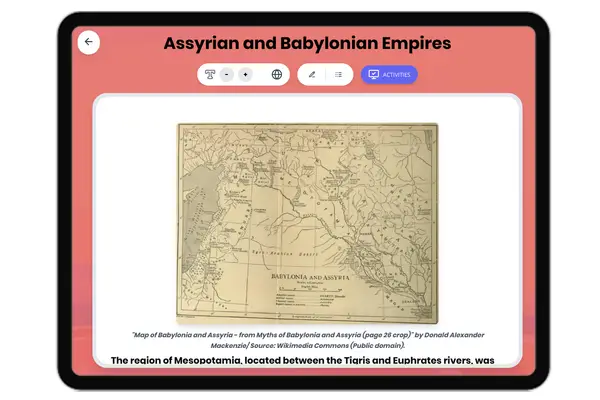
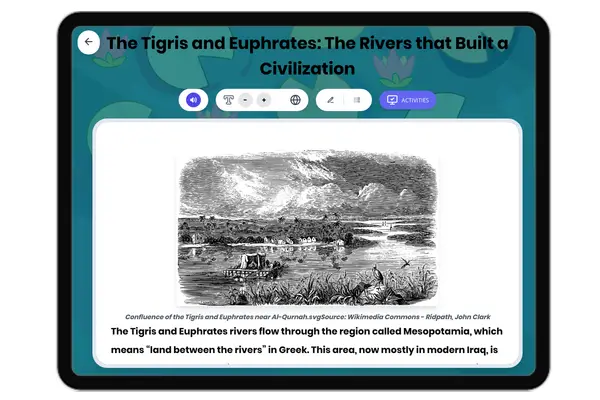
Ancient Mesopotamia, located between the Tigris and Euphrates Rivers, is known as the “cradle of civilization.” This region gave rise to powerful city-states like Ur, Babylon, and Sumer, where the relationship between power, religion, and patriarchy shaped daily life and society.
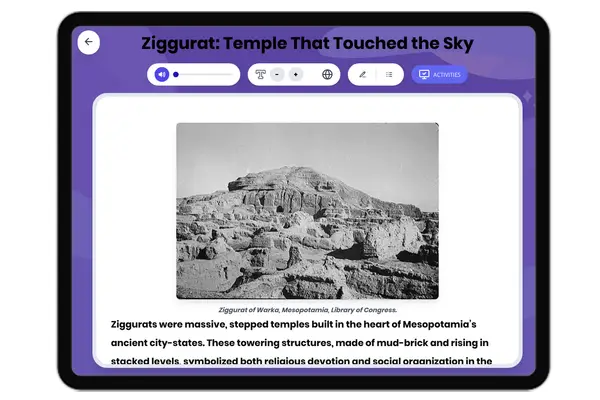
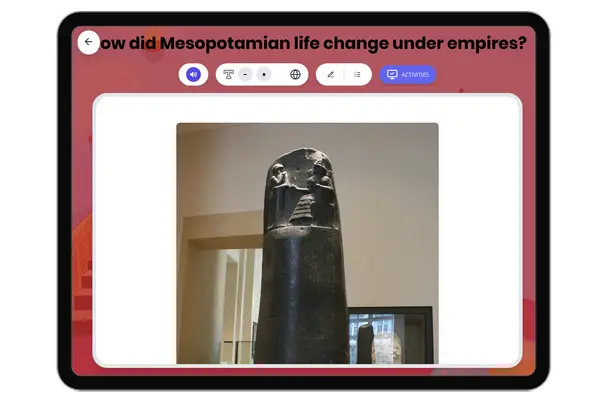
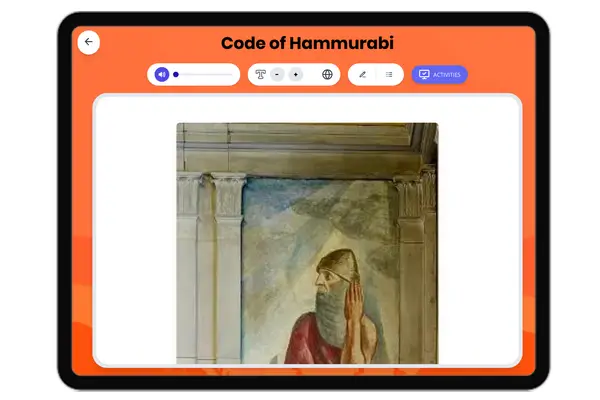
In Mesopotamian society, kings and priests held the highest positions in the social hierarchy. Kings, known as lugals in Sumer, claimed their authority came from the gods. For example, King Hammurabi of Babylon (ruled about 1792–1750 BCE) stated that the sun god Shamash gave him the laws, as shown on the famous stele of the Code of Hammurabi. This stone monument, found by archaeologists and now displayed in the Louvre Museum, contains nearly 300 laws and reveals the idea that the king was responsible for justice and order. Priests were equally important, as they performed rituals, managed temple lands, and communicated with the gods. Temples, called ziggurats, stood at the center of each city-state, symbolizing the connection between the people, their leaders, and their gods.
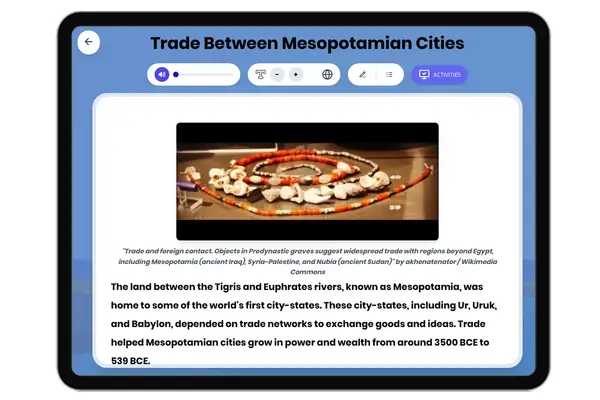
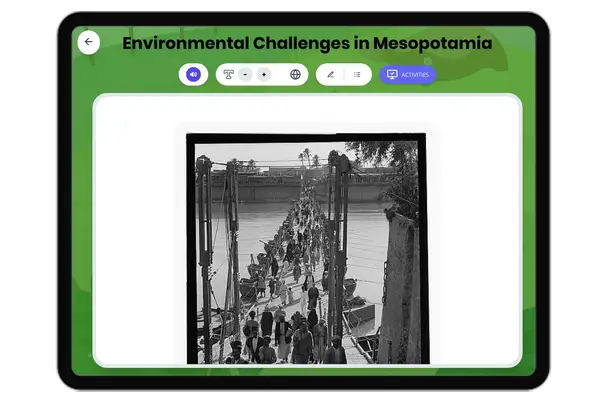
The connection between religion and political power can be seen in the way kings often acted as high priests and led major religious ceremonies. This blending of religious and royal authority helped maintain control over the population. Archaeological evidence such as the Standard of Ur and cuneiform records from temples show that priests collected taxes, stored surplus grain, and organized labor for irrigation projects. Because Mesopotamia had unpredictable floods, controlling water meant survival, giving priests and kings even more power over ordinary people.
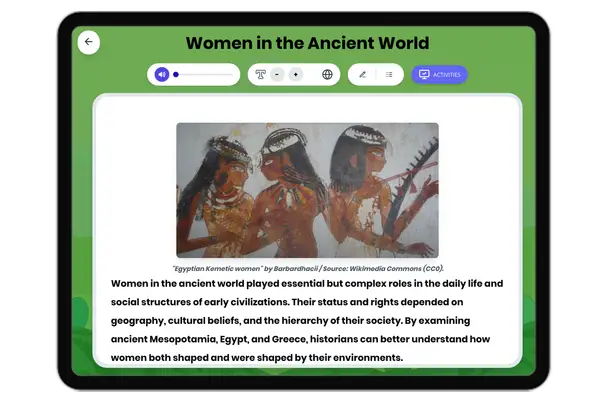
Patriarchy was a key part of Mesopotamian society. Most positions of power—kingship, priesthood, and property ownership—were reserved for men. Women could own property and run businesses in some cases, but laws such as those in the Code of Hammurabi made clear that men held legal and social authority within the family. Children inherited status from their fathers, and the household was ruled by the eldest male. Yet, some priestesses held important roles, showing that women could have influence, especially in religious life.
Over time, the roles of kings and priests evolved, but the close tie between power, religion, and patriarchy remained a central feature of Mesopotamian civilization. These systems provided stability and helped the society manage resources, but they also reinforced strict social divisions. Understanding the connections among leadership, belief, and gender helps us see how geography and human choices shaped one of the world’s earliest complex societies.
Interesting Fact: The ziggurat of Ur, built around 2100 BCE, still stands in modern-day Iraq and was once believed to be the dwelling place of the moon god Nanna. Many civilizations that followed, including those in Egypt and the Mediterranean, borrowed ideas from Mesopotamian systems of power and religion.
What is a ziggurat?
A temple in MesopotamiaA marketplaceA riverA palace
Who was Hammurabi?
King of BabylonHigh priestEgyptian pharaohSumerian goddess