Epic of Gilgamesh
Interactive passage with audio narration, comprehension questions, and printable PDF.
By completing this purchase you agree to our Terms of Use and Privacy Policy. Your subscription renews automatically until you cancel. You can cancel anytime from your account settings. All sales are final and non-refundable. Digital content is available for download in your account immediately upon purchase.
What's included
Part of this bundle

Epic of Gilgamesh preview and details
About this printable Epic of Gilgamesh reading passage (Grades 5-8)
Sample passage and quiz from Epic of Gilgamesh
Reading passage and comprehension quiz preview
Epic of Gilgamesh
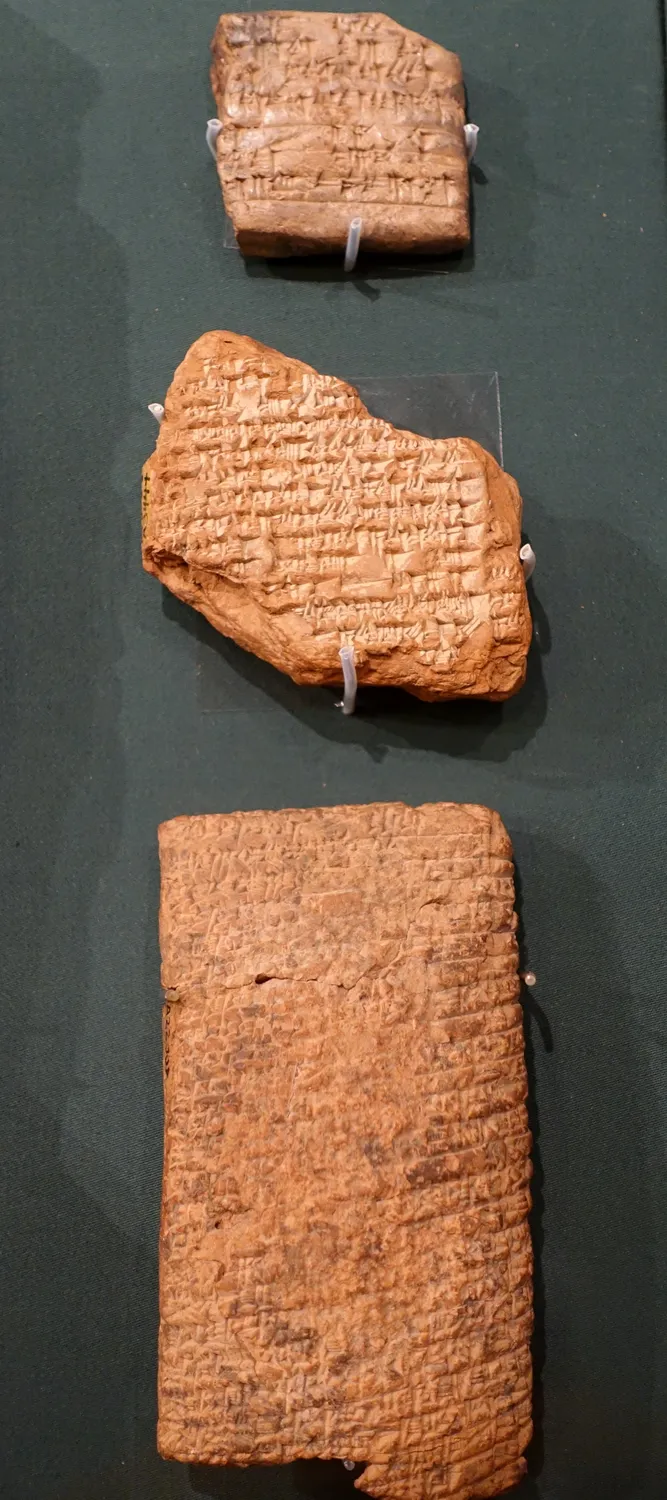
"Epic of Gilgamesh, three fragments - Oriental Institute Museum, University of Chicago - DSC07124" by Daderot / Wikimedia Commons (CC0).
The Epic of Gilgamesh is recognized as one of the earliest works of literature in human history. Originating in the ancient region of Mesopotamia—today’s Iraq—the epic was first recorded on clay tablets over 4,000 years ago. This story, written in cuneiform script, tells about Gilgamesh, the powerful king of the city-state of Uruk. Through adventures, friendship, and the search for immortality, the Epic of Gilgamesh offers a window into Sumerian society and beliefs.
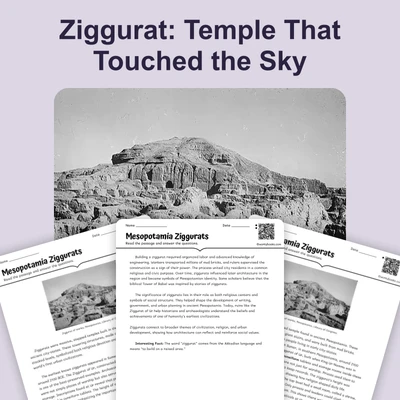
Mesopotamia, often called the “Cradle of Civilization,” was home to some of the world’s first city-states such as Uruk, Ur, and Babylon. Around 2100 BCE, Sumerian scribes began to write stories about Gilgamesh, believed to have ruled Uruk around 2700 BCE. These stories were passed down through oral tradition before being written. The cuneiform tablets discovered in the ruins of Nineveh and other ancient cities reveal details about daily life, government, and religion in Mesopotamia. For example, one tablet describes the building of a massive ziggurat—a stepped temple that was central to the city’s religious and social life.
The epic follows Gilgamesh as he sets out with his friend Enkidu to defeat monsters like Humbaba and the Bull of Heaven. When Enkidu dies, Gilgamesh is devastated and begins a quest to find the secret of eternal life. He meets Utnapishtim, who survived a great flood—an episode that is one of the earliest known flood stories and may have influenced later myths. Archaeologists have found versions of this tale on clay tablets from different periods, showing how stories changed but also stayed the same over time.
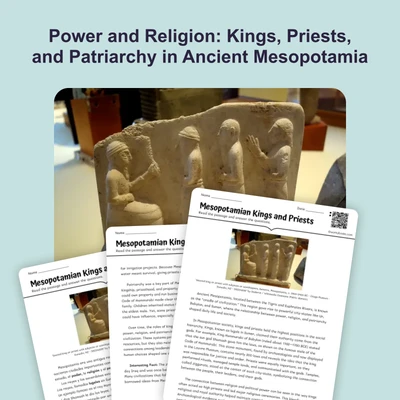
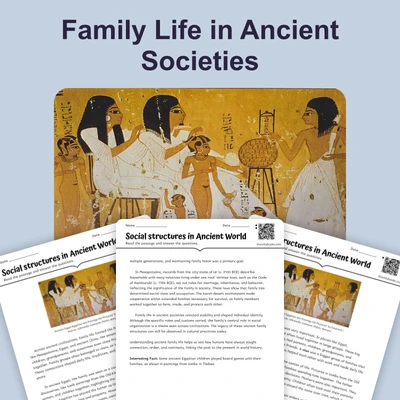
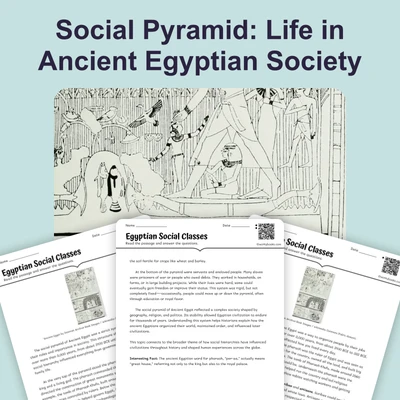
The Epic of Gilgamesh explores important themes such as friendship, leadership, mortality, and the search for meaning. It reflects the values and challenges of Mesopotamian society, including the belief in powerful gods and the importance of legacy. The story also shows the hierarchy of ancient society: kings, priests, scribes, and workers all played specific roles. Through the adventures of Gilgamesh, readers learn about the achievements and fears of one of the world’s first civilizations.
Today, the Epic of Gilgamesh remains significant because it connects us to the ancient past. By studying the epic and the archaeology of Mesopotamia, historians gain insight into the origins of storytelling, government, and religion. The tablets containing the story are found in museums worldwide, reminding us of the lasting impact of ancient Mesopotamian culture on human civilization.
This story helps us understand how geography, leadership, and the search for meaning have shaped societies throughout history and connects to our broader study of ancient civilizations in world history.
Interesting Fact: The Epic of Gilgamesh was lost for centuries and rediscovered in the 1800s when archaeologists found cuneiform tablets in the ruins of Nineveh.
Comprehension quiz (8 questions)
1. Where did the Epic of Gilgamesh originate?
2. What writing system was used for the story?
3. Who was Gilgamesh's close friend?
4. Why did Gilgamesh search for immortality?
5. What is a ziggurat?
6. How did archaeologists find the story?
7. The Epic of Gilgamesh was lost for centuries.
8. What does 'hierarchy' mean?
Perfect for the way you teach
- Build comprehension skills
- Auto-graded quiz
- Differentiated reading
- Read together at home
- Improve fluency
- Quiet reading time
- Reading curriculum support
- Independent practice
- Track Lexile growth