This learning resource is available in interactive and printable formats. The interactive worksheet can be played online and assigned to students. The Printable PDF version can be downloaded and printed for completion by hand.
This passage tells the amazing black-footed ferret conservation success story, focusing on how scientists worked to save this endangered species from extinction. Students will learn about the challenges faced by the ferrets, such as habitat loss and disease, and the innovative solutions used for their recovery, including captive breeding and reintroduction into the wild. The passage highlights the importance of biodiversity and human efforts in protecting wildlife, aligning with NGSS Disciplinary Core Idea LS4.D: Biodiversity and Humans. The content is suitable for 5th-grade readers, explaining complex topics in simple language. This passage is also audio integrated, enhancing the learning experience.
CONTENT PREVIEW
Expand content preview
Black-footed ferret conservation: habitat loss, captive breeding, and reintroduction into prairie ecosystems.
Black-Footed Ferret Conservation
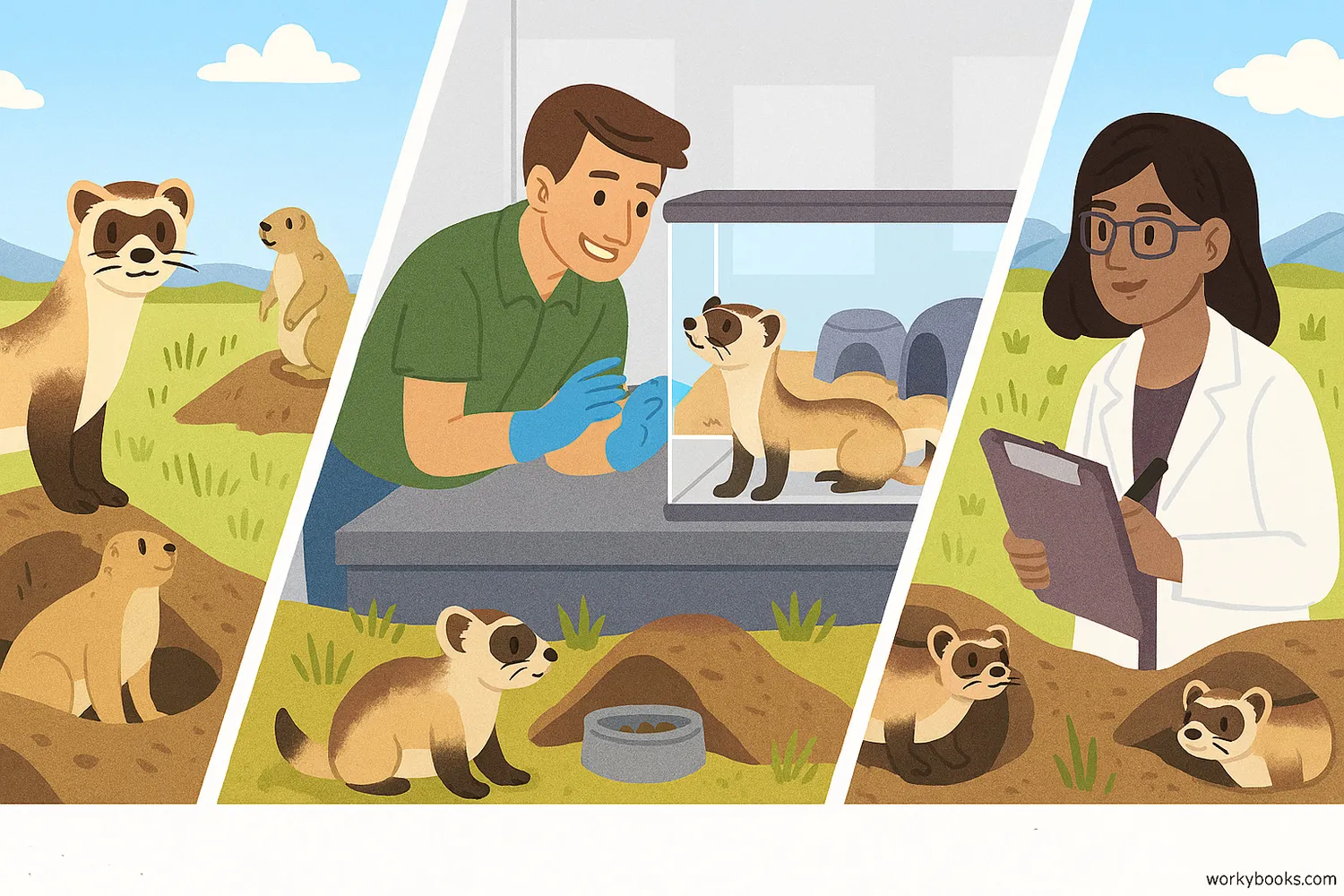
The black-footed ferret is North America's most endangered mammal. These small, slender animals once lived all across the Great Plains. They made their homes in prairie dog towns and depended on prairie dogs for both food and shelter. In fact, a single black-footed ferret needs to eat about 100 prairie dogs each year and often lives in their burrows.
But over time, things changed. Farmers wanted more land to grow crops, so they killed many prairie dogs. At the same time, a deadly disease called sylvatic plague spread through prairie dog towns and ferret populations. By 1979, scientists believed the black-footed ferret was completely extinct.
In 1981, something amazing happened. A ranch dog in Wyoming brought home a dead black-footed ferret. Scientists quickly searched the area and found 18 wild ferrets! This discovery gave hope that the species could be saved.
When another disease outbreak threatened the last wild ferrets, scientists captured them to start a special breeding program in zoos. With just 18 ferrets, they began raising baby ferrets, called kits, in captivity. These kits were later released into the wild, starting the process of reintroduction.
Conservationists used many creative methods to help the ferrets survive. They bred ferrets in special facilities and released them in areas with healthy prairie dog populations. To protect ferrets from disease, they gave them and prairie dogs vaccines. Scientists even used drones to drop vaccine-laced treats for prairie dogs, helping keep the ferrets' food supply healthy.
Today, thanks to these efforts, over 300 black-footed ferrets live in the wild across several states. It’s a real-life fairy tale—scientists found the last ones just in time, raised them carefully, and are slowly bringing them back from almost being gone forever! The black-footed ferret story also teaches us about the importance of ecosystems—when one species disappears, it can affect many others.
Interesting Fact: Black-footed ferrets sleep up to 21 hours a day and are most active at night!
What is the black-footed ferret's main food?
Prairie dogsFishCornRabbits
Why did ferrets almost go extinct?
Lack of food and diseaseToo much rainToo many ferretsNo breeding
What do scientists use drones for?
Drop vaccine treatsCount ferretsPlant treesScare birds
What is a breeding program?
Plan to help animals have babiesA place to feed ferretsA dog training classMaking food for ferrets
How do vaccines help ferrets?
Protect from diseaseMake them hungryGive them foodHelp them sleep
What would happen if prairie dogs disappeared?
Ferrets would have no foodFerrets would be happyFerrets would eat cornFerrets would get bigger
Ferrets sleep most of the day. True or false?
TrueFalse
What does 'reintroduction' mean?
Release animals into wildName an animalBuild a zooGive an animal food
Perfect For:
👩🏫 Teachers
• Reading comprehension practice
• Auto-graded assessments
• Literacy skill development
👨👩👧👦 Parents
• Reading practice at home
• Comprehension improvement
• Educational reading time
🏠 Homeschoolers
• Reading curriculum support
• Independent reading practice
• Progress monitoring
Reading Features:
📖
Reading Passage
Engaging fiction or nonfiction text
❓
Comprehension Quiz
Auto-graded questions
📊
Instant Feedback
Immediate results and scoring
📄
Printable Version
Download for offline reading
🔊
Read Aloud
Voice-over with word highlighting
Reviews & Ratings
No reviews yet. Be the first to share your experience!
Related Content
The Nature of Life Science
This passage, aligned with NGSS MS-LS1-1, introduces students in grades 6-8 to the foundational concepts of life science...
MS-LS1-1
Science Vocabulary
This worksheet on domain-specific words will help students learn some science vocabulary. Students will be asked to matc...
L.3.6L.3.4.A
The Science of Hibernation
This educational module, featuring an audio-integrated reading passage titled 'The Science of Hibernation,' is designed ...
Adaptation
This engaging middle school science passage explores adaptation, focusing on how inherited traits enable organisms to su...
MS-LS4-4MS-LS4-6
Simple Machines Science Report
This science writing task requires students to clearly explain how three simple machines work using precise domain-speci...
W.5.4
Desert Rain Frog Behavioral Adaptations
Dive into the fascinating world of the Desert Rain Frog and discover its incredible unique adaptations for survival in a...
Animal Adaptations Word Sort
This engaging word sort activity helps students understand the difference between physical and behavioral adaptations in...
Herbivore Adaptations
This engaging reading passage, integrated with audio, delves into the fascinating world of herbivore adaptations. Studen...
Ocean Animal Adaptations
Students will read a passage that provides information about various adaptations that marine animals have developed to t...
W.4.9.B
Nocturnal Adaptations of the Strange Aye-Aye
This engaging reading passage, integrated with audio, takes grade 5 students on a journey to discover the fascinating no...
Early Life Forms and Their Adaptations
This educational passage focuses on early life forms and their basic adaptations, supporting NGSS standard 3-LS4-2 for e...
RI.3.3RI.4.3RI.5.33-LS4-2
Binturong Adaptations
This engaging, audio-integrated reading passage, 'Binturong Adaptations,' for Grade 6 students delves into the fascinati...
Barnacle Biology and Adaptations
Dive into the intriguing world of barnacles with this engaging Grade 6 reading passage. Students will learn about these ...
Whale Blubber: Function and Adaptation
This engaging, audio-integrated reading passage, 'Whale Blubber Function and Adaptation,' introduces young learners to t...
Amur Leopard Adaptations
This engaging, audio-integrated reading passage, 'Amur Leopard Adaptations,' is designed for Grade 6 science students. I...
Mountain Animal Adaptations
This reading comprehension worksheet focuses on the topic of animal adaptations for survival in mountainous environments...
W.4.9.B
Climate Zone Adaptations Word Sort
This word sort activity examines how plants and animals adapt to different climate conditions. Students sort 12 differen...
Plant Adaptations for Survival
This NGSS-aligned word sort activity, suitable for kindergarten, focuses on plant survival adaptations, helping students...
K-LS1-1
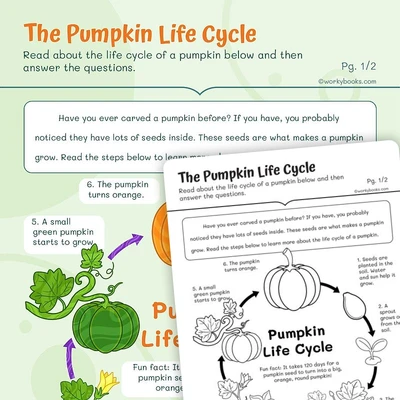
The Pumpkin Life Cycle
This informational worksheet explores the pumpkin lifecycle, guiding students through procedural steps in a scientific t...
RI.2.3RI.2.10
Blobfish Adaptations to Extreme Pressure
This engaging passage explores the fascinating world of the blobfish and its unique adaptations to the extreme pressure ...