Blue-Ringed Octopus Adaptations
Interactive passage with audio narration, comprehension questions, and printable PDF.
By completing this purchase you agree to our Terms of Use and Privacy Policy. Your subscription renews automatically until you cancel. You can cancel anytime from your account settings. All sales are final and non-refundable. Digital content is available for download in your account immediately upon purchase.
What's included
Blue-Ringed Octopus Adaptations preview and details
About this printable Blue-Ringed Octopus Adaptations science reading passage, NGSS-aligned (Grade 6)
Sample passage and quiz from Blue-Ringed Octopus Adaptations
Reading passage and comprehension quiz preview
Blue-Ringed Octopus Adaptations
Blue-Ringed Octopus Adaptations
The blue-ringed octopus is a tiny sea animal with powerful survival skills. It lives in tide pools and shallow coral reefs in Australia and the Pacific Ocean. Even though it can fit in your hand and is only as big as a golf ball, this octopus is one of the most dangerous animals in the ocean. You should always look, but never touch!
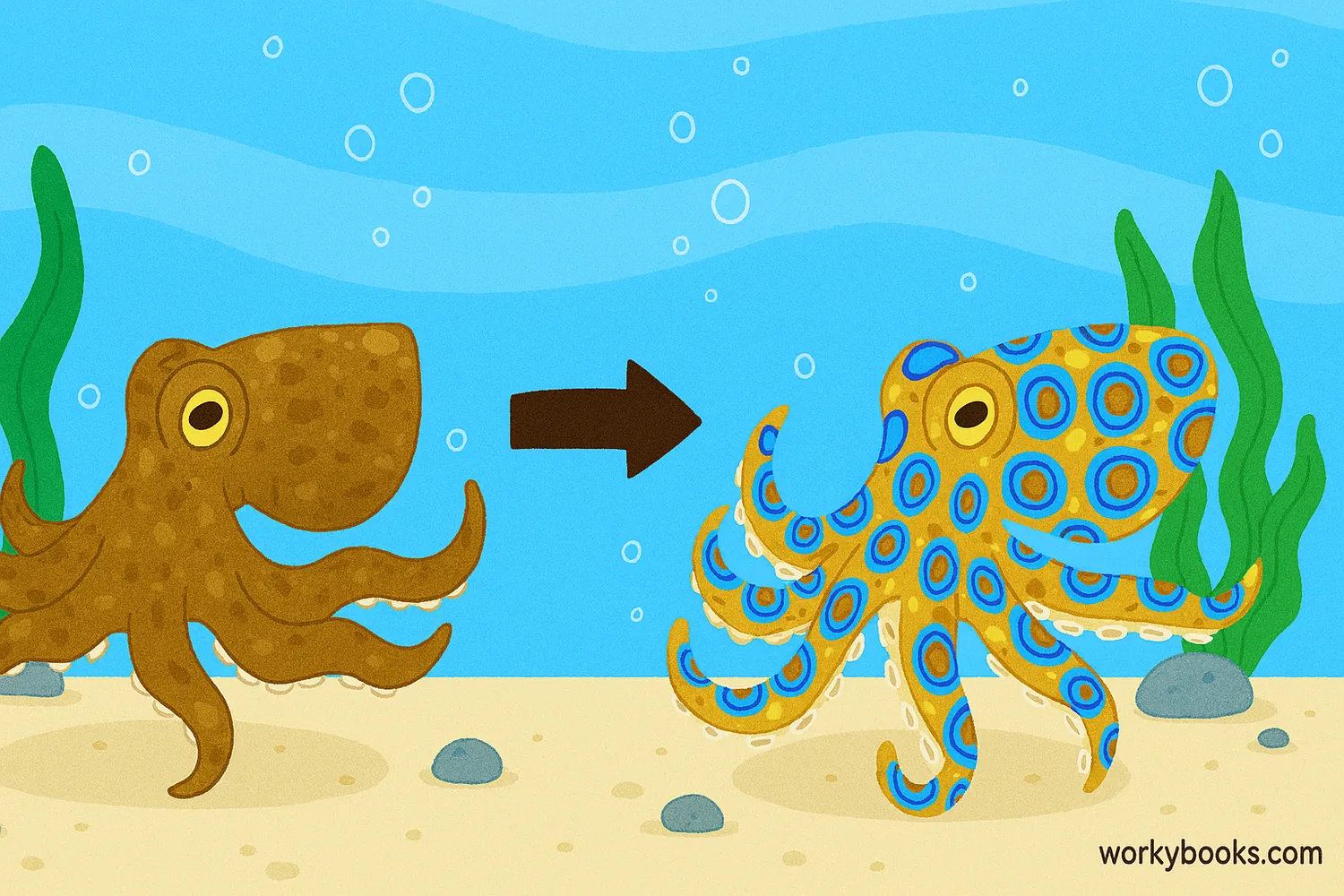
One of the blue-ringed octopus’s greatest adaptations is its amazing use of color for safety. Most of the time, its skin is tan or brown, which helps it use camouflage to blend in with rocks and coral. When it feels threatened, bright blue rings suddenly flash all over its body. These blue rings are a warning color, like nature’s danger sign, telling other animals, “Stay away!”
This octopus also has deadly venom. Its venom is strong enough to harm twenty-six people, but it only uses it for defense or when it hunts food such as crabs and shrimp. The octopus has a hard, parrot-like beak that it uses to crack open crab shells and deliver venom.
Another adaptation is its soft, flexible body. The blue-ringed octopus has no bones, so it can squeeze through tiny cracks in rocks to hide or chase prey. This helps it escape from bigger predators and sneak up on food.
Blue-ringed octopuses are like nature’s warning lights—small but flashing a big danger signal! If you’re exploring a tide pool, always look but never touch the animals you find. It’s important to respect wildlife and stay safe.
Interesting Fact: The blue-ringed octopus can change the color and texture of its skin in less than a second to hide from danger!
Comprehension quiz (8 questions)
1. What size is the blue-ringed octopus?
2. Where does the blue-ringed octopus live?
3. What does the octopus use its beak for?
4. Why does it flash blue rings?
5. How does camouflage help the octopus?
6. What should you do if you see a blue-ringed octopus?
7. The blue-ringed octopus is safe to touch. True or false?
8. What does 'venom' mean?
Perfect for the way you teach
- Build comprehension skills
- Auto-graded quiz
- Differentiated reading
- Read together at home
- Improve fluency
- Quiet reading time
- Reading curriculum support
- Independent practice
- Track Lexile growth