Bonobo Habitat and Conservation Status
Interactive passage with audio narration, comprehension questions, and printable PDF.
What's included
Bonobo Habitat and Conservation Status preview and details
About this printable Bonobo Habitat and Conservation Status science reading passage, NGSS-aligned (Grade 6)
Sample passage and quiz from Bonobo Habitat and Conservation Status
Reading passage and comprehension quiz preview
Bonobo Habitat and Conservation Status
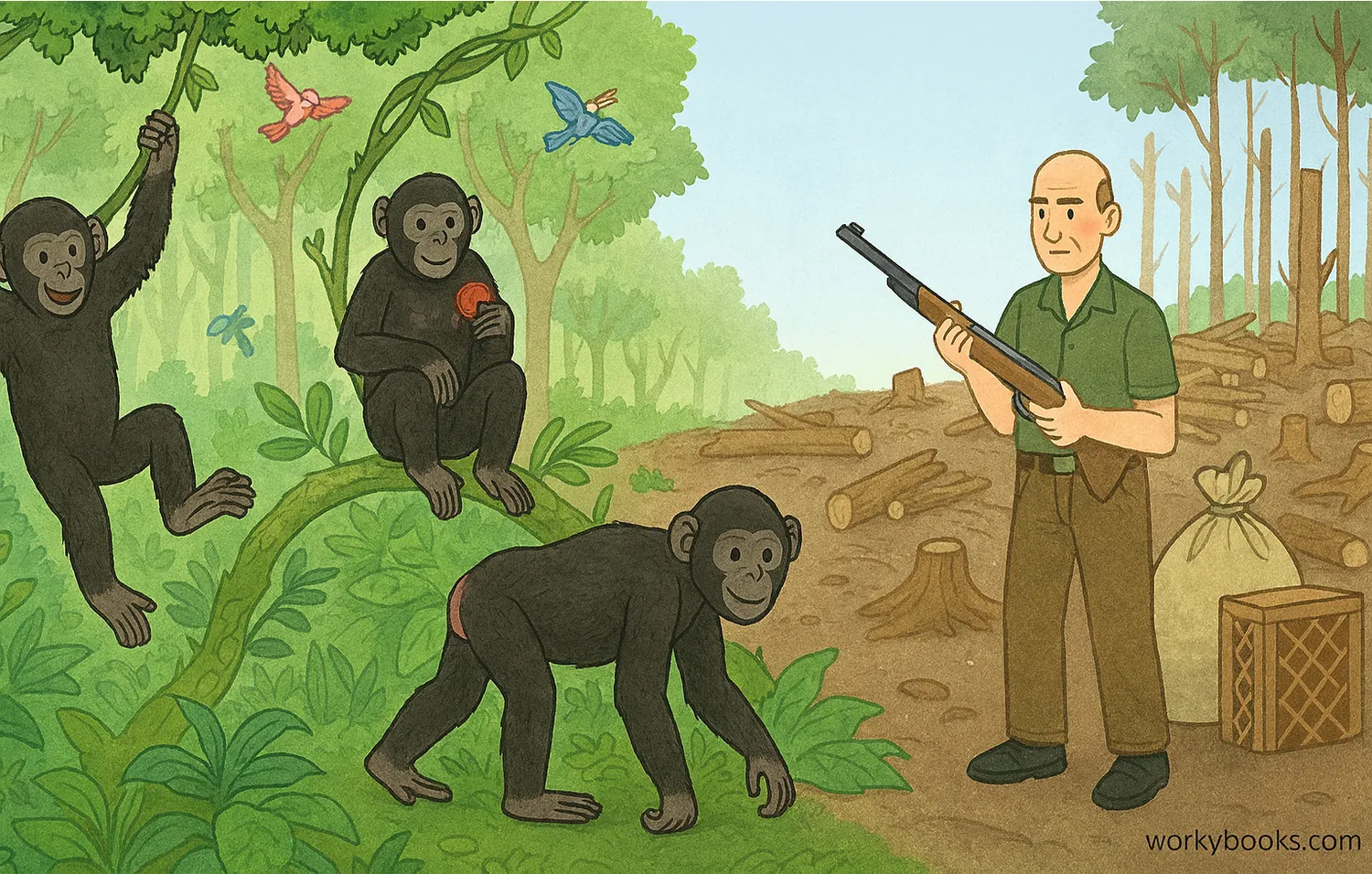
Imagine swinging through the dense, green canopy of a tropical rainforest, surrounded by the calls of exotic birds and the rustling of leaves. This is the world of the bonobo, one of our closest living relatives. Bonobos are a type of great ape, known for their peaceful nature and strong social bonds.
These incredible creatures live only in one place on Earth: the Congo Basin in Central Africa. Specifically, they call the forests south of the Congo River in the Democratic Republic of Congo their home. This region is a vital ecosystem, providing everything bonobos need to survive. Their habitat is dense, humid jungle, rich with fruit trees, leaves, and insects, which form a big part of their diet. They spend most of their lives in trees, moving gracefully through the branches, but they also travel on the ground, walking upright more often than other apes.
Sadly, bonobos are an endangered species. This means their numbers are shrinking, and they face a high risk of disappearing forever. The biggest threat to bonobos is habitat loss. Humans are cutting down parts of the rainforest for farming, logging, and building roads. This destruction takes away the bonobos' homes and their food sources. Another serious threat is poaching, which is the illegal hunting of animals. Bonobos are sometimes hunted for their meat or captured for the illegal pet trade.
Protecting bonobos is crucial for maintaining biodiversity, which is the variety of life on Earth. Many organizations are working hard to help these amazing primates. They establish protected areas where bonobos can live safely, educate local communities about conservation, and try to stop illegal hunting. By understanding the challenges bonobos face and supporting conservation efforts, humans can play a vital role in ensuring these intelligent and gentle apes thrive for future generations.
Interesting Fact: Bonobos are the only great apes where females typically hold the highest social rank.
Comprehension quiz (8 questions)
1. Where do bonobos live?
2. What is a main part of the bonobo diet?
3. Why are bonobos considered an endangered species?
4. Which human activity most directly harms bonobo habitat?
5. What does 'biodiversity' mean?
6. Why is protecting bonobos important?
7. Conservation efforts aim to increase bonobo populations.
8. If a new disease only affected bonobos, what would be the impact on the Congo Basin?
Perfect for the way you teach
- Build comprehension skills
- Auto-graded quiz
- Differentiated reading
- Read together at home
- Improve fluency
- Quiet reading time
- Reading curriculum support
- Independent practice
- Track Lexile growth