Causes and Effects of Glacial Retreat
Interactive passage with audio narration, comprehension questions, and printable PDF.
By completing this purchase you agree to our Terms of Use and Privacy Policy. Your subscription renews automatically until you cancel. You can cancel anytime from your account settings. All sales are final and non-refundable. Digital content is available for download in your account immediately upon purchase.
What's included
Causes and Effects of Glacial Retreat preview and details
About this printable Causes and Effects of Glacial Retreat science reading passage, NGSS-aligned (Grade 6)
Sample passage and quiz from Causes and Effects of Glacial Retreat
Reading passage and comprehension quiz preview
Causes and Effects of Glacial Retreat
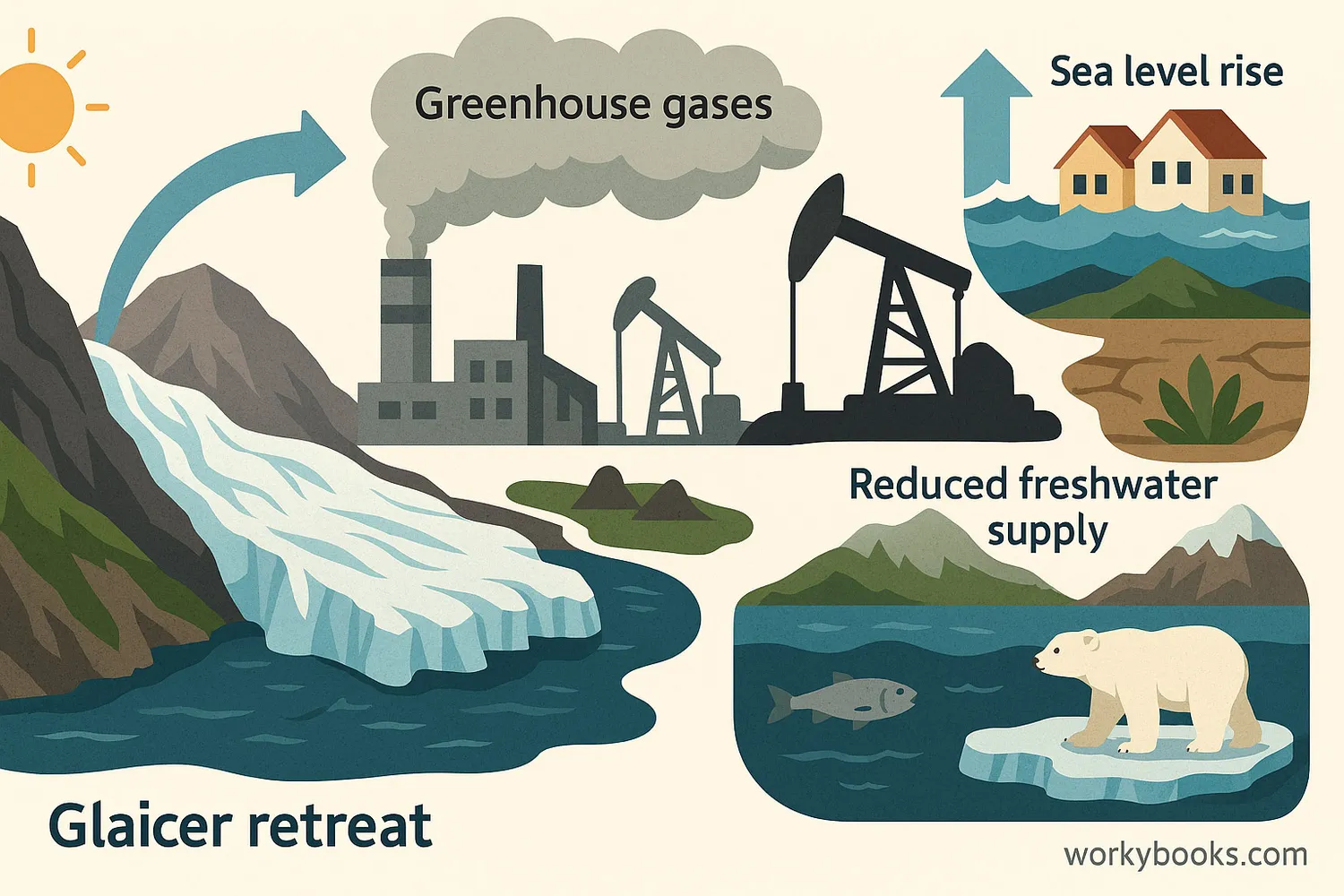
Imagine vast rivers of ice, slowly carving through mountains over thousands of years. These are glaciers, immense bodies of ice that form when snow accumulates over many years, compacting and recrystallizing. For centuries, glaciers have been a natural part of Earth’s landscape, storing much of the world's freshwater in their frozen forms. But today, these powerful ice formations are shrinking at an alarming rate, a process known as glacial retreat.
What is causing this rapid change? The main culprit is a rise in global temperatures, often called global warming. Our planet’s average temperature has been steadily increasing, especially over the last century. Scientists have gathered strong evidence showing a direct link between human activities and this warming trend. When we burn fossil fuels like coal, oil, and natural gas for energy, we release gases into the atmosphere. These are known as greenhouse gases, and they trap heat, much like the glass walls of a greenhouse trap warmth inside. This trapped heat leads to warmer air and ocean temperatures, which then cause glaciers and ice sheets to melt faster.
The effects of glacial retreat are far-reaching and impact our entire planet. One significant consequence is the rise in sea level. As glaciers melt, the water flows into oceans, causing global sea levels to creep higher. This can threaten coastal communities, leading to more frequent flooding and erosion of shorelines. Another important effect is on freshwater supplies. Many communities around the world rely on seasonal meltwater from glaciers for drinking water and irrigation. As glaciers disappear, these crucial water sources could diminish, leading to water shortages. Additionally, glacial retreat impacts ecosystems, affecting plants and animals that depend on glacial environments, such as polar bears and certain fish species. Understanding these changes helps us recognize the urgency of addressing global warming.
Interesting Fact: If all the ice on Earth's glaciers and ice sheets were to melt, global sea levels would rise by about 230 feet (70 meters), enough to submerge many major cities worldwide.
Comprehension quiz (10 questions)
1. What is glacial retreat?
2. What do scientists link to global warming?
3. Burning fossil fuels releases what?
4. What traps heat like a greenhouse?
5. How does glacial melt affect sea level?
6. What is a consequence of diminishing freshwater supplies?
7. Which animals are affected by glacial retreat?
8. The Earth's average temperature has been decreasing over the last century.
9. What does 'evidence' mean in the passage?
10. What is another term for global warming?
Perfect for the way you teach
- Build comprehension skills
- Auto-graded quiz
- Differentiated reading
- Read together at home
- Improve fluency
- Quiet reading time
- Reading curriculum support
- Independent practice
- Track Lexile growth