How Earth Science Shapes Our World — Reading Comprehension
Rate this
Premium Resource
Present
Present in classroom. No work saved
Assign
Classroom with student accounts, Track progress
Quick Play
No student accounts, assign with a link
Grades
6
7
8
Standards
MS-ESS3-1
PRINT+DIGITAL RESOURCE
This learning resource is available in interactive and printable formats. The interactive worksheet can be played online and assigned to students. The Printable PDF version can be downloaded and printed for completion by hand.
This comprehensive 600-word reading passage introduces middle school students to Earth science and its practical applications in everyday life. Aligned with NGSS standard MS-ESS3-1, the passage explains how Earth scientists study our planet's materials, systems, and processes to help humans understand natural phenomena, manage natural resources sustainably, and prepare for natural hazards. Students explore real-world examples including earthquake prediction, water resource management, and weather forecasting. The passage includes audio integration for accessibility, a simplified differentiated version for struggling readers, Spanish translations, interactive comprehension quizzes, writing activities, and graphic organizers. Key vocabulary terms are defined in context, and activities encourage students to apply scientific concepts to new situations while developing critical thinking skills about human-Earth system interactions.
CONTENT PREVIEW
Expand content preview
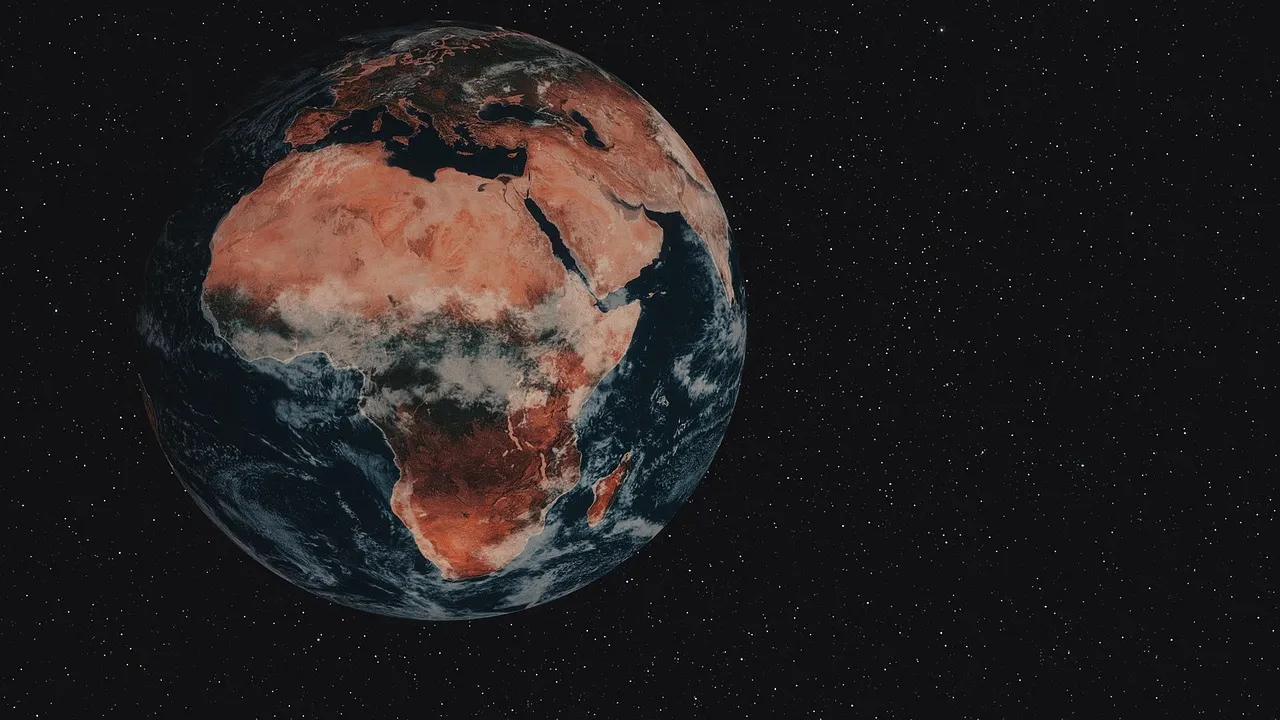
Earth scientists investigate everything from rocks and minerals to oceans, weather patterns, and earthquakes. This field of science helps humans understand how our planet works and how we can live safely and sustainably on Earth. Imge by CharlVera / Pixabay.
Earth science is the study of our planet's materials, systems, and processes. Earth scientists investigate everything from rocks and minerals to oceans, weather patterns, and earthquakes. This field of science helps humans understand how our planet works and how we can live safely and sustainably on Earth.
Earth scientists work in many different areas to help society. Geologists study rocks, minerals, and the structure of Earth's crust to locate valuable natural resources like oil, coal, and metals. These resources power our homes, build our cities, and create products we use every day. By understanding where these materials formed and how to extract them responsibly, geologists help ensure we use Earth's resources wisely without causing unnecessary environmental damage.
Another important role of Earth scientists involves preparing communities for natural hazards. Natural hazards are events like earthquakes, volcanic eruptions, hurricanes, and floods that can harm people and property. Seismologists monitor earthquake activity using special instruments that detect ground movements. While scientists cannot prevent earthquakes, they can identify areas at high risk and help communities build stronger structures. Meteorologists study weather patterns and use computer models to forecast severe storms, giving people time to evacuate or take shelter. These predictions save thousands of lives each year.
Earth scientists also help manage our planet's water supply. Hydrologists study how water moves through Earth's systems, including rivers, lakes, groundwater, and oceans. They track rainfall patterns, measure water quality, and predict droughts or floods. For example, hydrologists in California monitor snowpack in mountain ranges because melting snow provides much of the state's drinking water during summer months. This information helps water managers decide how much water communities can use without running out.
Understanding Earth's climate system has become increasingly important. Climate scientists study long-term patterns in temperature, precipitation, and atmospheric conditions. They collect data from ice cores, ocean sediments, and tree rings to understand how Earth's climate has changed over thousands of years. This research helps society make informed decisions about energy use, agriculture, and coastal development. Communities use this information to plan for rising sea levels and changing weather patterns.
Earth science connects directly to human survival and quality of life. When geologists map underground water sources, communities know where to drill wells. When volcanologists monitor active volcanoes, nearby residents receive early warnings before eruptions. When oceanographers study ocean currents, they help predict how oil spills will spread so cleanup crews can respond effectively. Every day, Earth scientists gather and analyze data that helps protect people, preserve resources, and understand our changing planet.
Interesting Fact: The United States Geological Survey operates a network of over 7,000 stream gauges across the country that measure water levels every 15 minutes, helping scientists predict floods and manage water resources in real time.
What is Earth science?
The study of outer space and planetsThe study of our planet's materials, systems, and processesThe study of animals and plants onlyThe study of human history and culture
What do geologists help locate?
Weather patterns and stormsUnderground water onlyNatural resources like oil, coal, and metalsEarthquake locations only
A natural hazard is a dangerous natural event that can harm people and property.
TrueFalse
What does the word 'forecast' mean in the context of meteorologists predicting severe storms?
To prevent something from happeningTo predict what will happen in the futureTo measure the size of somethingTo study past events
According to the passage, why do hydrologists in California monitor snowpack in mountain ranges?
Because snow causes dangerous avalanchesBecause melting snow provides drinking water during summerBecause snow affects earthquake patternsBecause snow helps predict volcanic eruptions
What do climate scientists study to understand how Earth's climate has changed over thousands of years?
Only current weather patternsIce cores, ocean sediments, and tree ringsRocks and minerals onlyEarthquake data and volcanic ash
Scientists can prevent earthquakes from happening.
TrueFalse
Based on the passage, how do weather predictions help save lives?
They stop hurricanes from formingThey give people time to evacuate or take shelter before severe stormsThey make storms less dangerousThey tell people exactly when earthquakes will happen
If an oceanographer discovers that ocean currents will carry an oil spill toward a beach, what would likely happen next?
The oil spill would disappear on its ownCleanup crews would know where to respond effectivelyThe ocean currents would change directionThe beach would be permanently closed
According to the passage, what is the main purpose of Earth science?
To explore other planets in the solar systemTo help humans understand how our planet works and live safely and sustainablyTo create new natural resourcesTo control weather and prevent all natural disasters
Perfect For:
👩🏫 Teachers
• Reading comprehension practice
• Auto-graded assessments
• Literacy skill development
👨👩👧👦 Parents
• Reading practice at home
• Comprehension improvement
• Educational reading time
🏠 Homeschoolers
• Reading curriculum support
• Independent reading practice
• Progress monitoring
Reading Features:
📖
Reading Passage
Engaging fiction or nonfiction text
❓
Comprehension Quiz
Auto-graded questions
📊
Instant Feedback
Immediate results and scoring
📄
Printable Version
Download for offline reading
🔊
Read Aloud
Voice-over with word highlighting
Reviews & Ratings
No reviews yet. Be the first to share your experience!
Related Content
How Do Solar Panels Work?
This middle school reading passage explains how solar panels work by turning sunlight into electricity. The passage desc...
MS-ESS3-1
How Do Wind Turbines Work?
This NGSS-aligned reading passage for middle school students explains how wind turbines convert the energy of moving air...
MS-ESS3-1
How Does a Hydroelectric Dam Work?
This NGSS-aligned science passage for middle school students explains how hydroelectric dams work to produce clean, rene...
MS-ESS3-1
What Is Biofuel?
This NGSS-aligned middle school science passage explains what biofuel is, how it is made, and why it is important as a c...
MS-ESS3-1
What Is Tidal Energy?
This engaging reading passage for middle school students introduces tidal energy, a form of renewable energy that uses t...
MS-ESS3-1
What Is Wave Energy?
This passage introduces middle school students to wave energy—a clean, renewable energy source that comes from the movem...
MS-ESS3-1
What Is Green Energy?
This science passage introduces middle school students to the concept of green energy—clean, renewable energy that comes...
MS-ESS3-1
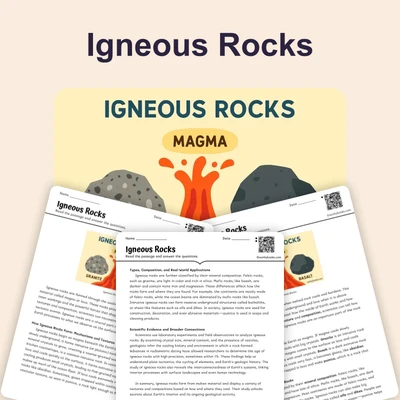
Igneous Rocks
This comprehensive passage introduces middle school students to igneous rocks, focusing on how these rocks form from mol...
MS-ESS2-1MS-ESS3-1
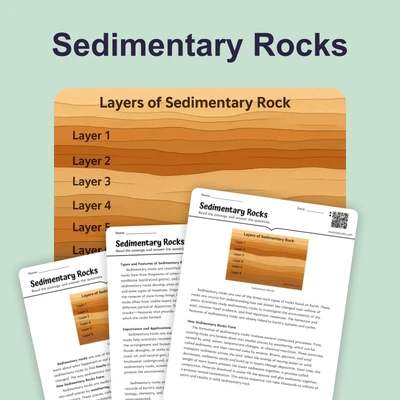
Sedimentary Rocks
This comprehensive middle school science passage introduces students to sedimentary rocks, detailing their step-by-step ...
MS-ESS2-1MS-ESS2-3MS-ESS3-1
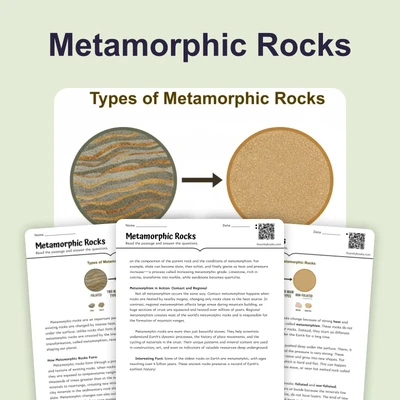
Metamorphic Rocks
This engaging middle school science passage introduces students to the fascinating world of metamorphic rocks. Aligned w...
MS-ESS2-1MS-ESS3-1
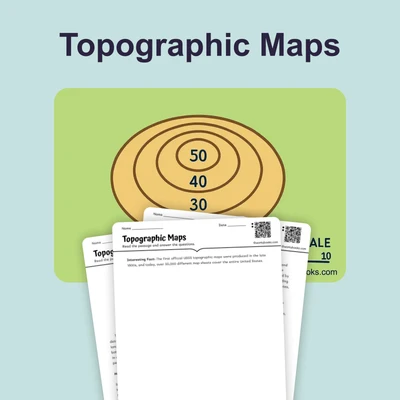
Topographic Maps
This comprehensive passage introduces middle school students to topographic maps, with a focus on how these maps represe...
MS-ESS2-2MS-ESS3-1SEP.4SEP.7
Minerals and Rocks as Resources
This middle school science passage, aligned to NGSS standards MS-ESS3-1 and MS-ESS3-4, explores the critical role that m...
MS-ESS3-1MS-ESS3-4
Benefits of Volcanic Activity
This middle school science passage explores the many positive impacts of volcanic activity, aligning with NGSS standards...
MS-ESS2-2MS-ESS3-1
Groundwater
This middle school science passage explores the essential topic of groundwater, aligned to NGSS standards MS-ESS2-4 and ...
MS-ESS2-4MS-ESS3-1
Distribution of Water on Earth
This middle school science reading passage explores the distribution of water on Earth, aligned with NGSS standards MS-E...
MS-ESS2-4MS-ESS3-1
Water as a Resource
This middle school science passage examines water as a critical resource, focusing on how it is used, managed, and conse...
MS-ESS3-1MS-ESS3-4
Water Quality
This middle school science reading passage covers the topic of water quality, aligned with NGSS standards MS-ESS3-1 and ...
MS-ESS3-1MS-ESS3-3
Why Is Uranium Found in Certain Rock Types
This informative science reading passage for middle school students (grades 6-8) explains why uranium concentrates in ce...
MS-ESS3-1
How Minerals Are Mined
This comprehensive 650-word informational science reading passage teaches middle school students (grades 6-8) about mine...
MS-ESS3-1
Why Are Resources Unevenly Distributed on Earth
This comprehensive 650-word reading passage explains why natural resources are unevenly distributed across Earth's surfa...