Collaboration Between Earth Science Branches
Interactive passage with audio narration, comprehension questions, and printable PDF.
By completing this purchase you agree to our Terms of Use and Privacy Policy. Your subscription renews automatically until you cancel. You can cancel anytime from your account settings. All sales are final and non-refundable. Digital content is available for download in your account immediately upon purchase.
What's included
Collaboration Between Earth Science Branches preview and details
About this printable Collaboration Between Earth Science Branches science reading passage, NGSS-aligned (Grades 6-8)
Sample passage and quiz from Collaboration Between Earth Science Branches
Reading passage and comprehension quiz preview
Collaboration Between Earth Science Branches
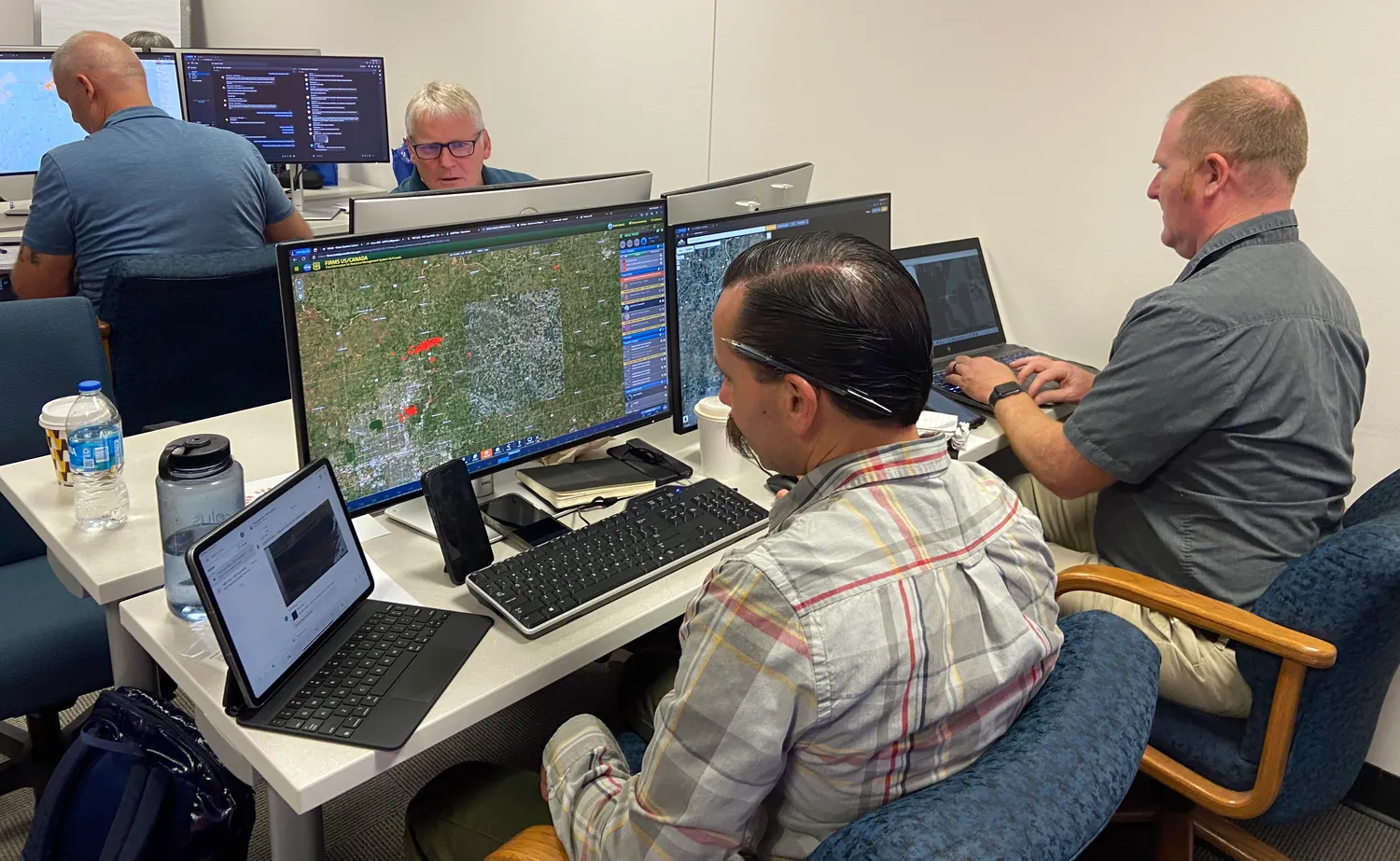
NOAA's Fire Weather Testbed (FWT) is a new innovative collaborative platform that brings together researchers, meteorologists, and fire managers to evaluate and improve fire weather forecasting tools and techniques, integrating both physical and social sciences to refine technologies before being put into operational use.. "Fire Weather Testbed Q&A Featuring Zach Tolby (NESDIS 2024-09-25 IMG 4198)" by NOAA / Wikimedia Commons
Earth science is the study of our planet and its place in the universe. This field includes four main branches: geology, oceanography, meteorology, and astronomy. Each branch focuses on different parts of Earth's systems, but scientists from these fields often work together to solve complex problems. This collaboration helps researchers understand how different Earth systems connect and influence each other.
Geologists study Earth's solid materials, including rocks, minerals, and the processes that shape the planet's surface. They examine how mountains form, why earthquakes happen, and how continents move over millions of years. Oceanographers investigate Earth's oceans, studying water movement, marine life, and how oceans affect global climate. Meteorologists focus on Earth's atmosphere and weather patterns, tracking storms and predicting climate changes. Astronomers look beyond Earth to study how our planet fits into the solar system and universe.
When scientists from different branches work together, they can tackle problems that no single field could solve alone. For example, understanding climate change requires input from all four branches. Geologists study ice cores and rock layers to learn about past climates. Oceanographers measure how warming oceans affect sea levels and weather patterns. Meteorologists track current atmospheric changes and create climate models. Astronomers examine how solar radiation and Earth's orbit influence long-term climate cycles. By combining their knowledge, these scientists build a complete picture of how Earth's climate system works.
Another example of collaboration involves predicting natural disasters like tsunamis. When an underwater earthquake occurs, geologists analyze the movement of tectonic plates that caused the quake. Oceanographers use this information to model how tsunami waves will travel across the ocean. Meteorologists contribute data about wind patterns that might affect wave height and direction. Astronomers provide information about tidal forces from the moon and sun that could make the tsunami more dangerous. This interdisciplinary approach saves lives by improving early warning systems.
Scientists also collaborate to study how human activities affect Earth's systems. When a volcanic eruption occurs, geologists examine the volcano's structure and predict future eruptions. Meteorologists track how ash clouds move through the atmosphere and affect air quality. Oceanographers study how volcanic material entering the ocean impacts marine ecosystems. Astronomers use satellite data to monitor the eruption from space and measure its global effects. This teamwork helps communities prepare for volcanic hazards and understand environmental impacts.
The collaboration between Earth science branches demonstrates an important principle: Earth's systems are interconnected. Changes in one system often affect others. Ocean currents influence weather patterns. Atmospheric conditions affect rock weathering. Solar activity impacts Earth's magnetic field. By working together and sharing data, scientists from different branches create more accurate models and better solutions to environmental challenges. This cooperative approach represents how modern science works best.
Interesting Fact: The 2004 Indian Ocean tsunami was detected by satellites operated by astronomers, analyzed by oceanographers, and its cause was explained by geologists, showing how all four branches worked together to understand a single catastrophic event.
Comprehension quiz (10 questions)
1. What are the four main branches of Earth science?
2. Which branch of Earth science studies rocks, minerals, and how mountains form?
3. What does the term 'collaboration' mean in the context of the passage?
4. What does 'interdisciplinary' mean?
5. How do scientists from different branches work together to predict tsunamis?
6. Why is collaboration between Earth science branches important for understanding climate change?
7. When a volcano erupts, which scientists use satellites to monitor the eruption from space?
8. According to the passage, what is an example of how Earth's systems are interconnected?
9. True or False: Meteorologists only study past weather patterns and cannot predict future climate changes.
10. True or False: The 2004 Indian Ocean tsunami involved collaboration from all four branches of Earth science.
Perfect for the way you teach
- Build comprehension skills
- Auto-graded quiz
- Differentiated reading
- Read together at home
- Improve fluency
- Quiet reading time
- Reading curriculum support
- Independent practice
- Track Lexile growth