Crossing the Delaware River — Reading Comprehension
Rate this
Premium Resource
Present
Present in classroom. No work saved
Assign
Classroom with student accounts, Track progress
Quick Play
No student accounts, assign with a link
Grades
3
4
5
Standards
D2.HIS.1-4.3-5RI.4.1
RI.4.2
RI.4.3
W.4.2.
PRINT+DIGITAL RESOURCE
This learning resource is available in interactive and printable formats. The interactive worksheet can be played online and assigned to students. The Printable PDF version can be downloaded and printed for completion by hand.
This engaging history reading passage explores George Washington's daring crossing of the Delaware River during the American Revolution. Students will learn about the events leading up to the surprise attack on Trenton, New Jersey, why this event was important, and how it changed the course of the war. The passage uses clear, simple sentences and explains key vocabulary, making it ideal for building literacy and history skills. Activities include an 8-question multiple-choice quiz, a thought-provoking writing activity, and a timeline summarizing the main events. A glossary helps students understand important words, while a Spanish translation supports language learners. Aligned with the C3 Framework and Common Core ELA standards, this resource also features a historic public domain image and read aloud audio to support diverse learners.
CONTENT PREVIEW
Expand content preview
Washington Crossing the Delaware by Emanuel Leutze, MMA-NYC, 1851.jpg Source: Wikimedia Commons - Emanuel Leutze
The Battle of Bunker Hill was one of the first major battles of the American Revolution. It took place on June 17, 1775, near Boston, Massachusetts. At this time, the American colonies were trying to break free from British rule. The British army was considered the best in the world, while the colonial soldiers were mostly farmers and tradesmen with little experience.
In June 1775, British troops planned to take control of the hills around Boston. The colonial leaders learned of this plan. They decided to build strong fortifications on Breed’s Hill and Bunker Hill to stop the British. At night, the colonial soldiers quietly built walls made of earth and wood. When the sun rose, the British saw the colonists’ defenses and prepared to attack.
The British soldiers marched up the hill in straight lines, wearing bright red coats. The colonial soldiers waited until the enemy was close. Their commander, Colonel William Prescott, told them, "Don’t fire until you see the whites of their eyes!" This was because the colonists had little ammunition and needed to make every shot count.
The British attacked three times. The first two times, the colonists pushed them back. The hill was filled with smoke, noise, and bravery. On the third attack, the colonists ran out of gunpowder and had to retreat. The British took the hill, but they lost over 1,000 men—much more than the colonists did.
Even though the British won the Battle of Bunker Hill, the colonists proved they could fight bravely. Their teamwork and courage inspired others to join the fight for freedom. People across the colonies now believed they had a chance to win independence from Britain.
The Battle of Bunker Hill showed that the war would be hard and costly for both sides. It gave Americans hope and showed the world their determination to be free.
Interesting Fact: Many of the colonial soldiers who fought at Bunker Hill had never been in battle before, but their actions inspired the entire nation.
When did the Battle of Bunker Hill happen?
June 17, 1775July 4, 1776May 10, 1775October 19, 1781
Where did the battle take place?
PhiladelphiaBostonNew YorkSavannah
Who led the colonial soldiers?
Colonel William PrescottGeorge WashingtonPaul RevereThomas Jefferson
Why did the colonists build fortifications?
To attack British shipsTo protect the hillsTo store foodTo hold meetings
What did the battle show colonists?
They could win independenceThey were not braveThe British were weakThey should give up
How many times did the British attack?
OneTwoThreeFour
The colonists won the battle. True or false?
TrueFalse
What does 'ammunition' mean?
Food for soldiersBullets or gunfireFlags for battleMaps of hills
Perfect For:
👩🏫 Teachers
• Reading comprehension practice
• Auto-graded assessments
• Literacy skill development
👨👩👧👦 Parents
• Reading practice at home
• Comprehension improvement
• Educational reading time
🏠 Homeschoolers
• Reading curriculum support
• Independent reading practice
• Progress monitoring
Reading Features:
📖
Reading Passage
Engaging fiction or nonfiction text
❓
Comprehension Quiz
Auto-graded questions
📊
Instant Feedback
Immediate results and scoring
📄
Printable Version
Download for offline reading
🔊
Read Aloud
Voice-over with word highlighting
Reviews & Ratings
No reviews yet. Be the first to share your experience!
Related Content
The Navajo People: Traditions and Way of Life
This engaging reading passage introduces students to the rich traditions and way of life of the Navajo people, one of th...
D2.HIS.1-4.3-5RI.4.1RI.4.4RI.4.10
World War II Begins in Europe
This engaging reading passage introduces students to the beginning of World War II in Europe. Students will learn how ev...
D2.HIS.1-4.3-5RI.4.1RI.4.3RI.4.4RI.4.10
Identify Main Idea Graphic Organizer
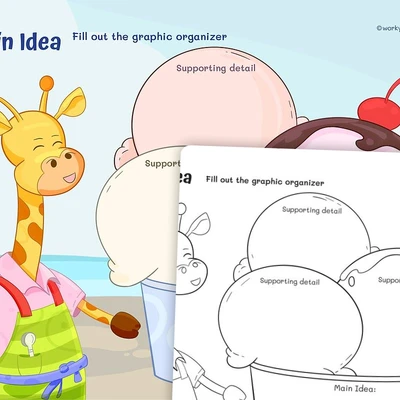
This graphic organizer on main idea includes space to write the main idea and three supporting details.
RI.1.2RI.2.2RI.3.2RI.4.2
Main Idea and Suporting Details Graphic Organizer
This graphic organizer on main idea includes space to write the main idea and three supporting details.
RI.1.2RI.2.2RI.3.2RI.4.2
Main Idea and Details Graphic Organizer
This graphic organizer on main idea includes space to write the main idea and three supporting details.
RI.1.2RI.2.2RI.3.2RI.4.2
Snorkeling & Scuba Diving
RI.2.2RI.2.6RI.2.10RF.2.4.A
The Rubik's Cube
RI.2.2RI.2.6RI.2.10RF.2.4.A
The Space Needle
Students read a passage about the history and features of Seattle's Space Needle, then answer comprehension questions to...
RI.4.2
Graphic Organizer for Main Idea
This graphic organizer on main idea includes space to write the main idea and three supporting details.
RI.1.2RI.2.2RI.3.2RI.4.2
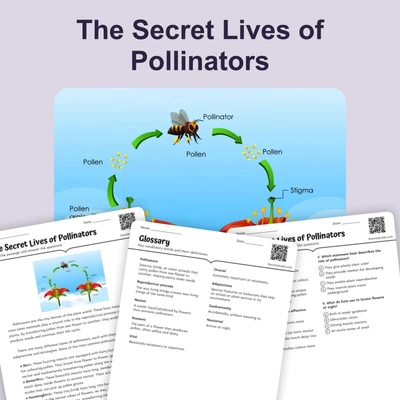
The Role of Pollinators in Nature
Learn about the fascinating world of pollinators and discover their crucial role in the reproductive process of flowerin...
RI.4.2RI.4.3RI.4.4RI.5.1
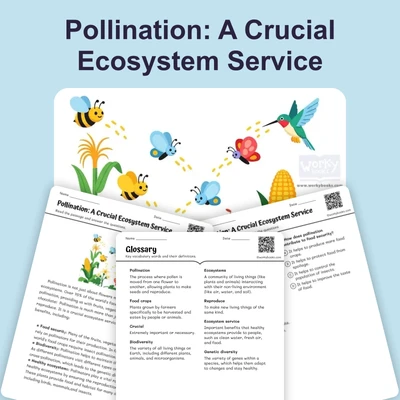
Pollination: A Crucial Ecosystem Service
Explore the vital role of pollination beyond plant reproduction, as it sustains ecosystems by ensuring food security, pr...
RI.4.2RI.4.3RI.4.4RI.5.1
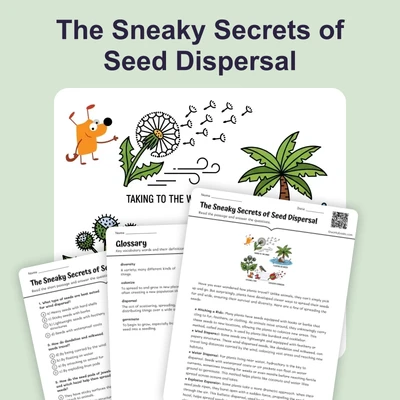
Seed Dispersal: How Plants Travel
Plants may seem stationary, but their seeds have amazing ways to travel! Explore the fascinating world of seed dispersal...
RI.4.2RI.4.3RI.4.4RI.5.1
The States of Matter: Solid
Discover the differences between solids, liquids and gases by exploring how their particles are arranged and move. This ...
RI.4.2RI.4.3RI.4.4RI.5.1
What is a Simple Machine
Discover the power of simple machines! This informational text explores how basic tools like levers, pulleys and incline...
RI.4.2RI.4.3RI.4.4RI.5.1
How Do Scientists Study Past Climates?
Students will analyze how tools like ice cores and tree rings provide scientific evidence about Earth’s historical clima...
RI.4.1RI.4.2RI.4.3.4.RI.4.74-ESS2-2
Earth Day and Types of Pollution
Earth Day is coming! Get ready to learn about pollution and test your knowledge. Click for a free reading passage and qu...
RI.4.1RI.4.2ESS3.CESS3.A
Earth Day and Green Initiatives
Celebrate Earth Day with this fun and educational activity! Students will begin by reading a short passage that explains...
RI.4.1RI.4.2ESS3.CESS3.A
The Life Cycle of a Salmon
Salmon have a remarkable life cycle that takes them from rivers to the ocean and back again. They hatch as alevin, grow ...
RI.3.1RI.4.4RI.4.2
Journey of a Sea Turtle
Sea turtles lay their eggs on beaches, and their hatchlings begin a dangerous journey to the ocean. After growing in the...