The Navajo People: Traditions and Way of Life — Reading Comprehension
Rate this
Premium Resource
Present
Present in classroom. No work saved
Assign
Classroom with student accounts, Track progress
Quick Play
No student accounts, assign with a link
Grades
3
4
5
Standards
D2.HIS.1-4.3-5RI.4.1
RI.4.4
RI.4.10
PRINT+DIGITAL RESOURCE
This learning resource is available in interactive and printable formats. The interactive worksheet can be played online and assigned to students. The Printable PDF version can be downloaded and printed for completion by hand.
This engaging reading passage introduces students to the rich traditions and way of life of the Navajo people, one of the largest Native American tribes in the United States. Students will learn about Navajo homes, called hogans, traditional weaving, and how the Navajo adapted to their environment. The passage follows a clear and chronological structure, making it easy for students to understand the historical development of Navajo culture. Key vocabulary is highlighted and explained in a glossary, supporting ELA skill-building. The passage also includes activities such as a multiple-choice quiz, writing prompts, and a timeline to reinforce comprehension and analytical thinking. Spanish translation is provided for bilingual support. This resource aligns with the C3 Framework for social studies and Common Core ELA standards, making it ideal for integrated literacy and history instruction. Read aloud audio and accessible vocabulary ensure all students can participate and succeed.
CONTENT PREVIEW
Expand content preview
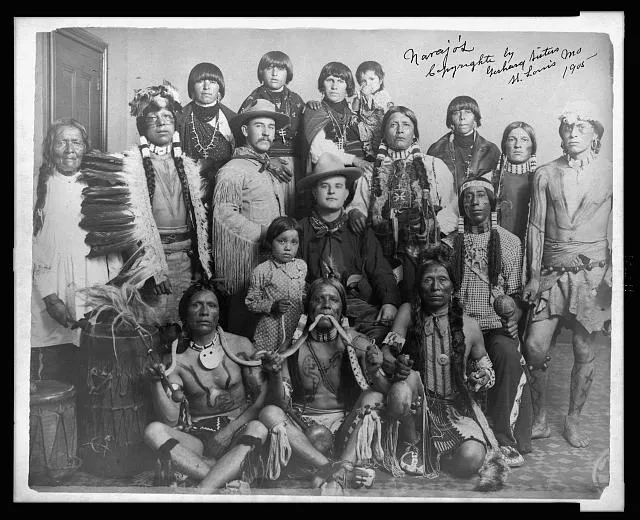
Navajos Source: Library of Congress - Gerhard Sisters
The Navajo people, also known as the Diné, are the largest Native American tribe in the United States. Their homeland covers parts of Arizona, New Mexico, and Utah. This area is called the Southwest. For hundreds of years, the Navajo have lived in this dry, beautiful land, caring for their families and honoring their traditions.
Navajo people are well known for their amazing weaving and colorful jewelry. Many families pass these skills down from parent to child. Navajo rugs are famous for their bright patterns and strong wool. Jewelry is often made with silver and turquoise, a blue-green stone found in the Southwest. These art forms are important to Navajo culture and help connect people to their history.
The Navajo have always respected the land. They believe their homeland is sacred. Their main shelter is called a hogan. A hogan is a round or six-sided house made from wood and earth. The door always faces east to greet the morning sun.
During World War II, the Navajo played a special role. The United States needed a way to send secret messages. The Navajo language was only spoken by a few people outside the tribe. This made it perfect for creating a secret code. Navajo men were chosen to become code talkers. They used their language to send and receive top-secret messages. Enemy forces could not understand the code. This helped U.S. troops stay safe and win important battles in the Pacific.
The bravery and teamwork of the Navajo code talkers are still honored today. Their story shows how a unique culture and language helped protect the country. The Navajo continue to share their traditions, teach their language, and honor their sacred land.
Interesting Fact: The Navajo code was never broken during World War II, making it one of the most successful secret codes in history!
Where do the Navajo live?
Southwest U.S.Northeast U.S.Southeast U.S.Midwest U.S.
What is a hogan?
Navajo homeType of rugFamous leaderPiece of jewelry
Which war did the code talkers help in?
World War IICivil WarRevolutionary WarVietnam War
Why was the Navajo language used as a code?
Few people spoke itIt was easy to learnIt had no wordsIt was written everywhere
How did Navajo skills help their culture?
Connected people to historyMade farming easierBuilt tall buildingsUsed only for trading
What is a sacred place?
Very important and holyNot neededA place to shopA city far away
The Navajo code was never broken. True or false?
TrueFalse
What does 'weaving' mean?
Making cloth or rugsRunning fastCooking foodBuilding houses
Perfect For:
👩🏫 Teachers
• Reading comprehension practice
• Auto-graded assessments
• Literacy skill development
👨👩👧👦 Parents
• Reading practice at home
• Comprehension improvement
• Educational reading time
🏠 Homeschoolers
• Reading curriculum support
• Independent reading practice
• Progress monitoring
Reading Features:
📖
Reading Passage
Engaging fiction or nonfiction text
❓
Comprehension Quiz
Auto-graded questions
📊
Instant Feedback
Immediate results and scoring
📄
Printable Version
Download for offline reading
🔊
Read Aloud
Voice-over with word highlighting
Reviews & Ratings
No reviews yet. Be the first to share your experience!
Related Content
Crossing the Delaware River
This engaging history reading passage explores George Washington's daring crossing of the Delaware River during the Amer...
D2.HIS.1-4.3-5RI.4.1RI.4.2RI.4.3W.4.2.
World War II Begins in Europe
This engaging reading passage introduces students to the beginning of World War II in Europe. Students will learn how ev...
D2.HIS.1-4.3-5RI.4.1RI.4.3RI.4.4RI.4.10
Snorkeling & Scuba Diving
RI.2.2RI.2.6RI.2.10RF.2.4.A
Informational Text —Healthy Teeth and Gums
RI.4.10RI.4.3RF.4.4RF.4.4.A
Informational Text —Migratory Birds
Engage young minds with this worksheet that delves into the wonders of migratory birds. Learn about their extraordinary ...
RI.4.10RI.4.3RF.4.4RF.4.4.A
The Rubik's Cube
RI.2.2RI.2.6RI.2.10RF.2.4.A
Informational Text —All About Dentists
Students read an informational text explaining what dentists do and how they are trained. Aligned to RI.4.3-2
RI.4.10RI.4.3RF.4.4RF.4.4.A
Structures on the Ocean Floor
ESS2.B4-ESS2-2RI.4.10RI.4.7
Desert Jerboa
The Desert Jerboa is a small rodent that thrives in the desert environment. It has long back legs that enable it to jump...
RI.3.1RI.4.4RI.4.10
The Cherokee Nation: History and Culture
This reading passage explores the rich history and culture of the Cherokee Nation, one of the largest Native American tr...
D2.HIS.2.3-5D2.HIS.14.3-5RI.4.3RI.4.4RI.4.10
The 13 Original Colonies: An Overview
This engaging U.S. history reading passage introduces students to the 13 original colonies. It presents the story of how...
D2.HIS.1-4.3-5RI.4.3RI.4.4RI.4.10
The French and Indian War
This educational history reading passage explores the French and Indian War, a major conflict in North America before th...
D2.HIS.1-4.3-5RI.4.1RI.4.3RI.4.4
Paul Revere's Midnight Ride
This U.S. History reading passage explores the famous Midnight Ride of Paul Revere, a key event in the American Revoluti...
D2.HIS.1-4.3-5RI.4.3RI.4.4RI.4.10
The Treaty of Paris 1783
This passage introduces students to the Treaty of Paris 1783, the important agreement that officially ended the American...
D2.HIS.1-4.3-5RI.4.3RI.4.4RI.4.10
Boomtowns Spring Up Out West
This engaging passage explores the exciting rise of boomtowns in the American West during the 1800s, focusing on the Gol...
D2.HIS.2.3-5D2.HIS.14.3-5RI.4.3RI.4.4
Stagecoaches and the Pony Express
This engaging U.S. history reading passage introduces students to the exciting era of stagecoaches and the Pony Express ...
D2.HIS.1-6.3-5RI.4.3RI.4.4RI.4.10
Life as a Union or Confederate Soldier
This engaging history reading passage explores the daily life of Union and Confederate soldiers during the American Civi...
D2.HIS.1-5.3-5RI.4.3RI.4.4RI.4.10
The Civil War Finally Ends
This engaging reading passage explores the end of the Civil War, focusing on the events of 1865 when General Robert E. L...
D2.HIS.1-6.3-5RI.4.3RI.4.4RI.4.10
Franklin D. Roosevelt and the New Deal
This engaging history reading passage explores the life and leadership of Franklin D. Roosevelt and his creation of the ...