Dangers of the Blue-Ringed Octopus — Reading Comprehension
Rate this
Premium Resource
Present
Present in classroom. No work saved
Assign
Classroom with student accounts, Track progress
Quick Play
No student accounts, assign with a link
Grades
6
PRINT+DIGITAL RESOURCE
This learning resource is available in interactive and printable formats. The interactive worksheet can be played online and assigned to students. The Printable PDF version can be downloaded and printed for completion by hand.
This engaging reading passage, perfect for 5th graders, delves into the fascinating and dangerous world of the blue-ringed octopus. Students will learn about this tiny creature's powerful venom, an internal structure that functions for both offense and defense, aligning with NGSS standard LS1.A: Structure and Function. The passage defines key terms like 'venom' and 'predator,' making complex biological concepts accessible. It also covers the octopus's warning signs and the effects of its neurotoxin, tetrodotoxin, on humans. This audio-integrated content helps students understand how organisms use their structures for survival, providing a captivating look at marine life safety and the unique adaptations of ocean animals. SEO keywords like 'blue-ringed octopus venom' and 'dangerous marine animals' are naturally included.
CONTENT PREVIEW
Expand content preview
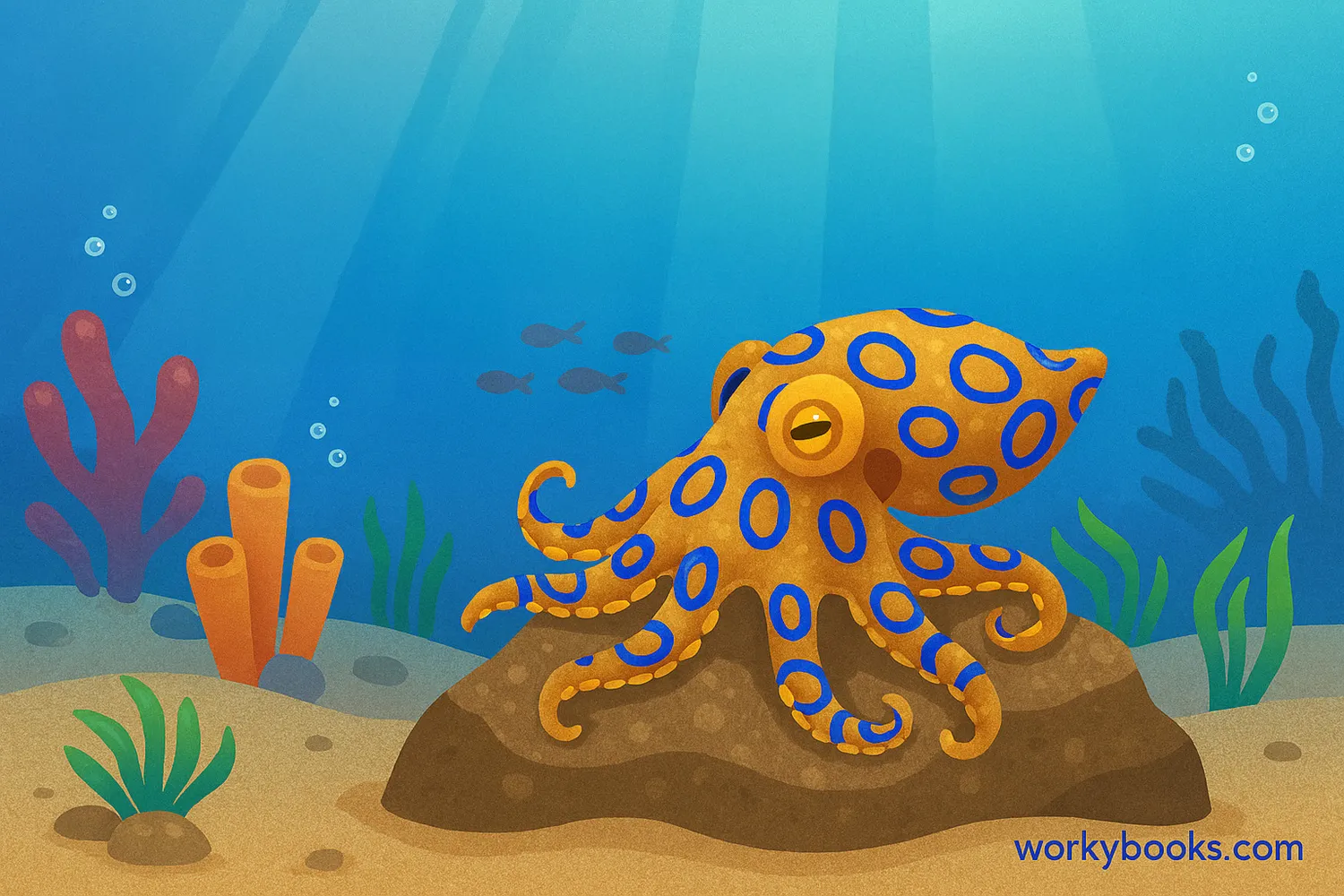
Blue-ringed octopus warns with glowing rings; venom can cause paralysis and breathing issues.
Meet the Blue-Ringed Octopus
The blue-ringed octopus is one of the most venomous animals in the world. Even though it is smaller than a golf ball, this sea creature can be extremely dangerous. The blue-ringed octopus lives in tide pools and shallow reefs in the Pacific and Indian Oceans, especially near Australia.
Warning Colors: Nature’s Danger Sign
Normally, the blue-ringed octopus is camouflaged with tan or yellowish skin. But when it feels threatened, about 60 bright blue rings suddenly pulse and glow all over its body. These blue rings act like nature’s warning lights, telling everyone, “Stay away or else!” This is called warning coloration.
Venom and Its Effects
The blue-ringed octopus produces a poison called tetrodotoxin, the same deadly venom found in pufferfish. One tiny octopus has enough venom to affect 26 adults! Its bite is very small and often painless, so a person might not even know they have been bitten. The venom can cause paralysis—which means the victim’s muscles stop working, making it hard to breathe. There is no antidote for this venom. Doctors can only help by giving the person life support until the venom wears off.
Where and When Do Bites Happen?
Bites usually happen when people accidentally step on the octopus, pick it up, or poke it. The blue-ringed octopus is shy and only bites to protect itself. It does not attack unless it feels threatened.
Staying Safe
To stay safe, never touch or pick up small octopuses. Always look before reaching into crevices in tide pools. Shuffle your feet when walking in shallow water, and always admire sea life from a safe distance.
What Do They Eat?
The blue-ringed octopus eats crabs and shrimp. It paralyzes its prey with venom before eating, just like a tiny supervillain with flashing blue warning lights!
Interesting Fact: The blue-ringed octopus is so small it can fit in your palm, but it carries enough venom to put many adults in danger.
What is a blue-ringed octopus?
A tiny, venomous sea animalA large whaleA kind of crabA harmless jellyfish
What does the octopus eat?
Seaweed and plantsCrabs and shrimpFish and turtlesRocks and sand
Where do blue-ringed octopuses live?
In desertsIn tide pools and reefsIn the rainforestOn mountain tops
Why do its blue rings glow?
To find foodTo warn others of dangerTo sleep betterTo blend in with rocks
How can you stay safe near tide pools?
Touch all sea animalsPick up small octopusesLook and shuffle your feetSwim far from shore
What happens after someone is bitten?
They turn blueThey get paralysisThey grow biggerThey become hungry
The octopus bites only to defend itself.
TrueFalse
What does 'venomous' mean?
Can make poisonCan swim fastHas many legsChanges color
Perfect For:
👩🏫 Teachers
• Reading comprehension practice
• Auto-graded assessments
• Literacy skill development
👨👩👧👦 Parents
• Reading practice at home
• Comprehension improvement
• Educational reading time
🏠 Homeschoolers
• Reading curriculum support
• Independent reading practice
• Progress monitoring
Reading Features:
📖
Reading Passage
Engaging fiction or nonfiction text
❓
Comprehension Quiz
Auto-graded questions
📊
Instant Feedback
Immediate results and scoring
📄
Printable Version
Download for offline reading
🔊
Read Aloud
Voice-over with word highlighting
Reviews & Ratings
No reviews yet. Be the first to share your experience!
Related Content
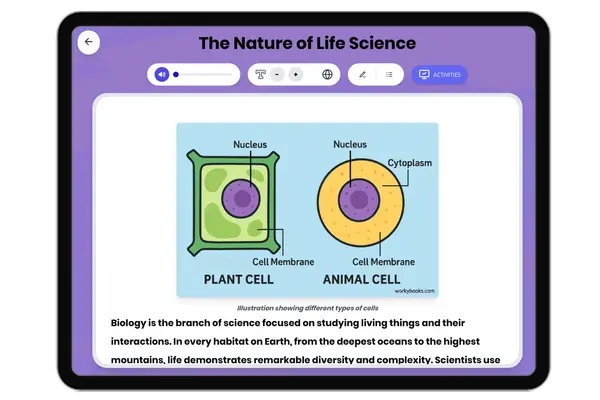
The Nature of Life Science
This passage, aligned with NGSS MS-LS1-1, introduces students in grades 6-8 to the foundational concepts of life science...
MS-LS1-1
Science Vocabulary
This worksheet on domain-specific words will help students learn some science vocabulary. Students will be asked to matc...
L.3.6L.3.4.A
The Science of Hibernation
This educational module, featuring an audio-integrated reading passage titled 'The Science of Hibernation,' is designed ...
Simple Machines Science Report
This science writing task requires students to clearly explain how three simple machines work using precise domain-speci...
W.5.4
Adaptation
This engaging middle school science passage explores adaptation, focusing on how inherited traits enable organisms to su...
MS-LS4-4MS-LS4-6
Desert Rain Frog Behavioral Adaptations
Dive into the fascinating world of the Desert Rain Frog and discover its incredible unique adaptations for survival in a...
Animal Adaptations Word Sort
This engaging word sort activity helps students understand the difference between physical and behavioral adaptations in...
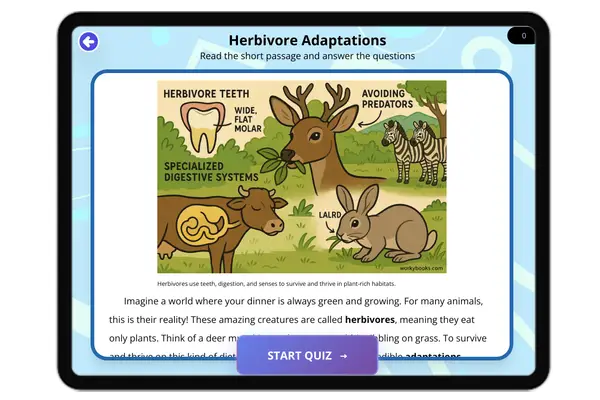
Herbivore Adaptations
This engaging reading passage, integrated with audio, delves into the fascinating world of herbivore adaptations. Studen...
Ocean Animal Adaptations
Students will read a passage that provides information about various adaptations that marine animals have developed to t...
W.4.9.B
Early Life Forms and Their Adaptations
This educational passage focuses on early life forms and their basic adaptations, supporting NGSS standard 3-LS4-2 for e...
RI.3.3RI.4.3RI.5.33-LS4-2
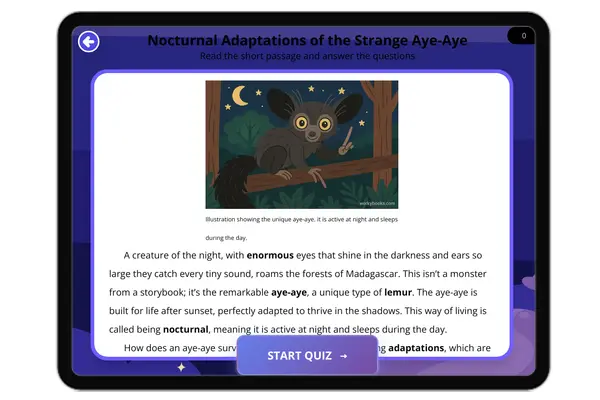
Nocturnal Adaptations of the Strange Aye-Aye
This engaging reading passage, integrated with audio, takes grade 5 students on a journey to discover the fascinating no...
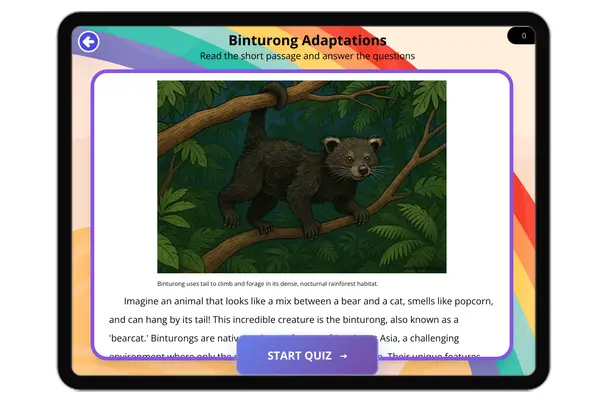
Binturong Adaptations
This engaging, audio-integrated reading passage, 'Binturong Adaptations,' for Grade 6 students delves into the fascinati...
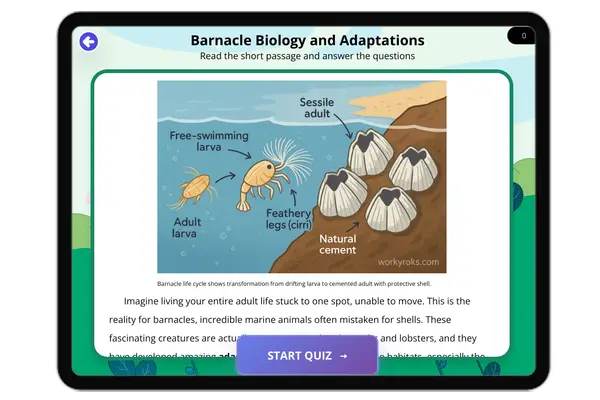
Barnacle Biology and Adaptations
Dive into the intriguing world of barnacles with this engaging Grade 6 reading passage. Students will learn about these ...
Whale Blubber: Function and Adaptation
This engaging, audio-integrated reading passage, 'Whale Blubber Function and Adaptation,' introduces young learners to t...
Mountain Animal Adaptations
This reading comprehension worksheet focuses on the topic of animal adaptations for survival in mountainous environments...
W.4.9.B
Amur Leopard Adaptations
This engaging, audio-integrated reading passage, 'Amur Leopard Adaptations,' is designed for Grade 6 science students. I...
Climate Zone Adaptations Word Sort
This word sort activity examines how plants and animals adapt to different climate conditions. Students sort 12 differen...
Plant Adaptations for Survival
This NGSS-aligned word sort activity, suitable for kindergarten, focuses on plant survival adaptations, helping students...
K-LS1-1
The Pumpkin Life Cycle
This informational worksheet explores the pumpkin lifecycle, guiding students through procedural steps in a scientific t...
RI.2.3RI.2.10
What Is Earth Science?
This engaging middle school science passage introduces students to the field of Earth science, aligning with NGSS standa...