Desert Adaptations for Water Conservation
Interactive passage with audio narration, comprehension questions, and printable PDF.
What's included
Desert Adaptations for Water Conservation preview and details
About this printable Desert Adaptations for Water Conservation science reading passage, NGSS-aligned (Grade 6)
Sample passage and quiz from Desert Adaptations for Water Conservation
Reading passage and comprehension quiz preview
Desert Adaptations for Water Conservation
Imagine a place where rain rarely falls, and the sun beats down relentlessly. This is the desert, one of Earth's harshest environments. For anything to survive here, it must be an expert in water conservation. Organisms in the desert face extreme challenges because water, an essential abiotic resource, is scarce. Their very survival and growth depend on how well they can find, store, and conserve this precious resource.
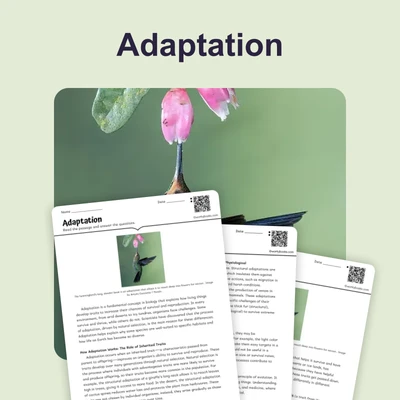
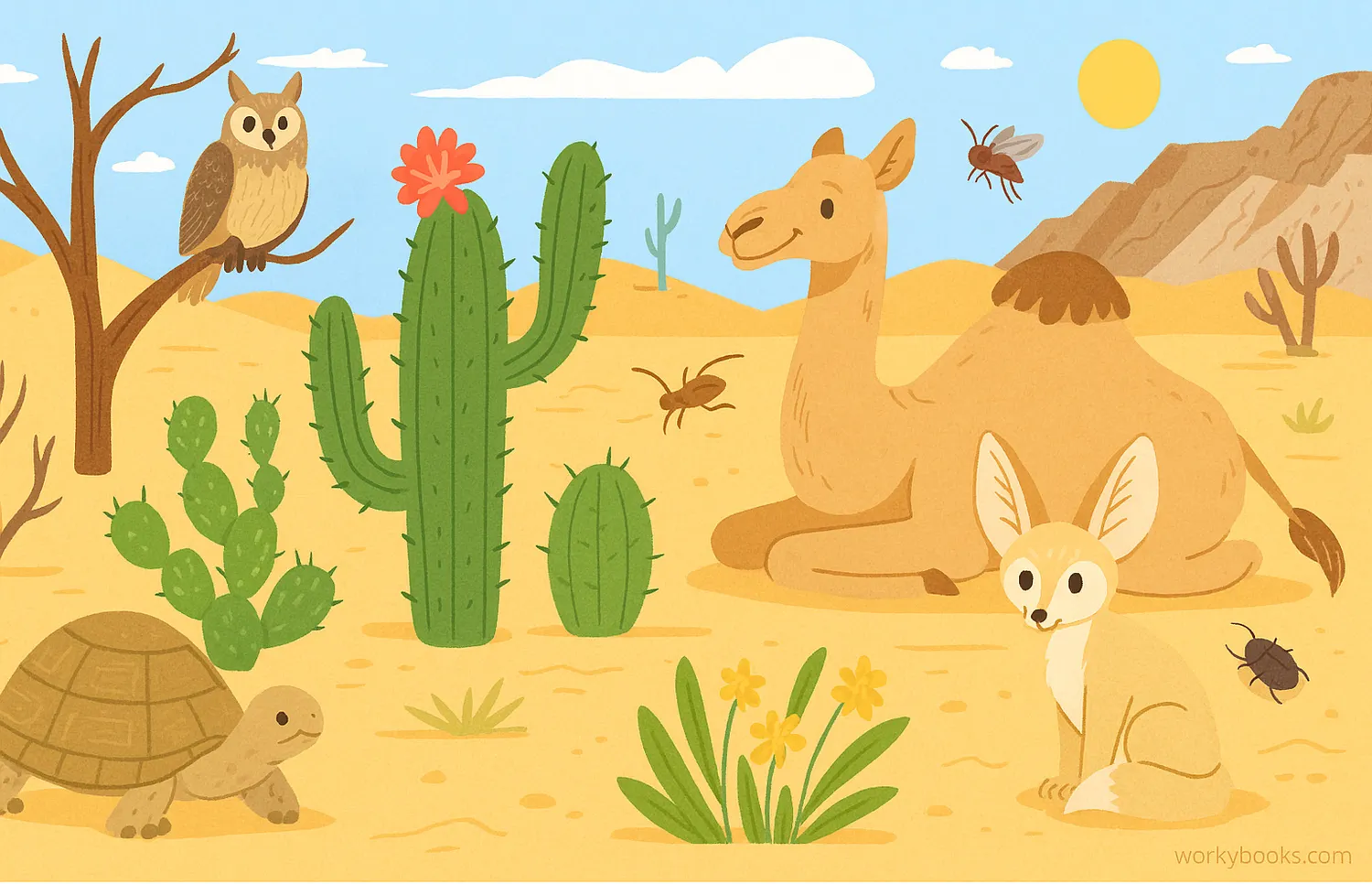
Desert plants have developed incredible ways to cope. Many, like cacti, are succulents. This means they have thick, fleshy stems or leaves that can store large amounts of water, much like a natural sponge. Their waxy skin helps to prevent water from evaporating into the dry air. Other desert plants have very long roots that reach deep into the ground to find underground water. Some plants even have tiny leaves or no leaves at all, reducing the surface area where water can be lost. Another amazing adaptation is growing quickly after a rare rain, producing seeds, and then dying. Their seeds then lie dormant until the next rainfall.
Animals in the desert are just as clever. The fennec fox, for example, is nocturnal, meaning it comes out at night when temperatures are much cooler, avoiding the intense daytime heat. Many desert animals get most of their water from the food they eat, such as plants or other animals. The camel is famous for its hump, which stores fat that can be metabolized for energy and produces water as a byproduct. Desert tortoises can store water in their bladders. Some insects and small mammals can even absorb moisture from the air or from dew.
These remarkable adaptations show how life finds a way, even in the most challenging conditions. Every living thing in the desert, from the smallest insect to the largest cactus, plays a role in a delicate ecosystem, demonstrating complex interdependent relationships centered around the limited availability of water.
Interesting Fact: Some desert plants have special pores, called stomata, that open only at night to collect carbon dioxide, minimizing water loss during the day.
Comprehension quiz (10 questions)
1. Which is an abiotic resource?
2. What do succulents store?
3. Why do desert plants often have waxy skin?
4. How do some desert animals avoid heat?
5. How does a camel's hump help?
6. What happens to dormant seeds?
7. Why are desert organisms expert in water conservation?
8. What is the main idea of the passage?
9. The fennec fox being nocturnal is an example of an adaptation.
10. What is the best definition for 'dormant' as used in the passage?
Perfect for the way you teach
- Build comprehension skills
- Auto-graded quiz
- Differentiated reading
- Read together at home
- Improve fluency
- Quiet reading time
- Reading curriculum support
- Independent practice
- Track Lexile growth