This comprehensive history reading passage explores how the environment shaped the migration and development of ancient civilizations. Students will learn about the role of geography, climate, and natural resources in influencing human movement, settlement patterns, and adaptation strategies. Using examples from ancient Mesopotamia, Egypt, and the Bantu migrations, the passage highlights cause-and-effect relationships and the significance of environmental factors in shaping societies. The resource includes a glossary, a Spanish translation, a simplified version for differentiated learning, multiple-choice and writing activities, graphic organizers, and a timeline of key developments. The passage and activities align with CA HSS 6.1.1 and CCSS RI.6.3 standards, making it ideal for classroom instruction. With read aloud audio and Spanish translation, this resource supports multilingual learners and helps students analyze history through evidence, causation, and the impact of geography.
Written by Workybooks TeamPublished by Workybooks
Preview
Sample passage and quiz content
CONTENT PREVIEW
Expand content preview
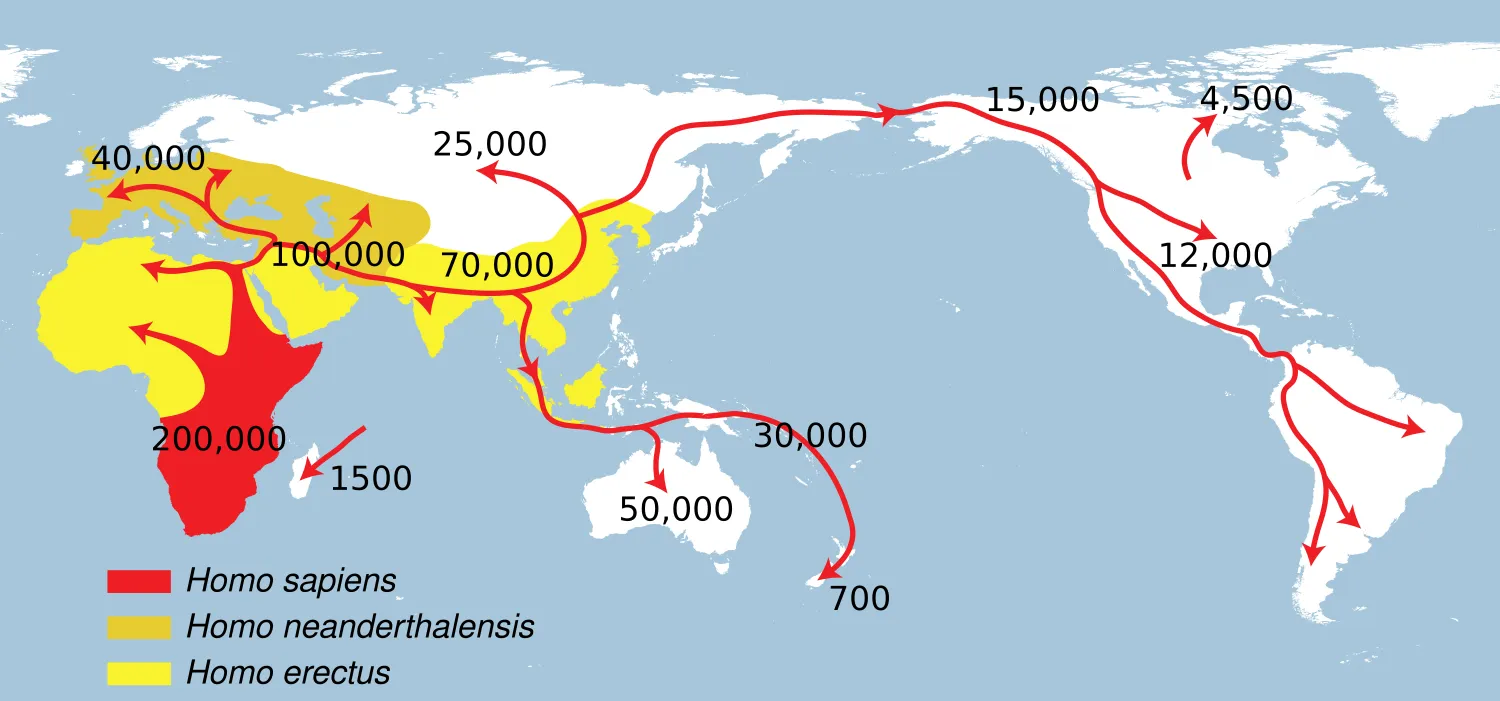
"Spread of Homo sapiens" by NordNordWest / Source: Wikimedia Commons (Public domain).
Migration in ancient times was closely connected to the environment. People moved from one place to another in search of better living conditions, often responding to the challenges and opportunities presented by the land, water, and climate. The physical geography of a region—such as rivers, mountains, and deserts—shaped the paths people took and the places where they settled.
One major example of environment-driven migration is found in the rise of early river valley civilizations. In Mesopotamia, between the Tigris and Euphrates Rivers around 3500 BCE, people settled due to the rich, fertile soil created by annual flooding. Archaeological evidence, such as ancient irrigation canals, shows how these early communities adapted to their environment. Similarly, ancient Egyptians established their civilization along the Nile River. The Nile’s predictable floods provided water for farming and created a regular food supply, allowing large populations to thrive. Ancient records, like the Egyptian Book of the Dead, even refer to the importance of the Nile in daily life and survival.
In contrast, harsh environments sometimes forced people to leave their homelands. The Sahara Desert, which became much drier around 3000 BCE, pushed groups like the Bantu-speaking peoples to migrate south and east in Africa. Archaeological findings, including pottery and iron tools, trace the paths of the Bantu migrations across the continent. These migrations spread new farming techniques and languages, which had a lasting impact on the cultures of sub-Saharan Africa.
Environmental factors not only influenced where people moved but also how they lived. Ancient people learned to adapt by developing new technologies, such as irrigation systems to control water flow or building homes from local materials. Social hierarchies often changed as new groups arrived in an area or when resources became scarce. For example, the growth of city-states in Mesopotamia led to the rise of powerful rulers who controlled land and water. Over time, human migration and adaptation to the environment played a key role in shaping the cultures and structures of ancient civilizations.
Understanding how the environment influenced ancient migration helps us see the strong connection between geography and human history. It shows how people’s choices and survival were deeply linked to their surroundings. This theme of adaptation and movement continues throughout history, influencing societies even today.
Interesting Fact: Some scholars believe that the first written maps were created by ancient Mesopotamians to keep track of farmland and irrigation channels.
Which river helped Egyptian civilization?
Nile RiverAmazon RiverYellow RiverMississippi River
What caused Bantu migrations?
Drier Sahara DesertVolcano eruptionNew language lawsGold discoveries
What did Mesopotamians build for farming?
Irrigation canalsStone pyramidsShipsCastles
How did the environment affect migration?
Created paths and barriersDid not matterMade people stayOnly affected animals
Why did people adapt technology?
To survive new environmentsTo make artFor funTo build temples
How did social hierarchy change?
New groups arrivedEnvironment was perfectNo resourcesEveryone was equal
The Sahara became drier around 3000 BCE.
TrueFalse
What does 'adapt' mean?
Change to surviveMove awayBuild pyramidsWrite stories
Who it's for
Perfect for the way you teach
Teachers
Build comprehension skills
Auto-graded quiz
Differentiated reading
Parents
Read together at home
Improve fluency
Quiet reading time
Homeschoolers
Reading curriculum support
Independent practice
Track Lexile growth
Topics
ancient migrationenvironmentgeographycivilizationadaptationancient historyreading passageSpanish translation
Reviews & Ratings
No reviews yet. Be the first to share your experience!
More reading you might love
19 more
Neanderthals and Denisovans
This comprehensive history reading passage explores the fascinating story of Neanderthals, Denisovans, and other ancient...
CA HSS 6.1.1TEKS 6.2BCCSS.RH.6-8.1CCSS.RH.6-8.2
Discovery of Fire
This history reading passage explores the revolutionary impact of fire on early human societies. Students will learn how...
CA HSS 6.1.1CCSS.RH.6-8.1CCSS.RH.6-8.2CCSS.RH.6-8.4
Out of Africa: First Migration
This comprehensive history reading passage explores the Out of Africa movement and how early humans migrated across cont...
CA HSS 6.1.1CCSS RH.6-8.1RH.6-8.2RH.6-8.4
Tools of the Stone Age
Explore the world of Paleolithic spearheads and bone tools in this detailed ancient history reading passage. Learn how e...
CA HSS 6.1.1CCSS.RH.6-8.1CCSS.RH.6-8.2CCSS.WHST.6-8.2
How Pottery Changed Daily Life
This engaging history reading passage explores how early humans invented pottery to solve the problem of long-term food ...
CA HSS 6.1.1CCSS RH.6-8.1CCSS RH.6-8.4
First Farming Villages
This passage explores how the transition from hunter-gatherer societies to Neolithic villages marked a turning point in ...
CA HSS 6.1.1CCSS.RI.6.1CCSS.RI.6.2
Introduction to the Paleolithic Age
This engaging passage explores the lives and achievements of ancient humans during the Paleolithic Age, focusing on thei...
CA HSS 6.1.1CCSS RH.6-8.1CCSS RH.6-8.2CCSS RH.6-8.4
Early Humans Settle Europe and Asia
This passage explores the arrival of early humans in Europe and Asia around 40,000 BCE, highlighting their migration, ad...
CA HSS 6.1.1CCSS RH.6-8.1CCSS RH.6-8.2CCSS RH.6-8.4
From Nomads to Farmers
This engaging passage explores the two major ways of life practiced by early humans: nomadic hunter-gathering and settle...
CA HSS 6.1.1CCSS RH.6-8.2
Stone Tools and Evidence
This engaging passage explores the significance of ancient stone tools and their role in understanding early human histo...
CA HSS 6.1.1CCSS.RI.6.1CCSS.RI.6.4
Stone Age Life Adaptation
This passage explores the ways Paleolithic humans adapted to warm climates, focusing on clothing, shelter, food, and wat...
CA HSS 6.1.1CCSS.RI.6.1CCSS.RI.6.4CCSS.W.6.2
Cyclones and Anticyclones: A Comparison
Cyclones are low-pressure systems that bring stormy weather, while anticyclones are high-pressure systems that bring cle...
7.RI.7.1RI.5.3RI.5.5RI.6.9
Cold Fronts and Warm Fronts: A Comparison
Cold fronts bring thunderstorms and cooler temperatures, while warm fronts bring light rain and warmer temperatures. Bot...
7.RI.7.3RI.5.3RI.5.5RI.6.9
The Great Pacific Garbage Patch
The Great Pacific Garbage Patch is a massive collection of plastic waste in the North Pacific Ocean. It harms marine lif...
RI.5.3RI.6.3RI.7.3
Surface Water Runoff
Surface water runoff replenishes rivers and lakes but can cause flooding and pollution. Solutions like rain gardens and ...
RI.5.3RI.6.3RI.7.3
Freshwater and Its Sources
Freshwater is a limited resource, with most stored in glaciers and aquifers. Rivers, lakes, and groundwater are key sour...
RI.5.3RI.6.3RI.7.3
Runoff from Precipitation
Runoff from precipitation replenishes rivers and lakes but can cause flooding and pollution. Solutions like rain gardens...
RI.5.3RI.6.3RI.7.3
Large Streams of Moving Water
Large streams of moving water, like rivers and creeks, shape landscapes, support ecosystems, and provide freshwater for ...
RI.5.3RI.6.3RI.7.3
What is Transpiration
Transpiration is the process by which plants release water vapor into the atmosphere. It cools plants, contributes to hu...