Stone Age Life Adaptation
Interactive passage with audio narration, comprehension questions, and printable PDF.
By completing this purchase you agree to our Terms of Use and Privacy Policy. Your subscription renews automatically until you cancel. You can cancel anytime from your account settings. All sales are final and non-refundable. Digital content is available for download in your account immediately upon purchase.
What's included
Part of this bundle

Stone Age Life Adaptation preview and details
About this printable Stone Age Life Adaptation reading passage (Grades 6-8)
Sample passage and quiz from Stone Age Life Adaptation
Reading passage and comprehension quiz preview
Stone Age Life Adaptation
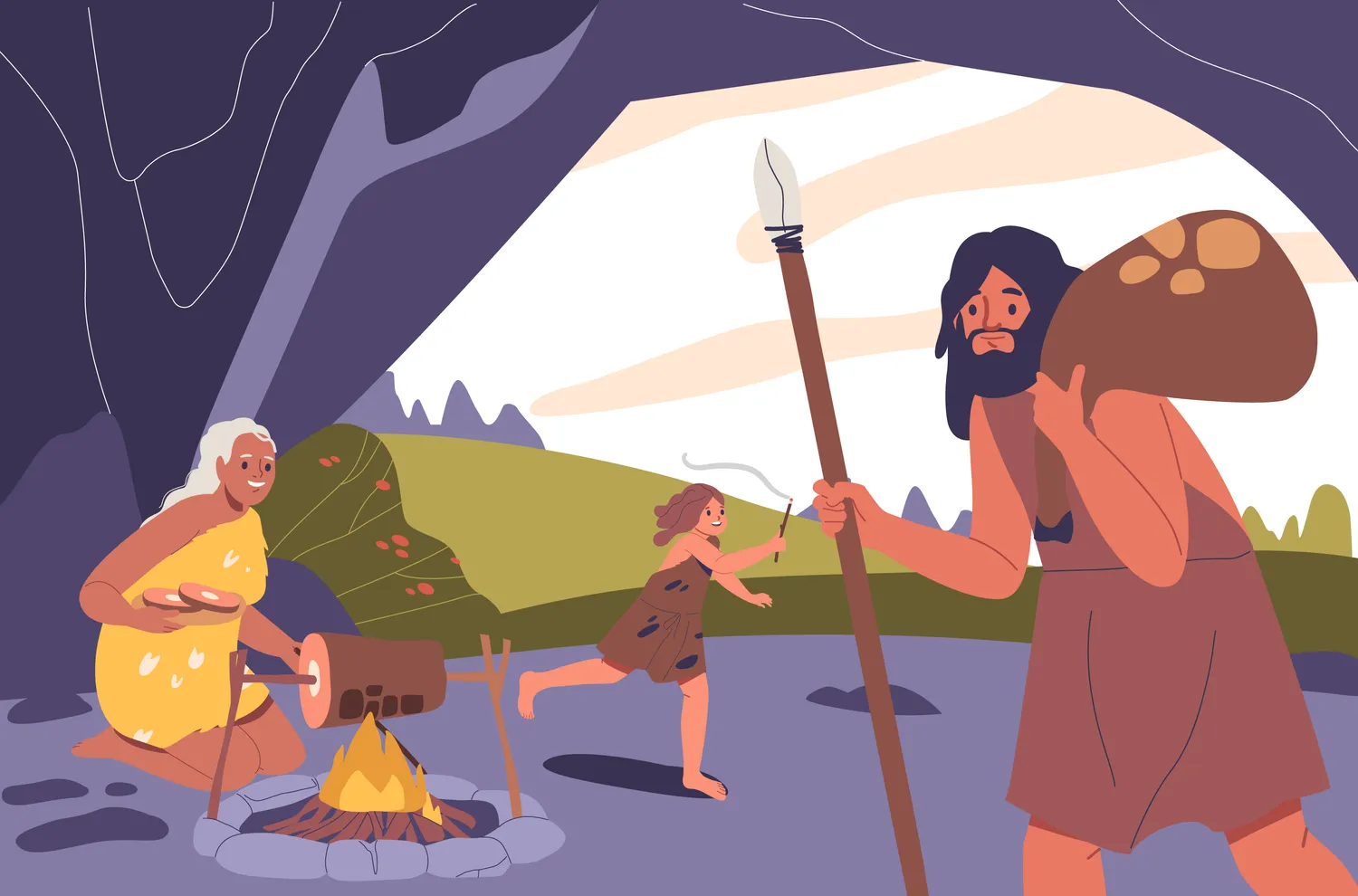
The Paleolithic period, which lasted from about 2.5 million to 10,000 BCE, was a time when early humans developed strategies to survive in a variety of environments, including hot and dry regions. Archaeological evidence reveals that people living in warm climates needed to solve daily challenges related to heat, sunlight, and limited water resources.
One key adaptation was the use of minimal clothing. In regions near the equator, such as East Africa, early humans wore simple coverings made from animal skins or plant fibers. This light clothing protected them from the sun while allowing cooling air to reach the body. Archaeological sites like Blombos Cave in South Africa (dated to about 70,000 years ago) have provided pigment-stained shells and tools, suggesting people made decorated personal items and possibly used ochre as sunscreen.
Another major adaptation involved diet and food sources. Instead of relying on large animals, people in hot climates often gathered wild plants, fruits, and nuts, which were more plentiful and easier to find during dry seasons. They also fished and hunted smaller animals. Tools found near Lake Turkana in Kenya show how early humans shaped sharp stones to process plant foods and butcher small animals. These hunter-gatherers developed knowledge about which plants provided the most hydration and nutrition, helping them survive periods of drought.
Water conservation was crucial. Early people learned to locate water sources, such as rivers, springs, and underground wells. In some areas, they collected dew or dug pits to capture rainwater. Archaeological studies at sites like Gobero in Niger show evidence of seasonal camps near ancient lakes, where people could access water during the dry months. To avoid heat, families built temporary shelters made from branches, leaves, and animal hides. These shelters were placed in the shade of trees or rock outcrops, reducing sun exposure and keeping the inside cooler. The use of fire also played a role, as fires could be used to cook food and provide safety from animals without adding much extra heat during the day.
Over time, these adaptations shaped daily life, social roles, and migration patterns. In warm climates, groups often moved seasonally to follow food and water sources. Women and children gathered edible plants while men hunted or fished. The skills and knowledge needed to survive were passed down through generations, creating a shared culture focused on adaptation and resilience. Although evidence about these early societies is sometimes limited, archaeological discoveries continue to reveal how creative and resourceful Paleolithic people were.
Understanding Paleolithic adaptation to warm climates helps historians recognize the connection between geography and human development. It also shows how early communities worked together to solve environmental challenges, a theme that appears throughout ancient history.
Interesting Fact: Archaeologists believe that some early humans used powdered ochre as a form of sunscreen, helping protect their skin from intense sunlight in open landscapes.
Comprehension quiz (8 questions)
1. What does 'Paleolithic' mean?
2. Where is Blombos Cave located?
3. What tool did early humans use near Lake Turkana?
4. Why did people build shelters in the shade?
5. How did hunter-gatherers survive droughts?
6. What is one effect of water conservation?
7. Early humans used ochre as sunscreen. True or false?
8. What does 'conservation' mean?
Perfect for the way you teach
- Build comprehension skills
- Auto-graded quiz
- Differentiated reading
- Read together at home
- Improve fluency
- Quiet reading time
- Reading curriculum support
- Independent practice
- Track Lexile growth