This comprehensive history reading passage explores the Out of Africa movement and how early humans migrated across continents. Students will learn about archaeological evidence, migration patterns, and the environmental and technological changes that shaped human history. The passage references key discoveries like fossils from Jebel Irhoud, tools from Blombos Cave, and footprints in Australia. Activities include multiple-choice and writing questions, graphic organizers, and a timeline to help students analyze cause and effect, use evidence, and understand the significance of early human migration. Aligned to CA HSS 6.1.1 and CCSS RH.6-8.1, the resource also offers read aloud audio and a Spanish translation, supporting diverse learners and bridging social studies and ELA skills.
Written by Workybooks TeamPublished by Workybooks
Preview
Sample passage and quiz content
CONTENT PREVIEW
Expand content preview
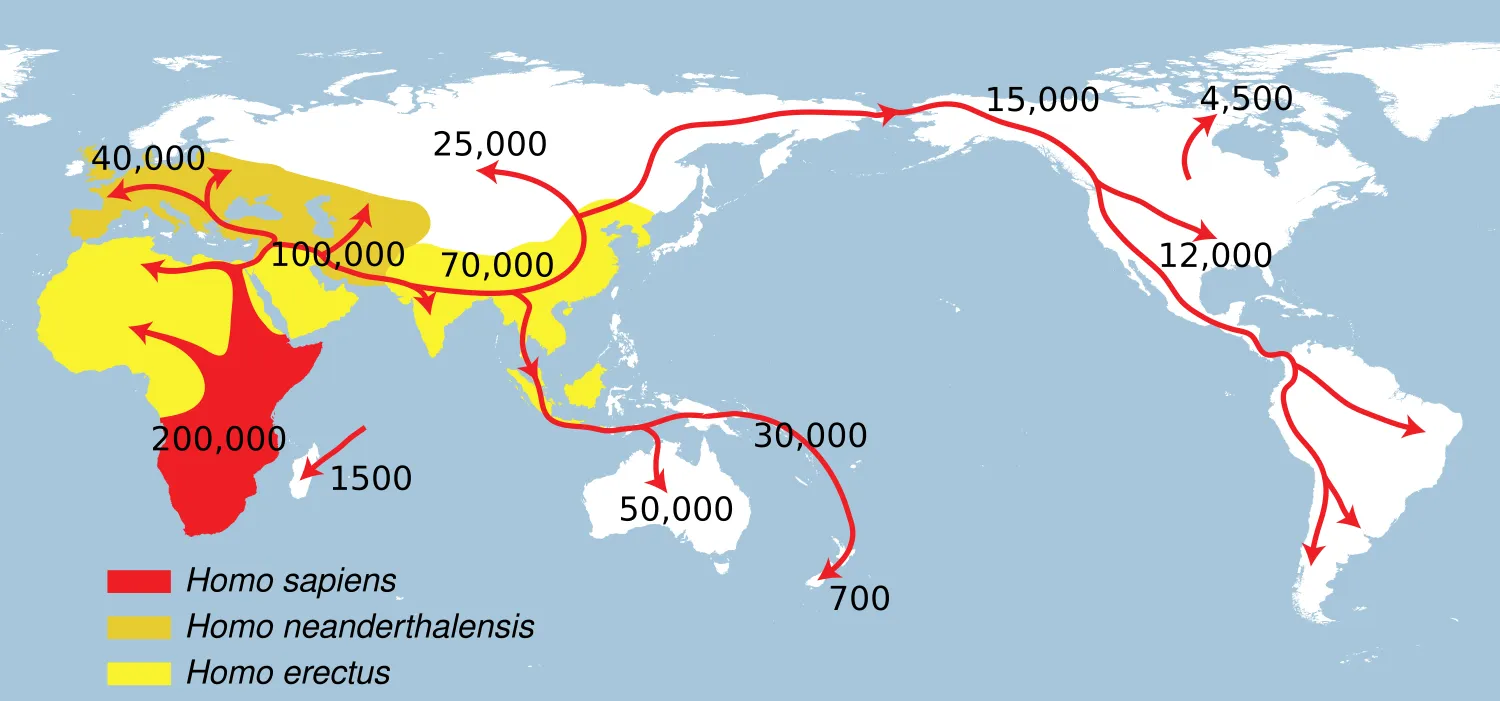
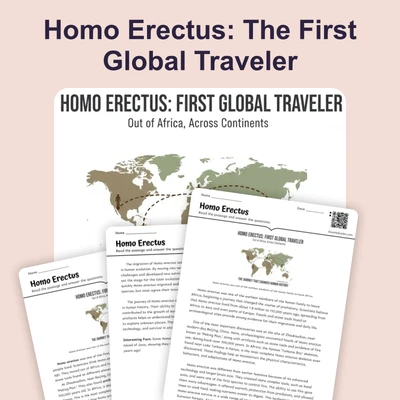
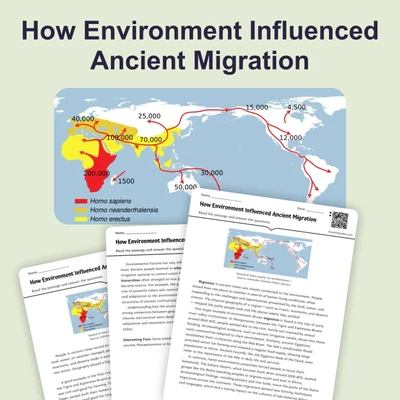
"Early human migrations" / Wikimedia Commons (Public domain).
The movement of early humans from Africa to other parts of the world is a major event in ancient history. Archaeologists and scientists use fossil and artifact evidence to trace how Homo sapiens—our own species—spread across continents. This journey, known as the Out of Africa movement, began around 60,000 to 100,000 years ago and shaped the development of societies worldwide.
Early humans first appeared in Africa. Fossils like those found at Jebel Irhoud in Morocco, dating back about 300,000 years, show the early presence of Homo sapiens. Over thousands of years, humans developed new technologies, such as stone blades and bone tools, which helped them survive in different environments. For example, discoveries from Blombos Cave in South Africa include engraved ochre and shell beads, suggesting early art and symbolic thinking.
Climate change played a major role in human migration. Shifts in temperature and rainfall transformed African landscapes, sometimes making resources scarce. To survive, groups of humans left Africa in waves, following herd animals and searching for water. Archaeological sites like Qafzeh Cave in Israel show humans reaching the Middle East about 90,000 years ago. Later, some groups made their way into Europe and Asia, adapting to cold climates with new clothing and fire-making skills. By 50,000 years ago, humans reached Australia, as seen in ancient footprints at Lake Mungo.
As people spread, they encountered new challenges and adapted their lifestyles. In Europe, early humans interacted with Neanderthals and learned from them, as shown by mixed tools and genetic evidence. Over time, humans developed more complex social structures and formed small communities or bands. They continued to innovate, creating better hunting weapons and starting to use language for communication. These changes allowed humans to thrive in a wide range of ecosystems, from African savannas to icy tundras.
The movement of early humans across continents is significant because it marks the beginning of global human history. It led to the spread of ideas, technologies, and cultures. Understanding this migration helps us see how geography and environment influence societies. The Out of Africa movement continues to be studied, and new discoveries often change what we know about our shared past.
This story connects to the broader theme of how humans adapt to and shape their environments—a key idea in world history.
Interesting Fact: Archaeologists in Australia discovered 20,000-year-old footprints at Lake Mungo, showing that early humans lived there much earlier than once believed.
Where did Homo sapiens first appear?
AfricaEuropeAsiaAustralia
When did major Out of Africa migration begin?
60,000-50,000 years ago10,000 years ago300,000 years ago2,000 years ago
What was found in Blombos Cave?
Engraved ochre and shell beadsPottery and coinsWheels and plowsStatues and tablets
Why did early humans leave Africa?
Climate change and resource scarcityWarfareTo build pyramidsFor trade
How did humans adapt to cold climates?
Made clothing and used fireBuilt pyramidsPlanted cropsWrote stories
What does 'Out of Africa movement' mean?
Human migration from AfricaInvention of agricultureBuilding pyramids in EgyptLearning to write
Humans reached Australia 50,000 years ago. True or false?
TrueFalse
What is an ecosystem?
Community of living things and their environmentA stone toolA kind of caveA social group
Who it's for
Perfect for the way you teach
Teachers
Build comprehension skills
Auto-graded quiz
Differentiated reading
Parents
Read together at home
Improve fluency
Quiet reading time
Homeschoolers
Reading curriculum support
Independent practice
Track Lexile growth
Topics
early humansOut of AfricamigrationcontinentsStone Agearchaeologyancient historyhuman adaptationtimelinereading passage
Reviews & Ratings
No reviews yet. Be the first to share your experience!
More reading you might love
19 more
Neanderthals and Denisovans
This comprehensive history reading passage explores the fascinating story of Neanderthals, Denisovans, and other ancient...
CA HSS 6.1.1TEKS 6.2BCCSS.RH.6-8.1CCSS.RH.6-8.2
Discovery of Fire
This history reading passage explores the revolutionary impact of fire on early human societies. Students will learn how...
CA HSS 6.1.1CCSS.RH.6-8.1CCSS.RH.6-8.2CCSS.RH.6-8.4
Tools of the Stone Age
Explore the world of Paleolithic spearheads and bone tools in this detailed ancient history reading passage. Learn how e...
CA HSS 6.1.1CCSS.RH.6-8.1CCSS.RH.6-8.2CCSS.WHST.6-8.2
How Pottery Changed Daily Life
This engaging history reading passage explores how early humans invented pottery to solve the problem of long-term food ...
CA HSS 6.1.1CCSS RH.6-8.1CCSS RH.6-8.4
First Farming Villages
This passage explores how the transition from hunter-gatherer societies to Neolithic villages marked a turning point in ...
CA HSS 6.1.1CCSS.RI.6.1CCSS.RI.6.2
Introduction to the Paleolithic Age
This engaging passage explores the lives and achievements of ancient humans during the Paleolithic Age, focusing on thei...
CA HSS 6.1.1CCSS RH.6-8.1CCSS RH.6-8.2CCSS RH.6-8.4
Early Humans Settle Europe and Asia
This passage explores the arrival of early humans in Europe and Asia around 40,000 BCE, highlighting their migration, ad...
CA HSS 6.1.1CCSS RH.6-8.1CCSS RH.6-8.2CCSS RH.6-8.4
From Nomads to Farmers
This engaging passage explores the two major ways of life practiced by early humans: nomadic hunter-gathering and settle...
CA HSS 6.1.1CCSS RH.6-8.2
Stone Tools and Evidence
This engaging passage explores the significance of ancient stone tools and their role in understanding early human histo...
CA HSS 6.1.1CCSS.RI.6.1CCSS.RI.6.4
Stone Age Life Adaptation
This passage explores the ways Paleolithic humans adapted to warm climates, focusing on clothing, shelter, food, and wat...
CA HSS 6.1.1CCSS.RI.6.1CCSS.RI.6.4CCSS.W.6.2
Early Human Migration and Adaptation
This comprehensive history reading passage explores how the environment shaped the migration and development of ancient ...
CA HSS 6.1.1RI.6.3RI.6.4W.6.2
Founding of Rome
This educational passage explores the legendary origins of Ancient Rome through the stories of Romulus and Aeneas, two i...
CA HSS 6.7CCSS RH.6-8.1CCSS RH.6-8.2CCSS RH.6-8.4
Han Dynasty Suspension Bridges
This passage explores the invention and impact of suspension bridges during the Han Dynasty in Ancient China, covering h...
CA HSS 6.6CCSS RH.6-8.1CCSS RH.6-8.4CCSS RH.6-8.7
Han Dynasty Wheelbarrow
This passage explores the invention and historical significance of the wheelbarrow during the Han dynasty in ancient Chi...
CA HSS 6.6CCSS RH.6-8.1RH.6-8.2RH.6-8.4
Han Dynasty Moldboard Plow
This engaging history reading passage explores the development and impact of the moldboard plow during the Han Dynasty i...
CA HSS 6.6.4CCSS RH.6-8.1RH.6-8.2RH.6-8.4
China's Terracotta Army
This passage explores the fascinating discovery of the Terra-Cotta Army near Xi’an, China, and its significance in ancie...
CA HSS 6.1CCSS RH.6-8.1CCSS RH.6-8.4CCSS RH.6-8.7
Lascaux Cave Paintings
This engaging passage introduces students to the prehistoric art of Lascaux Cave, a remarkable archaeological discovery ...
CA HSS 6.2.1CCSS RH.6-8.1CCSS RH.6-8.4
How Early Humans Survived the Ice Age
This passage explores how Paleolithic people adapted to a variety of landscapes, including coastal regions, mountains, p...
CA HSS 6.1CCSS RH.6-8.1CCSS RH.6-8.2CCSS RH.6-8.4
Neolithic Tools
This passage explores the profound impact of new stone tools during the Neolithic period, focusing on how these innovati...