Early Humans Settle Europe and Asia
Interactive passage with audio narration, comprehension questions, and printable PDF.
By completing this purchase you agree to our Terms of Use and Privacy Policy. Your subscription renews automatically until you cancel. You can cancel anytime from your account settings. All sales are final and non-refundable. Digital content is available for download in your account immediately upon purchase.
What's included
Part of this bundle

Early Humans Settle Europe and Asia preview and details
About this printable Early Humans Settle Europe and Asia reading passage (Grades 6-8)
Sample passage and quiz from Early Humans Settle Europe and Asia
Reading passage and comprehension quiz preview
Early Humans in Europe and Asia
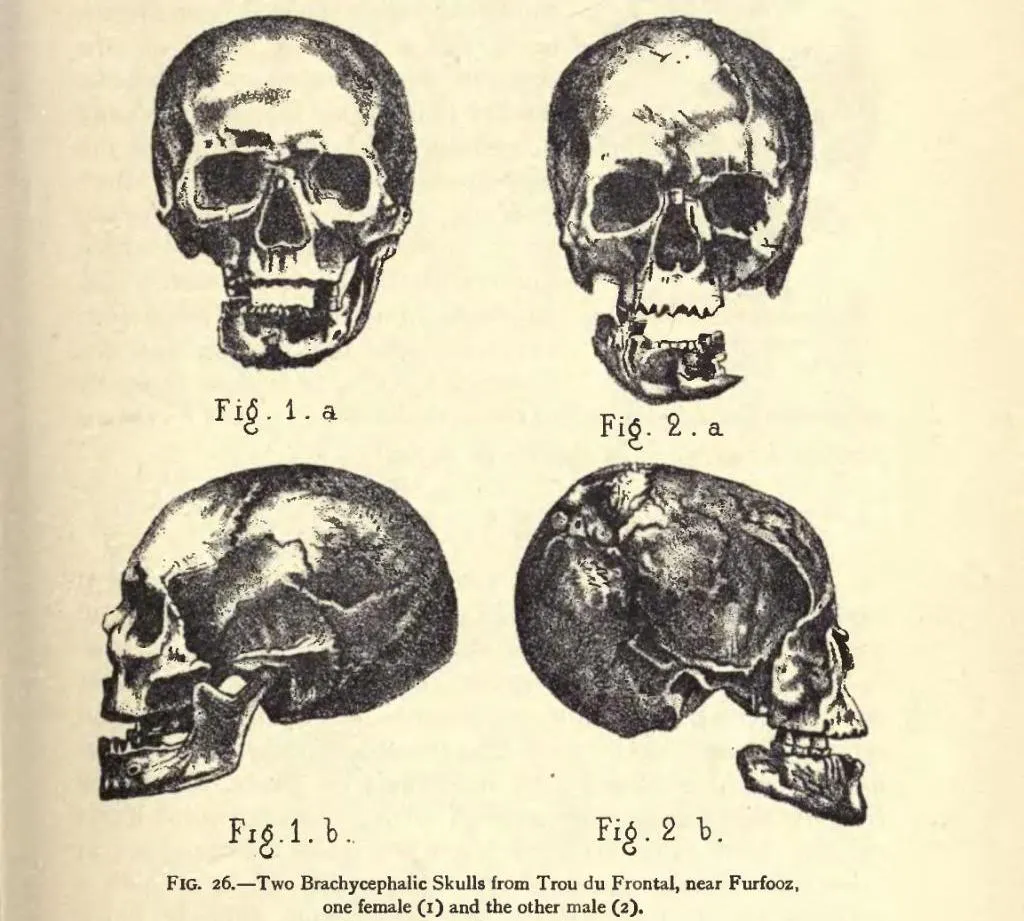
"P.121-fig.26-Palæolithic Man and Terramara Settlements in Europe" by Robert Munro / Wikimedia Commons
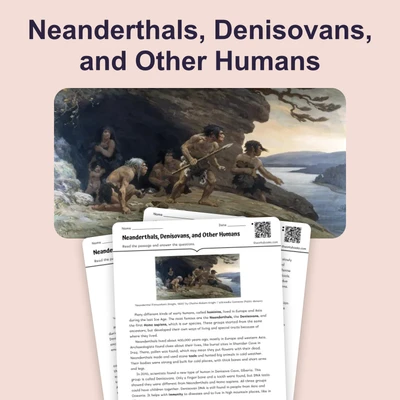
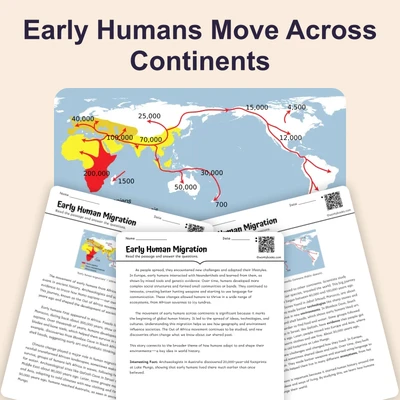
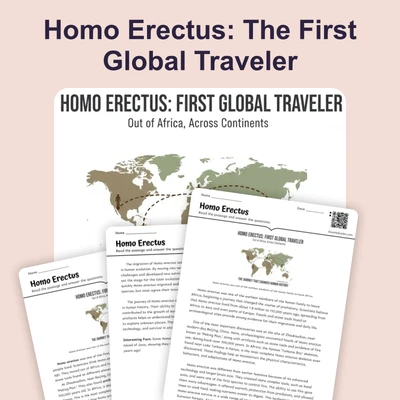
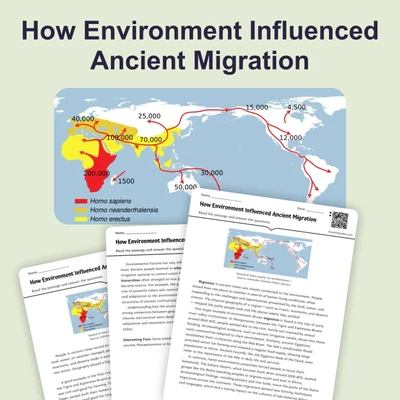
Between 50,000 and 40,000 BCE, groups of early Homo sapiens began to leave Africa and settle in new lands, including Europe and Asia. Archaeologists have studied ancient tools, bones, and cave paintings to learn how these early humans lived and adapted to unfamiliar environments. The migration into northern regions marked a major turning point in human history, as people learned to survive in colder, more challenging climates.
The movement of early humans into Europe and Asia was influenced by both environmental and technological factors. As the Ice Age created colder temperatures, large areas of land opened up when glaciers retreated. Early humans followed the migration patterns of large animals, such as mammoths and reindeer, which were essential sources of food and materials. Archaeological sites like the Chauvet Cave in France, dating to about 36,000 BCE, contain remarkable cave paintings. These paintings provide direct evidence of early human culture, beliefs, and daily life. Similarly, stone tools found in the Altai Mountains of Siberia show that humans adapted their technology for hunting and building shelters in harsh climates.
To survive in colder Europe and Asia, early humans developed new adaptations. They made clothing from animal skins, built sturdy shelters, and used fire for warmth and cooking. Social organization became more complex as people formed small bands and shared tasks such as hunting, gathering, and tool-making. Evidence from sites like the Sungir burial in Russia, where bodies were buried with beads and spears, suggests the beginnings of social hierarchy and symbolic behavior. These discoveries show that early humans were not only practical survivors but also creative thinkers who valued art and ritual.
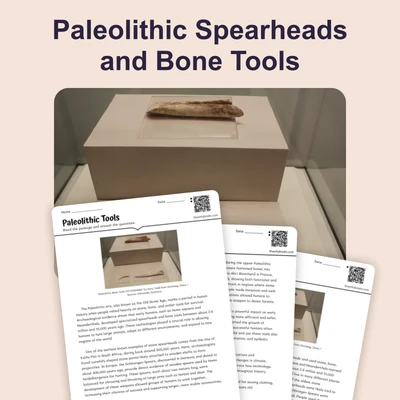
Over time, the settlement of Europe and Asia led to significant changes in human culture and society. People learned to use new resources, invented advanced tools like the atlatl (spear-thrower), and developed languages to communicate more effectively. The ability to adapt to different environments allowed humans to spread across continents and eventually establish permanent communities. Despite limited direct evidence, archaeologists use stratigraphy (the study of soil layers) and radiocarbon dating to piece together this distant past.
The arrival of humans in Europe and Asia is significant because it demonstrates how migration, adaptation, and innovation shaped the development of human societies. These early journeys laid the foundation for future civilizations across Eurasia and show the deep links between humans and the environments they inhabit. Understanding this process helps us see connections between ancient history and the challenges of today.
Interesting Fact: Some of the oldest known musical instruments, such as flutes made from bird bones, were found in caves in Germany, showing that early humans in Europe enjoyed music more than 40,000 years ago.
Comprehension quiz (8 questions)
1. When did humans settle in Europe?
2. What did early humans follow for food?
3. Where is the Chauvet Cave located?
4. Why did early people use fire?
5. What does the Sungir burial show?
6. How did the Ice Age help migration?
7. Early humans used atlatl for hunting. True or false?
8. What is stratigraphy?
Perfect for the way you teach
- Build comprehension skills
- Auto-graded quiz
- Differentiated reading
- Read together at home
- Improve fluency
- Quiet reading time
- Reading curriculum support
- Independent practice
- Track Lexile growth