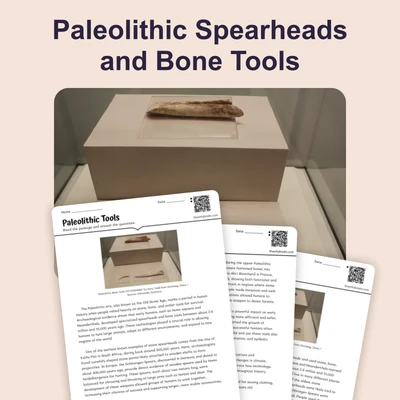
Stone Tools and Evidence
Interactive passage with audio narration, comprehension questions, and printable PDF.
By completing this purchase you agree to our Terms of Use and Privacy Policy. Your subscription renews automatically until you cancel. You can cancel anytime from your account settings. All sales are final and non-refundable. Digital content is available for download in your account immediately upon purchase.
What's included
Part of this bundle

Stone Tools and Evidence preview and details
About this printable Stone Tools and Evidence reading passage (Grades 6-8)
Sample passage and quiz from Stone Tools and Evidence
Reading passage and comprehension quiz preview
Stone Tools and Evidence
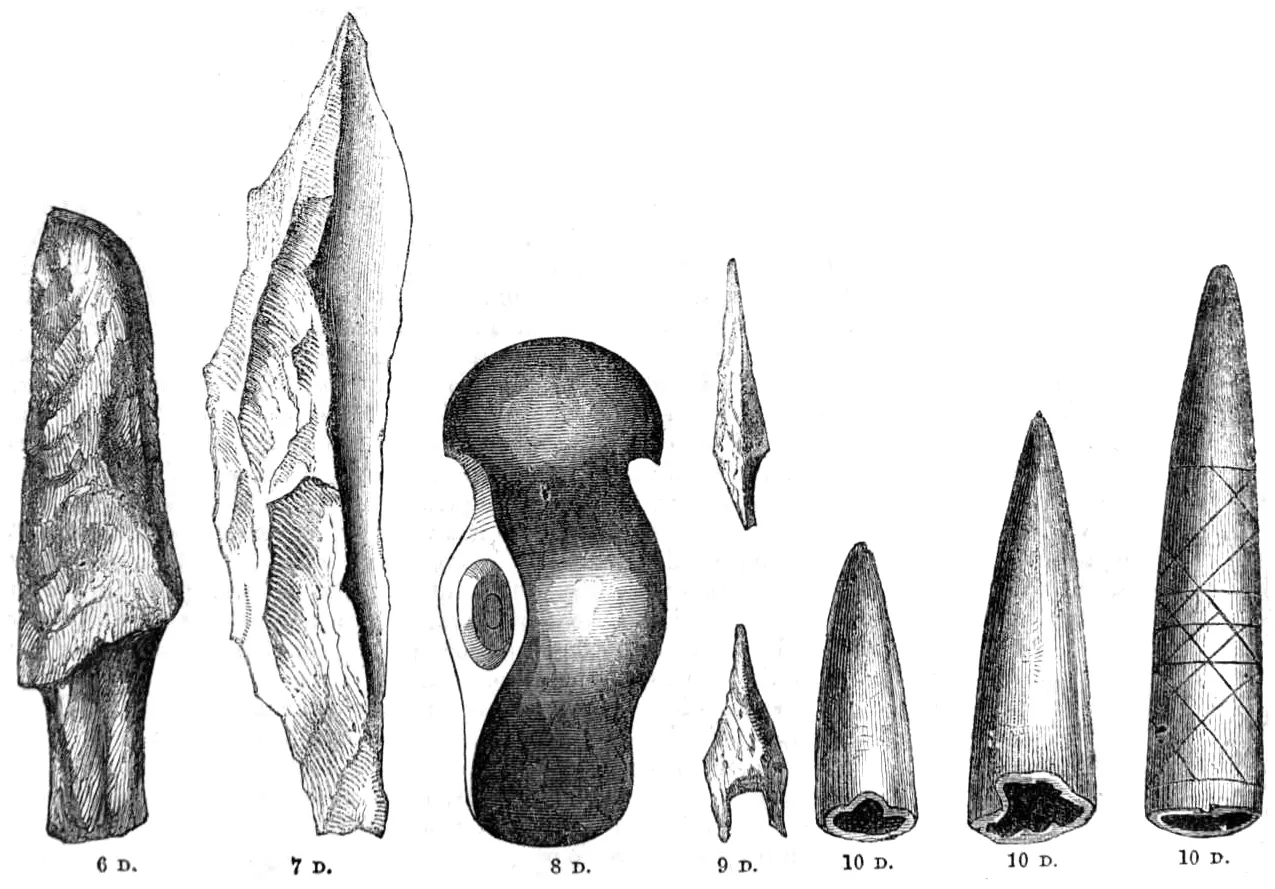
"Stone tools 2 (OAW)" / Wikimedia Commons
Archaeologists study ancient artifacts to learn about early humans. One of the most important types of artifacts they examine is the stone tool. These tools, made and used by our ancestors, offer valuable evidence about how people survived and adapted to their environments.
The oldest known stone tools were discovered at a site called Olduvai Gorge in Tanzania, Africa. These tools date back about 2.6 million years and are often called Oldowan tools. They were likely made by early human species such as Homo habilis. Archaeologists found sharp flakes and simple hand axes that were probably used for cutting meat, breaking bones, and processing plants. The presence of these tools suggests that early humans were developing new ways to hunt and gather food, which helped them survive in changing climates and landscapes.
In Europe, another important archaeological site is Boxgrove in England. Here, researchers uncovered stone tools made by Homo heidelbergensis nearly 500,000 years ago. These tools are more advanced, including carefully shaped hand axes and scrapers suited for preparing animal hides and butchering. The Boxgrove discoveries show that early humans were learning to adapt their technology to local resources and needs. Archaeologists analyze the context of where these tools are found, such as their depth in the soil and what animal bones are nearby. This helps them reconstruct ancient environments and understand how people lived.
Analyzing stone tools is not always easy. Sometimes, it's difficult to tell whether a rock was shaped by humans or by natural forces. Archaeologists look for signs of intentional shaping, such as flaking patterns and wear marks. They also compare finds from different sites to trace the spread and evolution of tool-making techniques. For example, the spread of the Acheulean hand axe tradition from Africa to Europe shows how knowledge and skills were shared or developed independently by different human groups.
Stone tools reveal much about early human society. The ability to create and use tools allowed early humans to hunt larger animals, process new types of food, and even defend themselves. Over time, the complexity of these tools increased, reflecting changes in intelligence, communication, and social cooperation. These artifacts give us clues about the daily life, social organization, and migration of our ancestors.
Studying ancient stone tools connects to the broader theme of how technology shapes history and human development.
Interesting Fact: Some stone tools found in Kenya are so old—about 3.3 million years—that they may have been made before the earliest known members of our genus, Homo!
Comprehension quiz (8 questions)
1. Where were the oldest stone tools found?
2. Who likely made the Oldowan tools?
3. How old are the Oldowan tools?
4. What does 'context' mean for archaeologists?
5. Why do archaeologists study wear marks?
6. How did stone tools help early humans?
7. Stone tools are only found in Africa.
8. What does 'flaking' mean?
Perfect for the way you teach
- Build comprehension skills
- Auto-graded quiz
- Differentiated reading
- Read together at home
- Improve fluency
- Quiet reading time
- Reading curriculum support
- Independent practice
- Track Lexile growth