From Nomads to Farmers
Interactive passage with audio narration, comprehension questions, and printable PDF.
By completing this purchase you agree to our Terms of Use and Privacy Policy. Your subscription renews automatically until you cancel. You can cancel anytime from your account settings. All sales are final and non-refundable. Digital content is available for download in your account immediately upon purchase.
What's included
Part of this bundle

From Nomads to Farmers preview and details
About this printable From Nomads to Farmers reading passage (Grades 5-8)
Sample passage and quiz from From Nomads to Farmers
Reading passage and comprehension quiz preview
From Nomads to Farmers
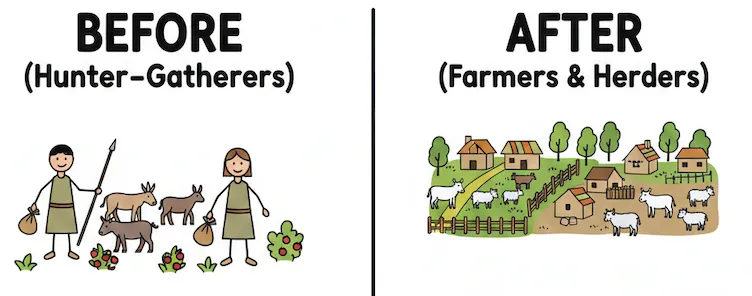
Early human societies developed two main ways of life: the nomadic lifestyle of hunter-gatherers and the settled existence of farmers. These choices depended on geographic location, climate, and available resources. By comparing these two systems, historians can understand how humans adapted to their environments and laid the foundation for complex civilizations.
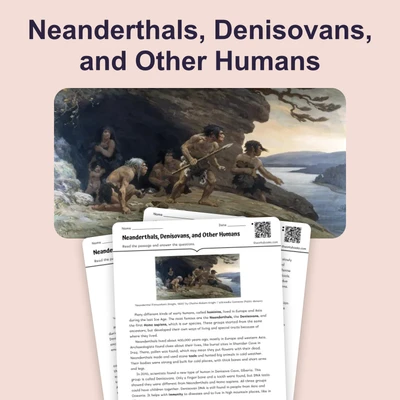
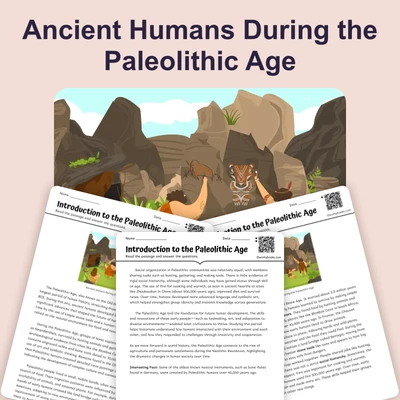
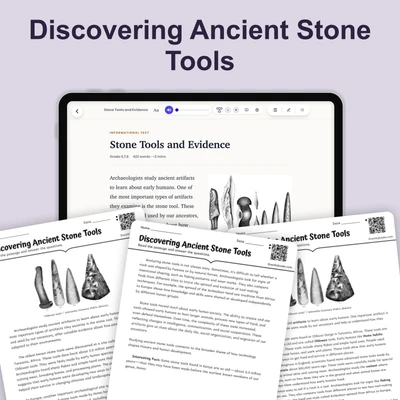
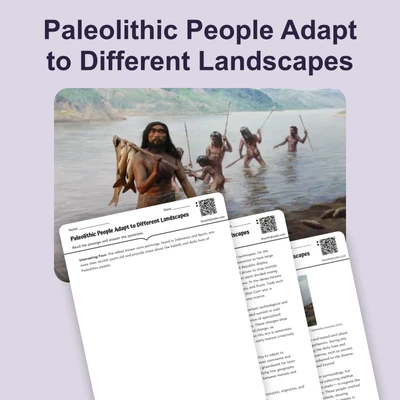
For tens of thousands of years, most humans lived as nomads. Nomads moved from place to place, following herds of wild animals and searching for edible plants. Archaeologists have found evidence of nomadic life in places like the Olduvai Gorge in East Africa and the caves of Lascaux in France, where people left behind stone tools and painted images of animals. These hunter-gatherers relied on their knowledge of the land and used simple technology such as stone blades and wooden spears. Social groups were small and organized around kinship ties.
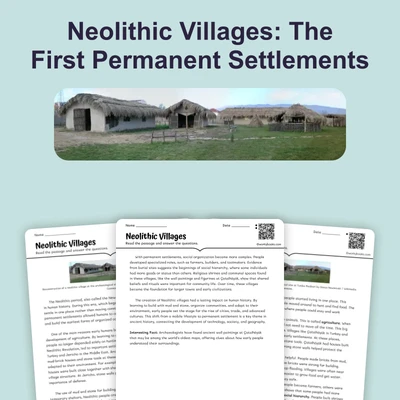
About 10,000 BCE, during the Neolithic era, some humans began to settle in one place. This major change is known as the Neolithic Revolution. People learned to domesticate plants and animals, which means they selected and bred species for human use. Archaeological sites like Çatalhöyük in Anatolia (present-day Turkey) and Jericho in the Levant show how early humans built permanent villages. Farming allowed people to produce surplus food, store grains, and support larger populations. With more reliable food sources, some individuals became specialists, such as potters or toolmakers, leading to social hierarchy.
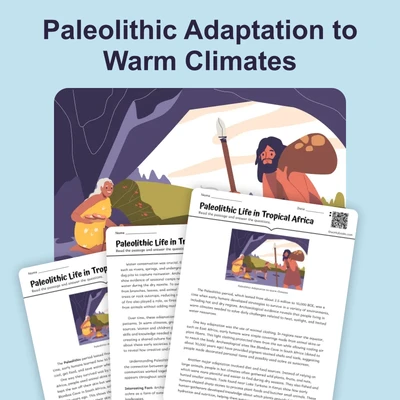
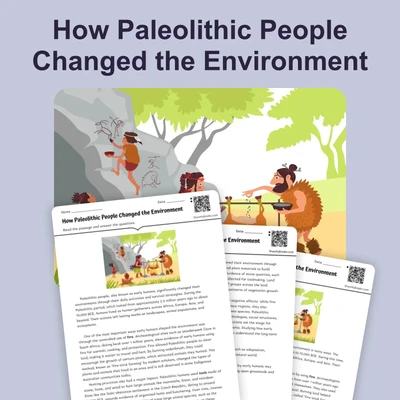
The shift from nomadic to settled life had many effects. Farmers changed the natural landscape by clearing forests and building irrigation systems. They developed new technologies, such as the plow and clay storage jars. Permanent settlements allowed for the creation of complex social rules and early forms of government. However, not all humans became farmers. Some groups continued to move with their herds, especially in areas unsuited for crops, such as the Central Asian steppes.
The interaction between farmers and nomads shaped ancient history. Sometimes, they traded goods like grain and animal products. At other times, they competed for land and resources. Over thousands of years, these two ways of life coexisted and influenced each other. Understanding this change helps historians see how environment, technology, and social organization affect the rise of civilizations.
Interesting Fact: Did You Know? The domestication of the dog may have happened as early as 15,000 years ago, helping both nomads and early farmers in hunting and protection.
Comprehension quiz (8 questions)
1. When did the Neolithic Revolution begin?
2. Which site shows early farming?
3. What did nomads mainly do?
4. Why did people settle in one place?
5. What is one effect of farming?
6. How did nomads and farmers interact?
7. Farming led to larger populations. True or false?
8. What does 'domesticate' mean?
Perfect for the way you teach
- Build comprehension skills
- Auto-graded quiz
- Differentiated reading
- Read together at home
- Improve fluency
- Quiet reading time
- Reading curriculum support
- Independent practice
- Track Lexile growth