Foods of the Columbian Exchange
Interactive passage with audio narration, comprehension questions, and printable PDF.
By completing this purchase you agree to our Terms of Use and Privacy Policy. Your subscription renews automatically until you cancel. You can cancel anytime from your account settings. All sales are final and non-refundable. Digital content is available for download in your account immediately upon purchase.
What's included
Foods of the Columbian Exchange preview and details
About this printable Foods of the Columbian Exchange reading passage (Grades 3-5)
Sample passage and quiz from Foods of the Columbian Exchange
Reading passage and comprehension quiz preview
Foods of the Columbian Exchange
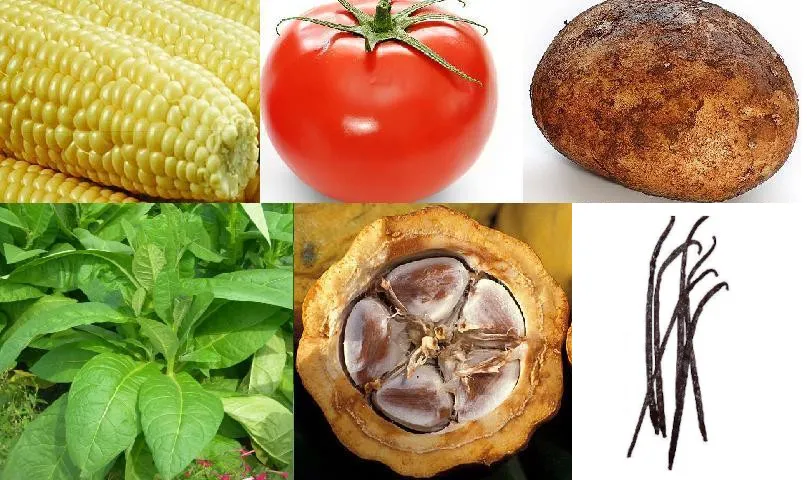
New World's main domesticated plants El Comandante/ Wikimedia Commons (CC0).
The Columbian Exchange began after Christopher Columbus arrived in the Americas in 1492. This event started a huge swap of foods, animals, and plants between the Old World (Europe, Africa, and Asia) and the New World (the Americas). The exchange changed what people ate and how they lived on both sides of the Atlantic Ocean.
Many crops grown in the Americas were unknown in Europe before this time. For example, potatoes, tomatoes, and corn were sent from the Americas to Europe. These foods became important in European diets. Potatoes became a staple food in Ireland, while tomatoes changed Italian cooking forever. Corn spread across Europe and became food for both people and animals.
At the same time, Europeans brought their own foods to the Americas. They introduced wheat, rice, and sugar. These crops grew well in the new land. Wheat became the main grain for bread in the colonies. Rice was grown in the warm, wet climate of the southern colonies. Sugar cane grew in the Caribbean, leading to new foods and drinks for American colonists.
The Columbian Exchange was not just about food. Animals like horses, cows, and pigs also came from Europe to the Americas. These animals helped people farm, travel, and have more food. The exchange also brought diseases, which sadly hurt many Native Americans, but in terms of food, it helped people eat better and live longer.
This worldwide swap created many changes. Foods from the Americas helped people in Europe survive. For example, potatoes are full of vitamins and can grow in poor soil. Corn can be used in many ways and feeds many people. In America, wheat and rice became part of everyday meals. Sugar made new desserts and sweet drinks possible.
The effects of the Columbian Exchange are still felt today. Italian foods like pizza and pasta often use tomatoes—thanks to the Americas. Irish meals use potatoes, which also came from the New World. American foods, like cornbread and grits, use crops that were once new to Europe. The Columbian Exchange made the world’s diets more varied and interesting.
Interesting Fact: Chocolate, made from cacao beans from the Americas, became a favorite treat in Europe after the Columbian Exchange.
Comprehension quiz (8 questions)
1. What started the Columbian Exchange?
2. Which food went from America to Europe?
3. Which crop came from Europe to America?
4. Why did potatoes help people in Europe?
5. What animal was brought to America by Europeans?
6. How did the Columbian Exchange change diets?
7. The Columbian Exchange helped people eat better. True or false?
8. What does 'crops' mean?
Common Core standards for Foods of the Columbian Exchange
Explain events, procedures, ideas, or concepts in a historical, scientific, or technical text, including what happened and why, based on specific information in the text.
Perfect for the way you teach
- Build comprehension skills
- Auto-graded quiz
- Differentiated reading
- Read together at home
- Improve fluency
- Quiet reading time
- Reading curriculum support
- Independent practice
- Track Lexile growth