Grassland Biomes of the World
Interactive passage with audio narration, comprehension questions, and printable PDF.
What's included
Grassland Biomes of the World preview and details
About this printable Grassland Biomes of the World science reading passage, NGSS-aligned (Grades 5-8)
Sample passage and quiz from Grassland Biomes of the World
Reading passage and comprehension quiz preview
Grassland Biomes of the World
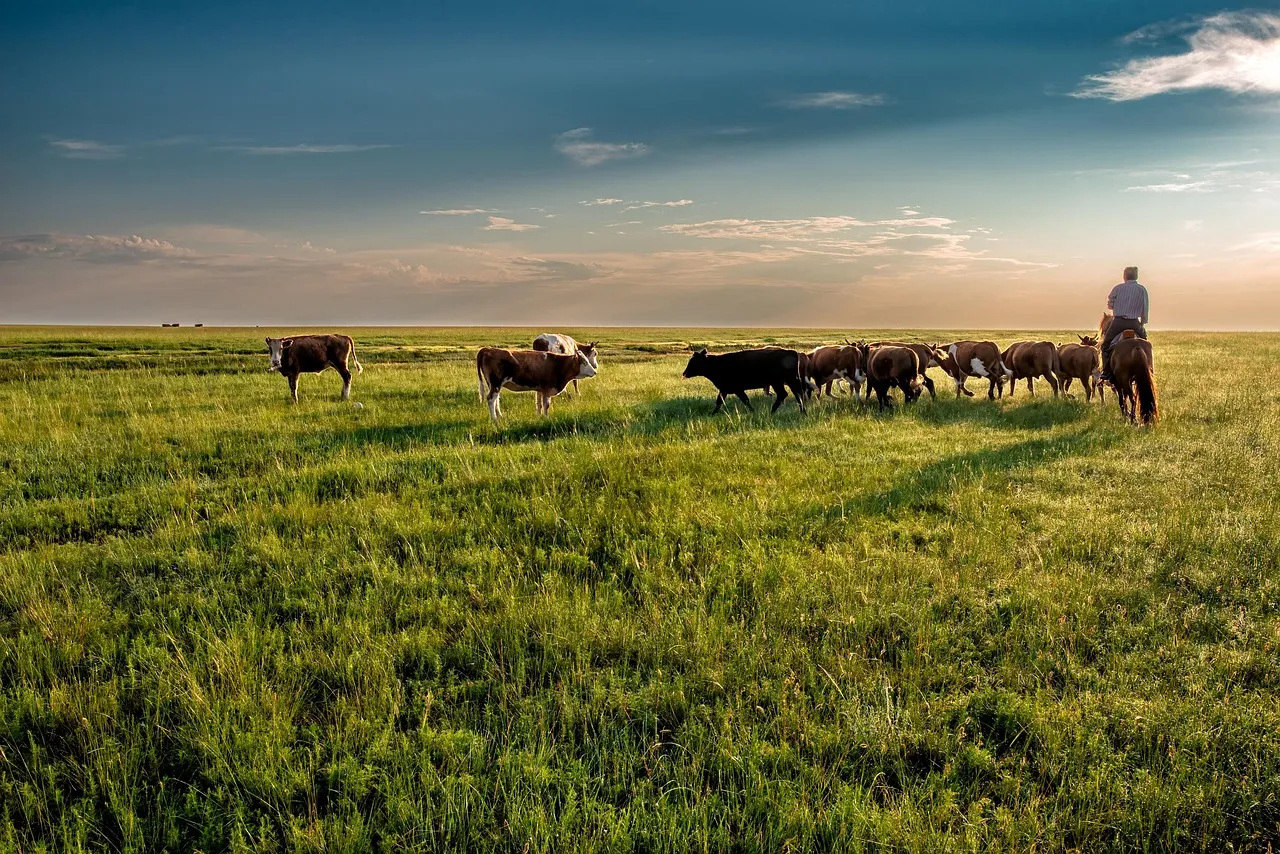
Grassland Biome. Imge by Kanenori / Pixabay.
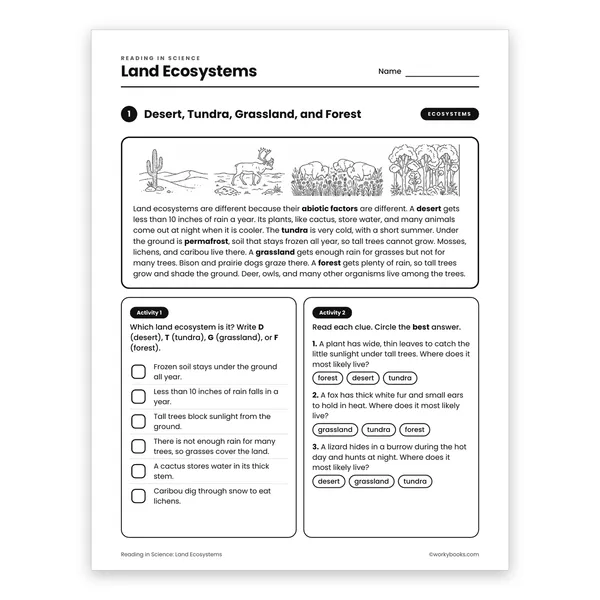
The grassland biome is a large area of land where the main plants are grasses instead of trees or shrubs. Grasslands are found on every continent except Antarctica. There are two main types: temperate grasslands and tropical savannas. Temperate grasslands, like the North American prairies, have warm summers, cold winters, and moderate rainfall. Tropical savannas, such as those in Africa, are warm all year with a wet and dry season.
Grasslands have a special climate that makes them different from forests and deserts. They receive enough rain to support grasses but not enough for many trees to grow. The soil in grasslands is often rich and deep, which makes it good for farming. Because there are few trees, most of the sunlight reaches the ground, helping grasses and wildflowers grow thick and tall.
Many different organisms live in grasslands. Some examples are large herbivores like bison, zebras, and antelope. These animals eat the grasses and move in groups called herds. There are also many predators, such as lions and cheetahs in the savannas, and wolves in the prairies. Birds, insects, and small mammals like prairie dogs also play important roles in the grassland ecosystem.
Plants and animals in grasslands have special adaptations to survive. Grasses have deep roots to find water and survive fires. Some animals, like prairie dogs, dig burrows to escape heat and predators. Large animals may migrate to find food during dry seasons. Fires are common in grasslands and help new grasses grow by clearing away old plants.
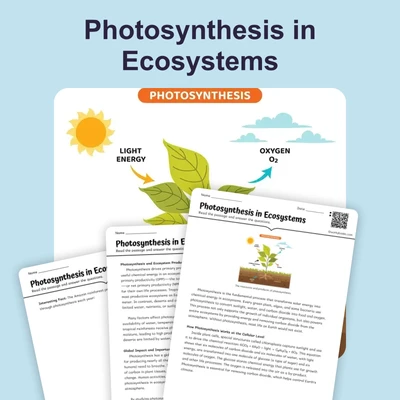
The food web in grasslands shows how energy moves between plants, herbivores, and carnivores. Grasses use sunlight to make food through photosynthesis. Herbivores eat the grasses, and carnivores eat the herbivores. When plants and animals die, decomposers break them down and return nutrients to the soil.
Grasslands are important for people, too. They are often used for growing crops like wheat and corn or for raising cattle. However, grasslands are at risk from overgrazing, farming, and climate change. Protecting grasslands helps keep these ecosystems healthy for both wildlife and humans.
Interesting Fact: Some grassland fires happen naturally, but many are started by lightning or humans. These fires are important because they help keep grasslands from turning into forests!
Comprehension quiz (8 questions)
1. What is the main plant in grasslands?
2. Which animal is NOT found in savannas?
3. What helps grasses survive fires?
4. What happens if too many trees grow in grasslands?
5. Why do some animals migrate in grasslands?
6. How do decomposers help the soil?
7. Grasslands have rich, deep soil. True or false?
8. What is adaptation?
Perfect for the way you teach
- Build comprehension skills
- Auto-graded quiz
- Differentiated reading
- Read together at home
- Improve fluency
- Quiet reading time
- Reading curriculum support
- Independent practice
- Track Lexile growth