Major Biomes of the World
Interactive passage with audio narration, comprehension questions, and printable PDF.
By completing this purchase you agree to our Terms of Use and Privacy Policy. Your subscription renews automatically until you cancel. You can cancel anytime from your account settings. All sales are final and non-refundable. Digital content is available for download in your account immediately upon purchase.
What's included
Major Biomes of the World preview and details
About this printable Major Biomes of the World science reading passage, NGSS-aligned (Grade 6)
Sample passage and quiz from Major Biomes of the World
Reading passage and comprehension quiz preview
Major Biomes of the World
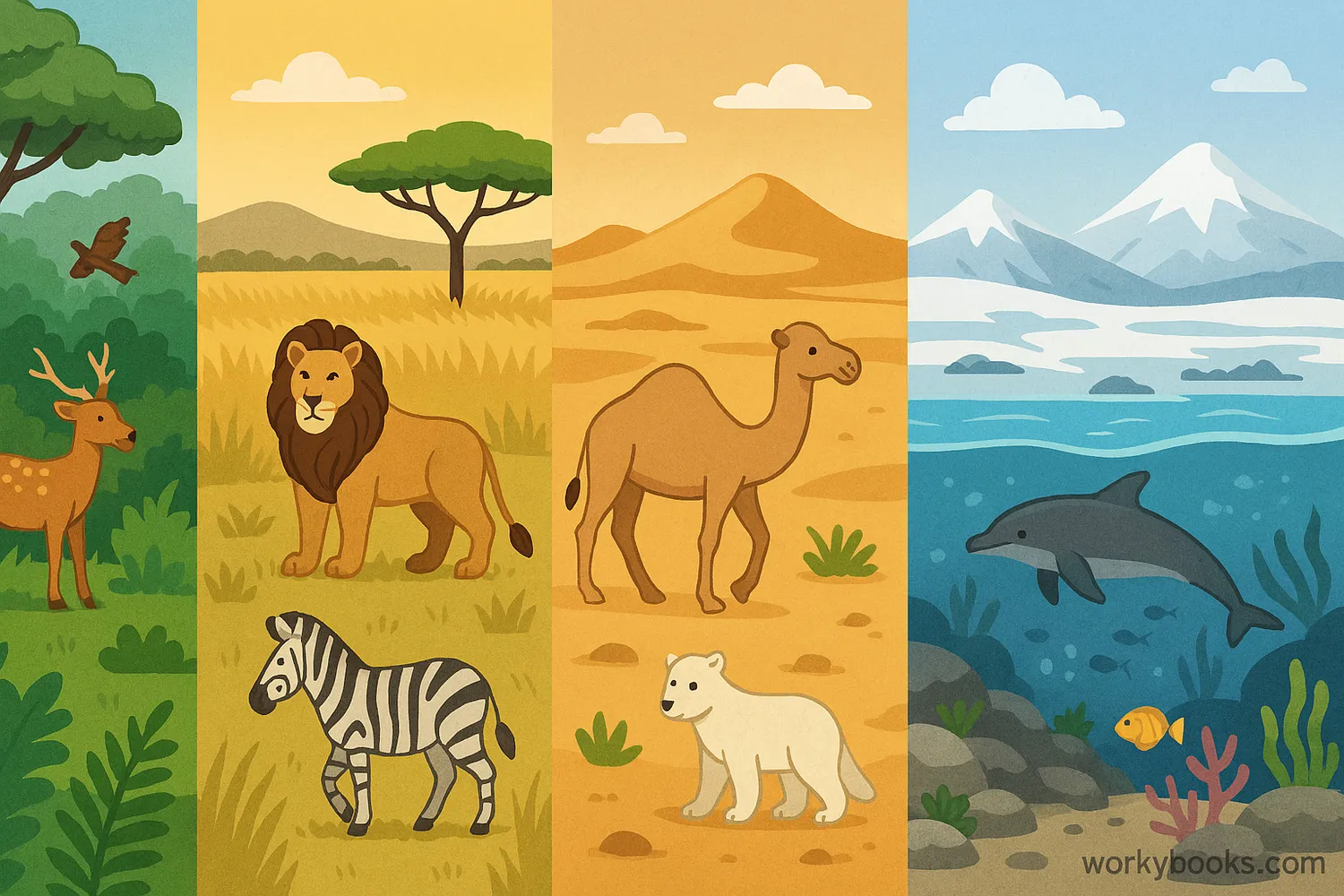
Imagine traveling across the Earth, experiencing vastly different landscapes. From scorching sands to icy plains, and dense jungles to wide-open savannas, our planet is a tapestry of diverse environments. These large regions, each with its own unique climate, plants, and animals, are called biomes. Understanding biomes helps us appreciate the incredible variety of life on Earth and how different living things adapt to their surroundings.
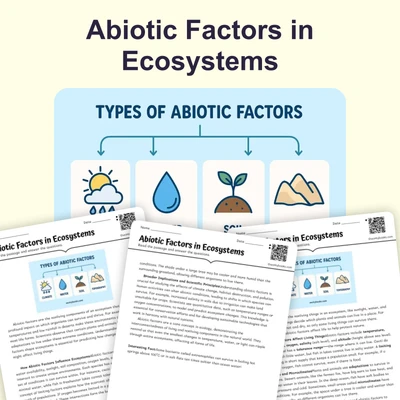
Biomes are defined by a combination of biotic factors and abiotic factors. Biotic factors are all the living parts of an environment, such as plants, animals, bacteria, and fungi. Abiotic factors are the non-living parts, like temperature, rainfall, sunlight, soil type, and humidity. For example, a hot, dry climate with sandy soil (abiotic factors) will support different plants and animals (biotic factors) than a cold, wet region with rich soil. These factors work together to create the distinct characteristics of each biome.
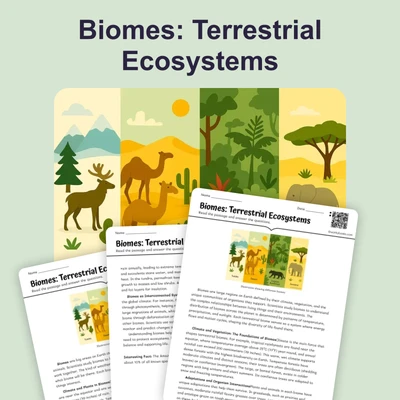
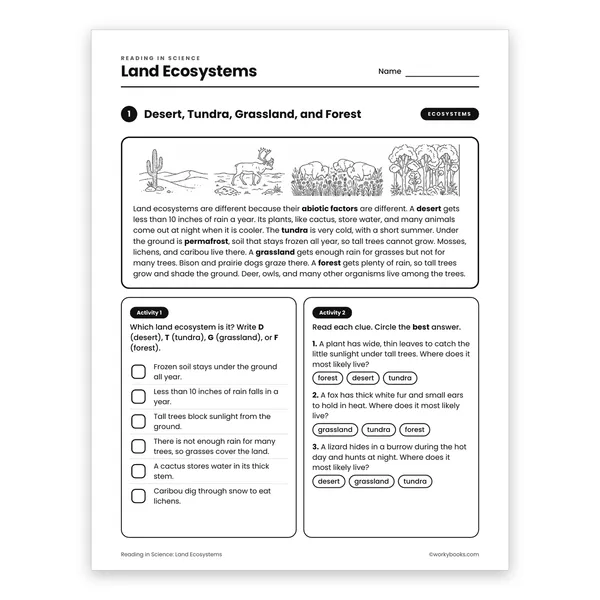
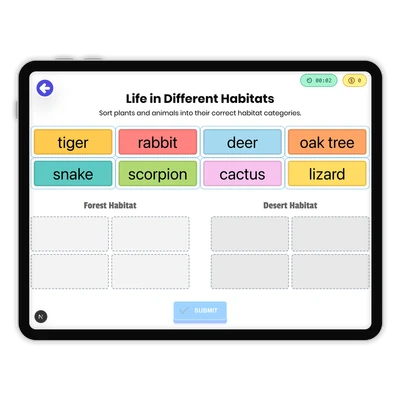
One major biome is the forest biome. Forests are characterized by dense tree cover and typically receive a good amount of rainfall. They can be tropical rainforests, which are warm and wet year-round, or temperate forests, which have distinct seasons. Animals like monkeys, deer, and various bird species thrive in forests.
Next, consider the grassland biome. Grasslands are dominated by grasses rather than large trees. They often have moderate rainfall, not enough for forests but too much for deserts. Savannas in Africa and prairies in North America are examples. Here, you'd find animals like zebras, lions, bison, and kangaroos adapted to open spaces.
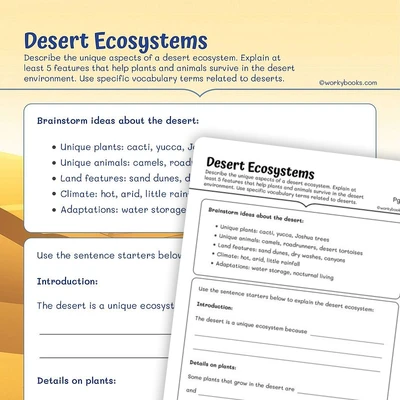
The desert biome is known for its extreme dryness and often high temperatures during the day, with cold nights. Plants and animals in deserts have incredible adaptations to conserve water, like cacti with thick waxy stems and camels that can store water. Deserts receive very little rainfall, making life challenging but not impossible.
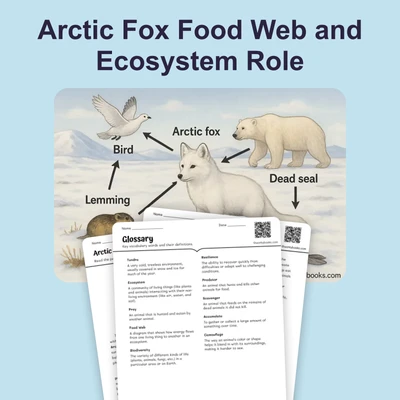
On the opposite end of the spectrum is the tundra biome. Tundra is found in very cold regions, often near the North Pole or on high mountains. It has a layer of permanently frozen ground called permafrost, which prevents large trees from growing. Mosses, lichens, and small shrubs cover the land, supporting animals like polar bears, arctic foxes, and caribou.
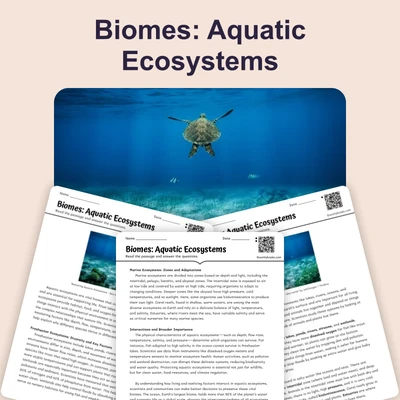
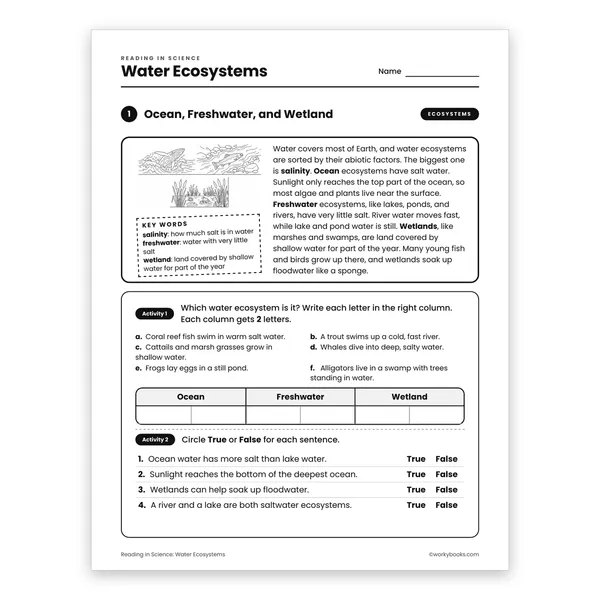
Finally, aquatic biomes cover most of the Earth's surface and include oceans, lakes, rivers, and wetlands. These biomes are defined by water's characteristics, like saltiness (salinity), temperature, and depth. Marine life, from tiny plankton to massive whales, calls these watery worlds home. Each biome, whether on land or in water, is a unique ecosystem, a community of living organisms interacting with their non-living environment.
Interesting Fact: The largest biome on Earth is the marine (ocean) biome, covering about 70% of the planet's surface!
Comprehension quiz (10 questions)
1. Which of the following is a biotic factor?
2. What is the permanently frozen ground in the tundra biome called?
3. What primarily characterizes a grassland biome?
4. How do plants in the desert biome adapt to conserve water?
5. Which biome is known for moderate rainfall, not enough for forests but too much for deserts?
6. What defines aquatic biomes?
7. Why do large trees not grow in the tundra biome?
8. Tropical rainforests are a type of forest biome.
9. An ecosystem is defined as:
10. How would you classify a region with very cold temperatures and permafrost?
Perfect for the way you teach
- Build comprehension skills
- Auto-graded quiz
- Differentiated reading
- Read together at home
- Improve fluency
- Quiet reading time
- Reading curriculum support
- Independent practice
- Track Lexile growth