Hard or Soft
Interactive passage with audio narration, comprehension questions, and printable PDF.
By completing this purchase you agree to our Terms of Use and Privacy Policy. Your subscription renews automatically until you cancel. You can cancel anytime from your account settings. All sales are final and non-refundable. Digital content is available for download in your account immediately upon purchase.
What's included
Hard or Soft preview and details
About this printable Hard or Soft science reading passage, NGSS-aligned (Grades 3-6)
Sample passage and quiz from Hard or Soft
Reading passage and comprehension quiz preview
Is It Hard or Soft? Rough or Smooth?
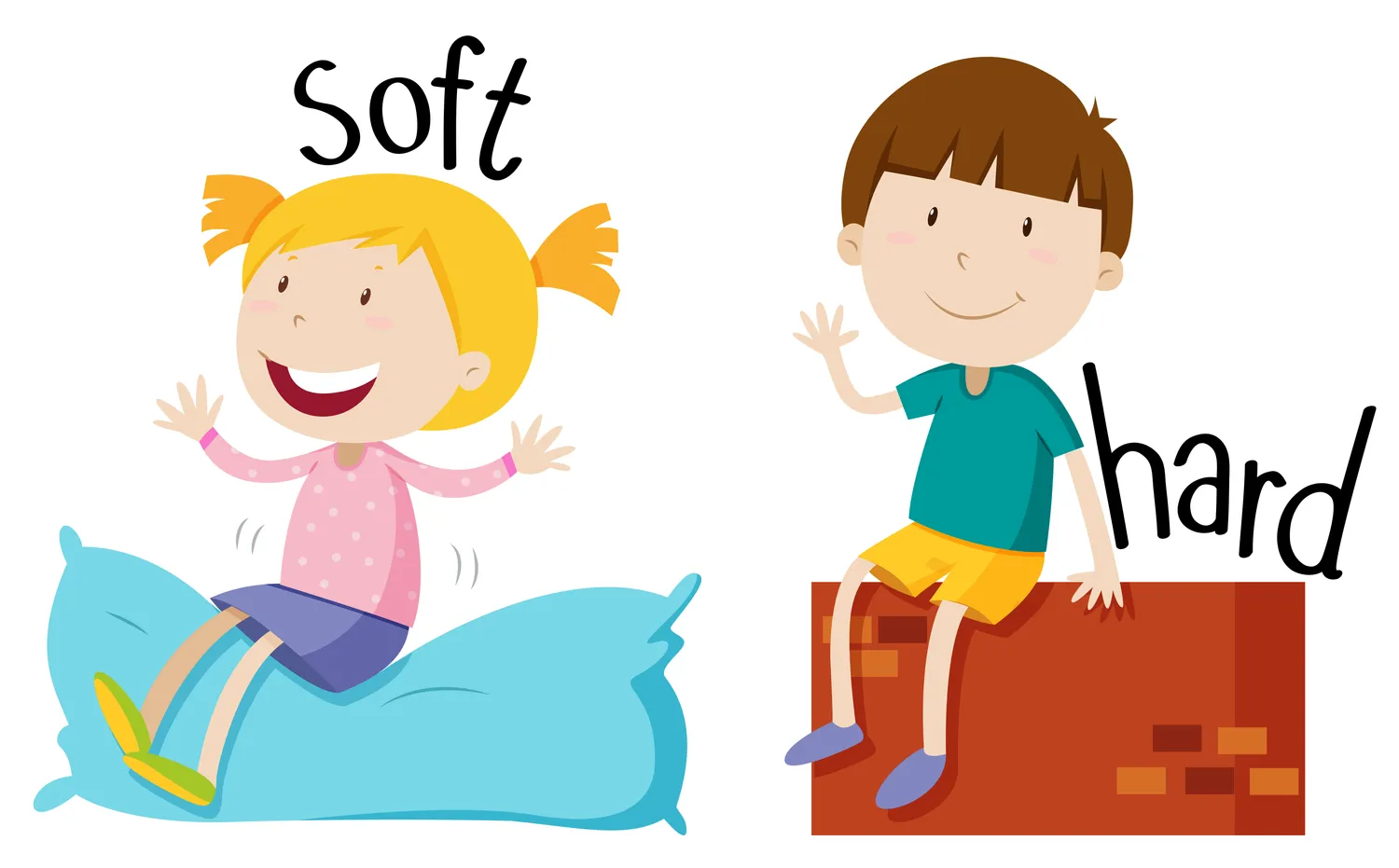
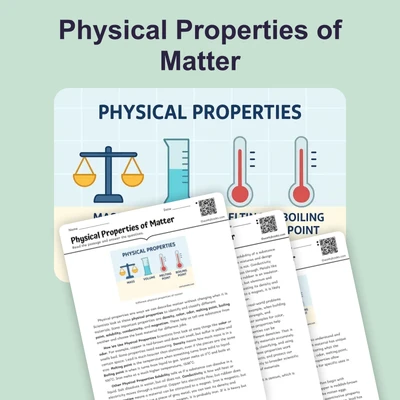
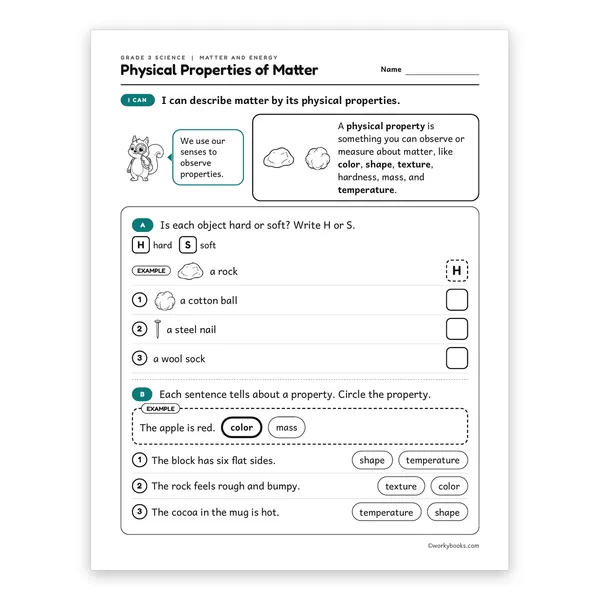
Materials all around us have different properties that we can notice using our senses. Two important properties of materials are texture and hardness. Texture is how something feels when you touch it. It can be rough, smooth, soft, or hard. Hardness is how solid or firm something is. A material that is hard does not bend or change shape easily.
For example, a rock is hard and rough. You cannot bend a rock, and its surface feels bumpy. Glass is hard and smooth. It does not bend, and its surface feels slippery to touch. A pillow is soft and sometimes smooth. You can press or squeeze it, and it feels gentle on your skin. A sponge is soft and rough. It can be pressed and it feels bumpy.
Different materials have different uses because of their properties. Hard materials like metal are used to make tools and buildings because they are strong and last a long time. Soft materials like cotton are used for clothes and bedding because they are comfortable. Rough materials can help clean things, like a rough sponge for washing dishes. Smooth materials, such as glass or plastic, are used for windows and bottles because they are easy to clean and feel nice to touch.
When scientists study materials, they also look at properties like absorbent (how well something takes in water), flexible (how easily it bends), and elastic (how well it stretches and returns to its shape). Knowing about these properties helps us choose the right material for the job.
Interesting Fact: Diamonds are the hardest natural material on Earth! They can even cut through other hard materials like metal and glass.
Comprehension quiz (8 questions)
1. What is texture?
2. Which is a hard and rough material?
3. What is an example of a soft material?
4. Why are hard materials used for tools?
5. What property helps clothes feel comfortable?
6. What is a flexible material?
7. Diamonds are the hardest natural material.
8. What does absorbent mean?
Perfect for the way you teach
- Build comprehension skills
- Auto-graded quiz
- Differentiated reading
- Read together at home
- Improve fluency
- Quiet reading time
- Reading curriculum support
- Independent practice
- Track Lexile growth