The Melting Point of Aluminum — Reading Comprehension
Rate this
Premium Resource
Present
Present in classroom. No work saved
Assign
Classroom with student accounts, Track progress
Quick Play
No student accounts, assign with a link
Grades
5
6
7
8
Standards
5-PS1
MS-PS1-4
RI.6.3
RI.7.1
PRINT+DIGITAL RESOURCE
This learning resource is available in interactive and printable formats. The interactive worksheet can be played online and assigned to students. The Printable PDF version can be downloaded and printed for completion by hand.
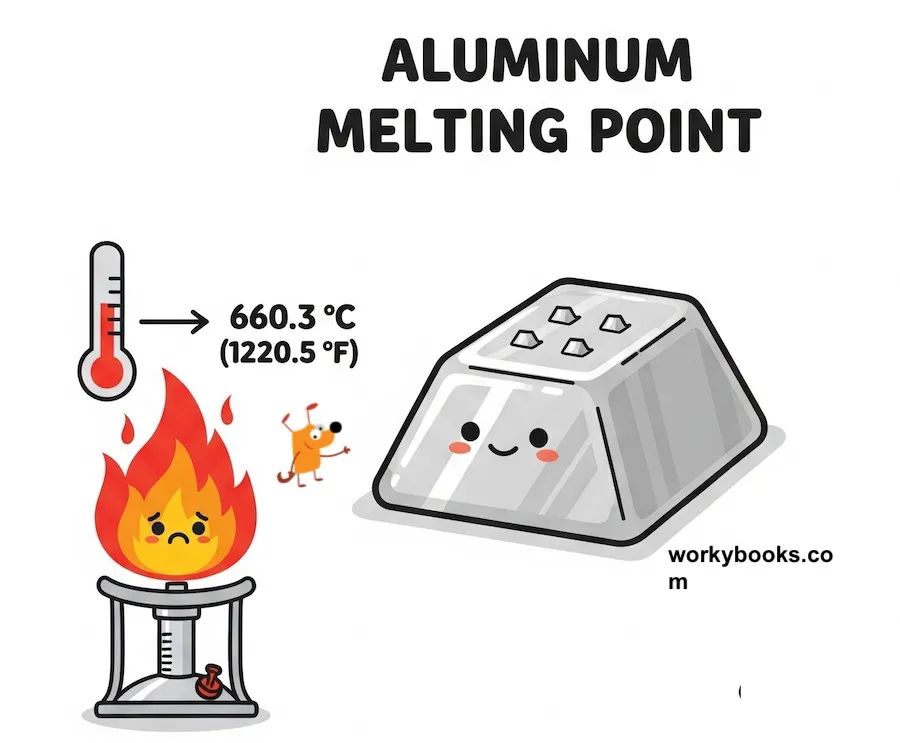
This science reading passage, 'The Melting Point of Aluminum,' introduces middle school students to the physical property of melting point through the example of aluminum. With a melting point of 660.3°C (1220.5°F), aluminum changes from solid to liquid at a lower temperature than many other metals, making it easier to melt, shape, and recycle. The passage explains how melting point is a physical property—one that can be observed without changing the identity of a substance. Students will learn why aluminum is widely used in industries like transportation, packaging, and construction. This content supports the NGSS standard MS-PS1-4, which focuses on particle motion, temperature, and state changes in pure substances. It also supports Common Core standards such as RI.6.1 and RI.6.4. Engaging and accessible, the passage includes a fun fact about aluminum’s abundance and offers 8 multiple choice questions to reinforce comprehension, vocabulary, and science literacy.
CONTENT PREVIEW
Expand content preview
Aluminum is a light, silver-colored metal used in many everyday items. You can find it in soda cans, kitchen foil, airplanes, and even bicycles. One important property of aluminum is its melting point—the temperature at which it changes from a solid to a liquid.
The melting point of aluminum is 660.3 degrees Celsius (or 1220.5 degrees Fahrenheit). This is much lower than the melting point of steel, but still much hotter than most kitchen ovens can reach. Because it melts at a lower temperature than other metals, aluminum is easier to shape and recycle.
Melting point is a physical property. That means it can be measured without changing what the substance is made of. When aluminum melts, it becomes a liquid, but it is still aluminum. Its basic structure stays the same, just in a different form.
Aluminum’s melting point makes it useful in many industries. In factories, aluminum is heated until it melts and is then poured into molds to make car parts, cans, and machine parts. Its low melting point also makes it great for recycling. Used aluminum can be melted and reused many times without losing quality.
Understanding melting points helps scientists and engineers know how to work with materials safely and efficiently. For aluminum, it’s all about being lightweight, easy to shape, and energy-efficient to recycle.
Fun Fact : Aluminum is the most abundant metal in Earth’s crust, making up about 8% of the planet’s solid surface!
What is the main idea of the passage?
Aluminum is more expensive than steelAluminum can be found in foodThe melting point of aluminum and why it is importantHow to clean aluminum properly
What is the melting point of aluminum in Celsius?
0°C100°C660.3°C1535°C
Why is aluminum easier to recycle than other metals?
It is heavier than steelIt melts at a lower temperatureIt dissolves in waterIt doesn’t need heat to recycle
What is meant by a physical property?
A trait that changes the substance completelyA property that only gases haveA measurable trait that does not change the substance's identitySomething only scientists care about
Which item is not listed in the passage as made of aluminum?
Soda cansAirplanesBicyclesShoes
What happens when aluminum melts?
It turns into a gasIt changes into a new substanceIt turns into liquid aluminumIt loses all its strength
Why is knowing the melting point of aluminum useful?
To cook with itTo know how to throw it awayTo shape and recycle it safelyTo stop it from rusting
What is a benefit of aluminum’s lower melting point?
It cannot be used in machinesIt breaks down easilyIt is easier to shape and reuseIt freezes faster than water
Perfect For:
👩🏫 Teachers
• Reading comprehension practice
• Auto-graded assessments
• Literacy skill development
👨👩👧👦 Parents
• Reading practice at home
• Comprehension improvement
• Educational reading time
🏠 Homeschoolers
• Reading curriculum support
• Independent reading practice
• Progress monitoring
Reading Features:
📖
Reading Passage
Engaging fiction or nonfiction text
❓
Comprehension Quiz
Auto-graded questions
📊
Instant Feedback
Immediate results and scoring
📄
Printable Version
Download for offline reading
🔊
Read Aloud
Voice-over with word highlighting
Reviews & Ratings
No reviews yet. Be the first to share your experience!
Related Content
The Melting Point of Substances
This middle school science reading passage, titled 'The Melting Point of Substances', explores the physical property kno...
5-PS1MS-PS1-4RI.6.3RI.7.1
The Melting Point of Steel
This engaging science passage, 'The Melting Point of Steel,' explains a key physical property of steel—its melting point...
5-PS1MS-PS1-4RI.6.3RI.7.1
The Melting Point of Copper
This reading passage, 'The Melting Point of Copper,' introduces middle school students to an important physical property...
5-PS1MS-PS1-4RI.6.3RI.7.1
The Boiling Point of Water
This passage, 'The Boiling Point of Water,' introduces students to the physical property of boiling point through one of...
5-PS1MS-PS1-4RI.6.3RI.7.1
What is Freezing Point Depression
This passage, 'Freezing Point Depression,' introduces students to the physical science concept of how adding substances ...
5-PS1MS-PS1-4RI.6.3RI.7.1
Is Sublimation Endothermic or Exothermic?
This NGSS-aligned science passage for middle school explains the thermodynamic nature of sublimation, showing how a soli...
MS-PS1-4HS-PS1
How Many Valence Electrons Does Oxygen Have?
This NGSS-aligned science reading passage teaches middle school students about the number of valence electrons in oxygen...
MS-PS1-2MS-PS1-4
How Many Valence Electrons Does Chlorine Have?
This NGSS-aligned science reading passage explains how many valence electrons chlorine has and why that makes it such a ...
MS-PS1-2MS-PS1-4
What Is Vapor Pressure?
This NGSS-aligned science passage explains the concept of vapor pressure in an age-appropriate, engaging way for middle ...
MS-PS1-4MS-LS1-2
Solids, Liquids, and Gases
This comprehensive middle school science passage explains the scientific concepts behind the three common states of matt...
MS-PS1-4
Behavior of Gases
This comprehensive reading passage explores the behavior of gases for middle school students, aligned with NGSS standard...
MS-PS1-4
Evaporation as Physical Change
This middle school science passage examines the process of evaporation, a fundamental physical change where a liquid tur...
MS-PS1-4
Physical Changes: Condensation
This middle school science passage explores the process of condensation, the physical change where a gas becomes a liqui...
MS-PS1-4
Sublimation as Physical Change
This educational passage for grades 6-8 explores the science of sublimation—a physical change where a solid transforms d...
MS-PS1-4
Physical Changes: Deposition
This middle school science passage explores the concept of deposition, a type of physical change where matter transition...
MS-PS1-4
Scientific Investigations
This passage, aligned with NGSS standards for grades 6-8, introduces students to the process of scientific investigation...
MS-ETS1-1MS-ETS1-2MS-ETS1-3MS-ETS1-4
Scientific Theories
This reading passage for grades 6-8 introduces students to the concept of scientific theories, emphasizing that these ar...
MS-PS1-1MS-PS1-4MS-PS3-4SCIENCE AND ENGINEERING PRACTICES
Particle Model of Matter
This comprehensive science reading passage for grades 6-8 explores the particle model of matter, aligning with NGSS stan...
MS-PS1-1MS-PS1-4
Kinetic Theory of Matter
This middle school science reading passage introduces students to the kinetic theory of matter, aligning with NGSS MS-PS...