What Are Physical Changes?
Interactive passage with audio narration, comprehension questions, and printable PDF.
By completing this purchase you agree to our Terms of Use and Privacy Policy. Your subscription renews automatically until you cancel. You can cancel anytime from your account settings. All sales are final and non-refundable. Digital content is available for download in your account immediately upon purchase.
What's included
What Are Physical Changes? preview and details
About this printable What Are Physical Changes? science reading passage, NGSS-aligned (Grades 3-6)
Sample passage and quiz from What Are Physical Changes?
Reading passage and comprehension quiz preview
What Are Physical Changes
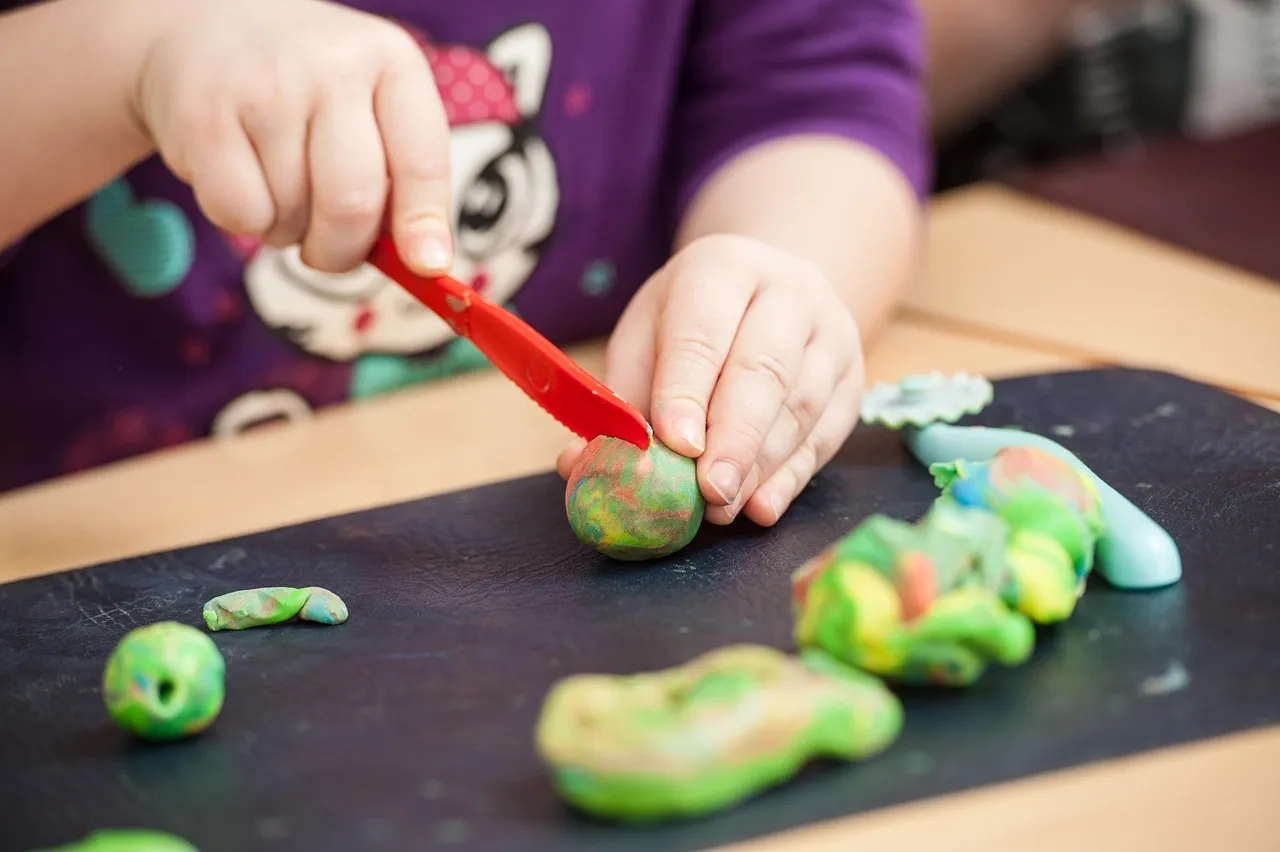
When you squeeze, roll, or flatten play dough, you're only changing its shape—a perfect example of a physical change. Image by elkimmelito / Pixabay.
A physical change is a change to matter that does not create a new substance. When a physical change happens, the material looks different, but it is still made of the same stuff. Understanding physical changes helps us see that matter can change its shape, size, or state without becoming something completely new.
Think about what happens when you cut a piece of paper. The paper changes from one large piece into many smaller pieces. It looks different, but each small piece is still paper. Nothing new was created. This is a physical change. The same is true when you fold a piece of clay. You can shape it into a ball, a snake, or a flat pancake. The clay changes shape, but it is still clay.
Another common physical change involves states of matter. States of matter are the forms that matter can take, such as solid, liquid, or gas. When ice melts, it changes from a solid to a liquid. The ice looks very different as water, but it is still the same substance. Both ice and water are made of the same tiny particles. The particles just move differently in each state. When water freezes back into ice, that is also a physical change.
Some physical changes can be reversed, or undone. If you crumple a piece of paper, you can unfold it again. If you melt butter, you can put it in the refrigerator to make it solid again. Other physical changes cannot easily be reversed. Once you cut paper into tiny pieces, it is very hard to put it back together. Even though some physical changes are hard to reverse, the important idea is that no new substance is formed. A substance is a type of matter with specific properties.
Physical changes happen all around us every day. When you tear lettuce for a salad, sharpen a pencil, or watch snow melt in the spring, you are seeing physical changes. The size, shape, or state may change, but the material stays the same. Scientists use the idea of physical changes to understand how matter behaves and to tell the difference between changes that make new substances and changes that do not.
Interesting Fact: When you dissolve sugar in water, it seems to disappear, but it is still there! This is a physical change because the sugar can be recovered by evaporating the water.
Comprehension quiz (8 questions)
1. What is a physical change?
2. Which is an example of physical change?
3. What are states of matter?
4. Why is melting ice a change?
5. Which change can be easily reversed?
6. What stays same during physical change?
7. Physical changes always create new substances.
8. What does substance mean?
Perfect for the way you teach
- Build comprehension skills
- Auto-graded quiz
- Differentiated reading
- Read together at home
- Improve fluency
- Quiet reading time
- Reading curriculum support
- Independent practice
- Track Lexile growth