How We Learn About the Past β Reading Comprehension
Rate this
Premium Resource
Present
Present in classroom. No work saved
Assign
Classroom with student accounts, Track progress
Quick Play
No student accounts, assign with a link
Grades
6
7
8
PRINT+DIGITAL RESOURCE
This learning resource is available in interactive and printable formats. The interactive worksheet can be played online and assigned to students. The Printable PDF version can be downloaded and printed for completion by hand.
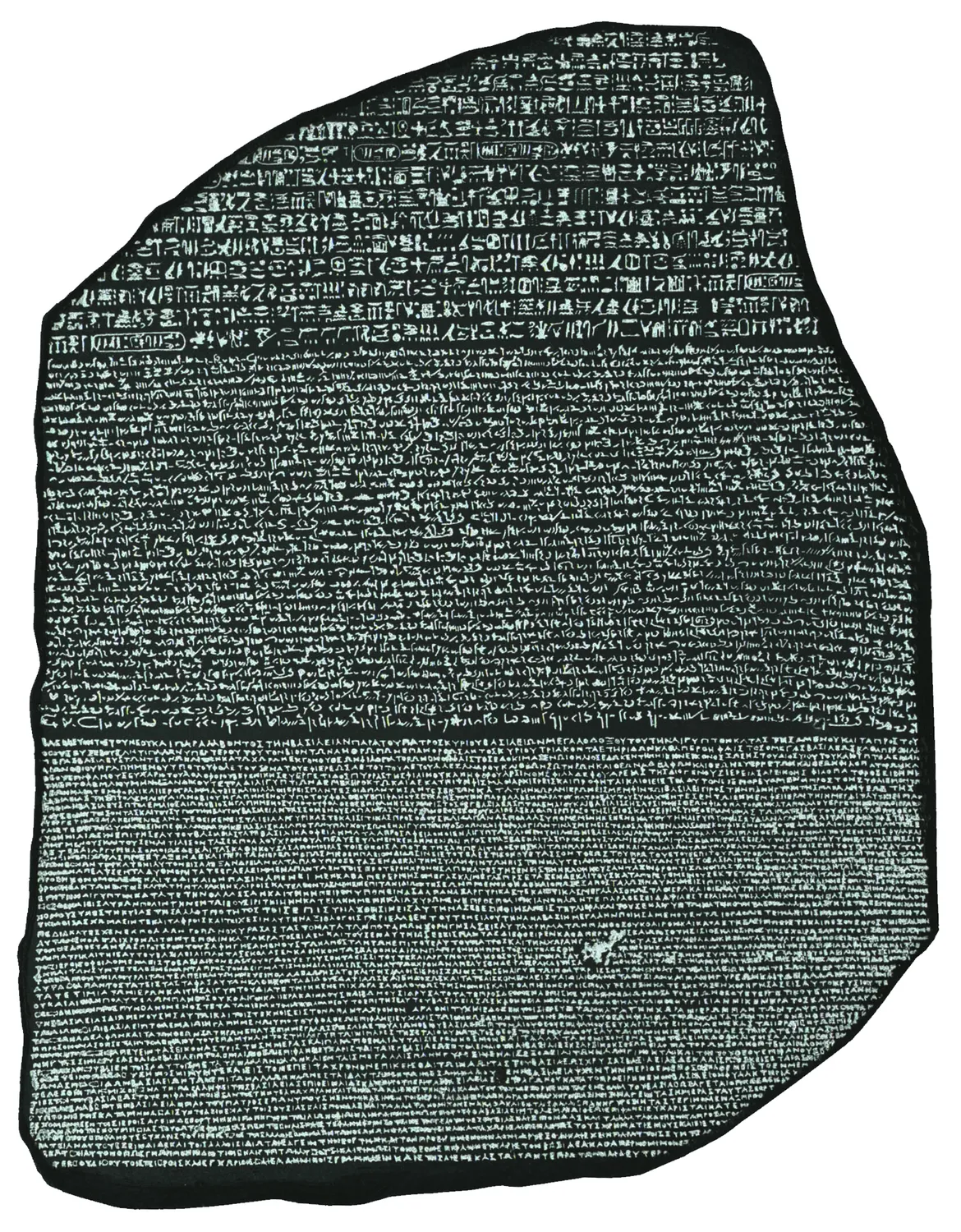
This engaging history reading passage examines how historians and archaeologists uncover the mysteries of ancient civilizations. Aligned with CA HSS 6.1 and CCSS RI.6.1 standards, the passage explains the methods used to study the past, such as analyzing primary sources and excavating artifacts. Students learn about the significance of archaeological discoveries like the Rosetta Stone and the city of Pompeii, and how these findings reveal information about daily life, social hierarchies, and major developments. The passage also discusses the challenges historians face due to limited evidence and how geography shapes civilizations. Included are comprehension questions, writing prompts, two graphic organizers, and a Spanish translation. The resource supports both history and ELA skills, and features an accessible read-aloud audio option.
The study of ancient civilizations depends on careful methods used by historians and archaeologists. These experts use different types of evidence, such as artifacts, primary sources, and the geographic context of sites to reconstruct the lives of people who lived thousands of years ago.
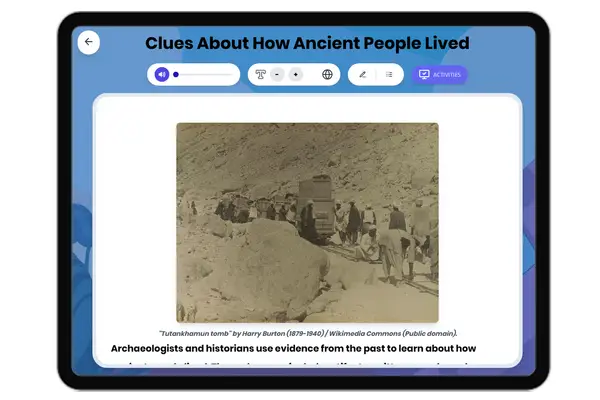
Historians often begin with written records, which are called primary sources. For example, the ancient Sumerians left behind clay tablets with cuneiform writing around 3,500 BCE in Mesopotamia. These tablets reveal details about trade, law, and daily life. However, not all civilizations developed writing, so historians rely on archaeology. Archaeologists excavate sites to uncover artifacts like tools, pottery, and even human remains. The discovery of the Rosetta Stone in 1799 allowed scholars to decode Egyptian hieroglyphs because it included the same text in three languages. This breakthrough helped historians read and understand other ancient texts.
Archaeological evidence also shows how geography shaped civilizations. The ruins of the city of Mohenjo-Daro, part of the Indus Valley Civilization in present-day Pakistan, reveal advanced urban planning, including grid-like streets and complex drainage systems. These features show how people adapted to their river environment. The eruption of Mount Vesuvius in 79 CE preserved the Roman city of Pompeii under ash, providing a unique look at Roman daily life. Objects such as frescoes, jewelry, and household tools help us understand the social hierarchy and roles within society.
Historians must also consider the limits of their evidence. Sometimes, only fragments of buildings or incomplete artifacts survive. Scholars debate the meaning and purpose of certain discoveries, and new findings can change interpretations. For example, the meaning of some symbols on Indus Valley seals remains a mystery because their writing has not been fully deciphered.
Understanding how we learn about the past is important because it connects us with the achievements, challenges, and daily lives of people from long ago. By studying ancient civilizations, we see how human societies have changed over time and how geography, innovation, and culture have shaped our world.
This process of discovery relates to the wider study of history, showing how evidence and interpretation help us understand our shared human story.
Interesting Fact: The city of Troy, once believed to be a legend, was discovered in modern-day Turkey by archaeologist Heinrich Schliemann in the late 1800s.
What did the Rosetta Stone help scholars do?
Decode Egyptian hieroglyphsFind new citiesBuild pyramidsCreate cuneiform writing
Which city was preserved by volcanic ash?
PompeiiTroyMohenjo-DaroSumer
When did Sumerians write on clay tablets?
Around 3,500 BCE79 CE1799Late 1800s
Why do historians use archaeology?
Some societies left no writingTo build new citiesTo make lawsFor fun
How did geography affect Mohenjo-Daro?
Led to smart city planningCreated the Rosetta StoneDestroyed the cityStarted wars
What is a primary source?
A record made at the timeA modern history bookA movie about the pastA scientist
Troy was discovered by Schliemann. True or false?
TrueFalse
What is an artifact?
An object from the pastA living animalA modern toolA weather event