Hurricanes and Ocean Heat
Interactive passage with audio narration, comprehension questions, and printable PDF.
By completing this purchase you agree to our Terms of Use and Privacy Policy. Your subscription renews automatically until you cancel. You can cancel anytime from your account settings. All sales are final and non-refundable. Digital content is available for download in your account immediately upon purchase.
What's included
Hurricanes and Ocean Heat preview and details
About this printable Hurricanes and Ocean Heat science reading passage, NGSS-aligned (Grades 5-8)
Sample passage and quiz from Hurricanes and Ocean Heat
Reading passage and comprehension quiz preview
Hurricanes and Ocean Heat
Hurricanes are among the most powerful and destructive storms on Earth. These massive weather systems form over warm ocean waters and can cause severe damage when they reach land. Scientists study hurricanes to understand how they develop and why some become much stronger than others. One key question is: What role does the ocean play in making hurricanes so intense?
How Warm Ocean Water Powers Hurricanes
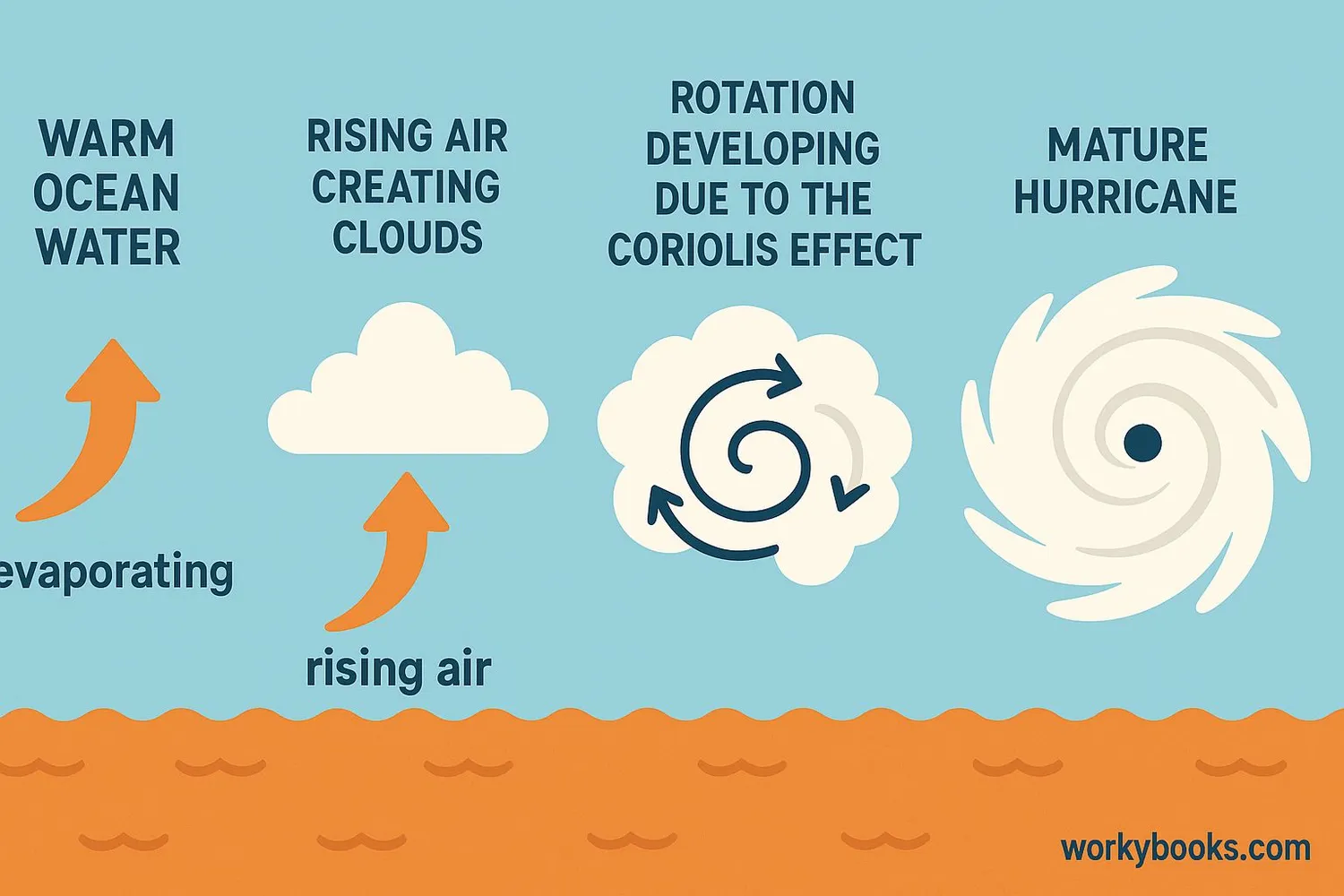
Hurricanes act as a type of natural heat engine. The process begins when the surface of the ocean reaches at least 26°C (79°F) to a significant depth, usually around 50 meters. This warm water evaporates, sending moist air upward into the atmosphere. As the moist air rises, it cools and condenses, releasing latent heat. This heat energy causes air to rise even faster, lowering pressure at the surface and drawing in more moist air from the surroundings. The cycle repeats, and the storm grows in strength. The more heat energy available from the ocean, the more powerful the hurricane can become. For example, major storms in the Atlantic often intensify rapidly when they pass over warm regions like the Gulf Stream, which can carry water several degrees warmer than nearby areas.
Ocean Currents, Marine Heat Waves, and Hurricane Intensification
Not all parts of the ocean are equally warm. Ocean currents such as the Gulf Stream and the Loop Current transport warm water from the tropics to higher latitudes. When a hurricane crosses one of these warm currents, it often intensifies rapidly because it has more heat energy to absorb. Marine heat waves—periods when ocean temperatures are much warmer than normal—can also supercharge hurricanes. In 2020, Hurricane Laura intensified quickly over the warm waters of the Gulf of Mexico, fueled by the Loop Current and a marine heat wave. However, as hurricanes churn the ocean, they mix up deeper, cooler water to the surface, which can weaken the storm or reduce the strength of storms that follow. This effect is one reason why back-to-back storms may not both become extremely strong.
Climate Change and the Future of Hurricanes
There is growing evidence that a warming climate is making hurricanes stronger and more dangerous. As greenhouse gases raise global temperatures, oceans absorb over 90% of the excess heat. This means that sea surface temperatures are rising worldwide. Because hurricanes rely on warm water, hotter oceans supply more energy, leading to storms that intensify more quickly and produce heavier rainfall. In recent years, scientists have observed several hurricanes in the Atlantic that rapidly intensified just before landfall, causing major impacts. This trend is expected to continue as climate change progresses, making hurricane forecasting and disaster preparedness even more important.
Understanding the connection between ocean heat and hurricane strength helps scientists predict storm behavior and protect communities. It also demonstrates how Earth’s systems—ocean, atmosphere, and human activities—are deeply interconnected.
Interesting Fact:
Hurricane Patricia, which struck Mexico in 2015, was the strongest hurricane ever recorded in the Western Hemisphere, fueled by record-warm Pacific Ocean waters.
Comprehension quiz (10 questions)
1. What is the minimum sea surface temperature needed for a hurricane to form?
2. Which ocean current is known for carrying warm water up the east coast of the United States?
3. What happens when a hurricane passes over a marine heat wave?
4. What does the term 'latent heat' mean in the context of hurricanes?
5. According to the passage, what is one effect of hurricanes stirring up deeper, cooler water?
6. Which of the following best describes the relationship between climate change and hurricanes?
7. What is the role of the Loop Current in the Gulf of Mexico regarding hurricanes?
8. Which of the following is TRUE according to the passage?
9. Climate change is making hurricanes weaker and less dangerous. True or False?
10. All hurricanes require warm ocean water to form. True or False?
Perfect for the way you teach
- Build comprehension skills
- Auto-graded quiz
- Differentiated reading
- Read together at home
- Improve fluency
- Quiet reading time
- Reading curriculum support
- Independent practice
- Track Lexile growth