Isopod Behavior
Interactive passage with audio narration, comprehension questions, and printable PDF.
By completing this purchase you agree to our Terms of Use and Privacy Policy. Your subscription renews automatically until you cancel. You can cancel anytime from your account settings. All sales are final and non-refundable. Digital content is available for download in your account immediately upon purchase.
What's included
Isopod Behavior preview and details
About this printable Isopod Behavior science reading passage, NGSS-aligned (Grade 6)
Sample passage and quiz from Isopod Behavior
Reading passage and comprehension quiz preview
Isopod Behavior: Little Critters, Big Discoveries
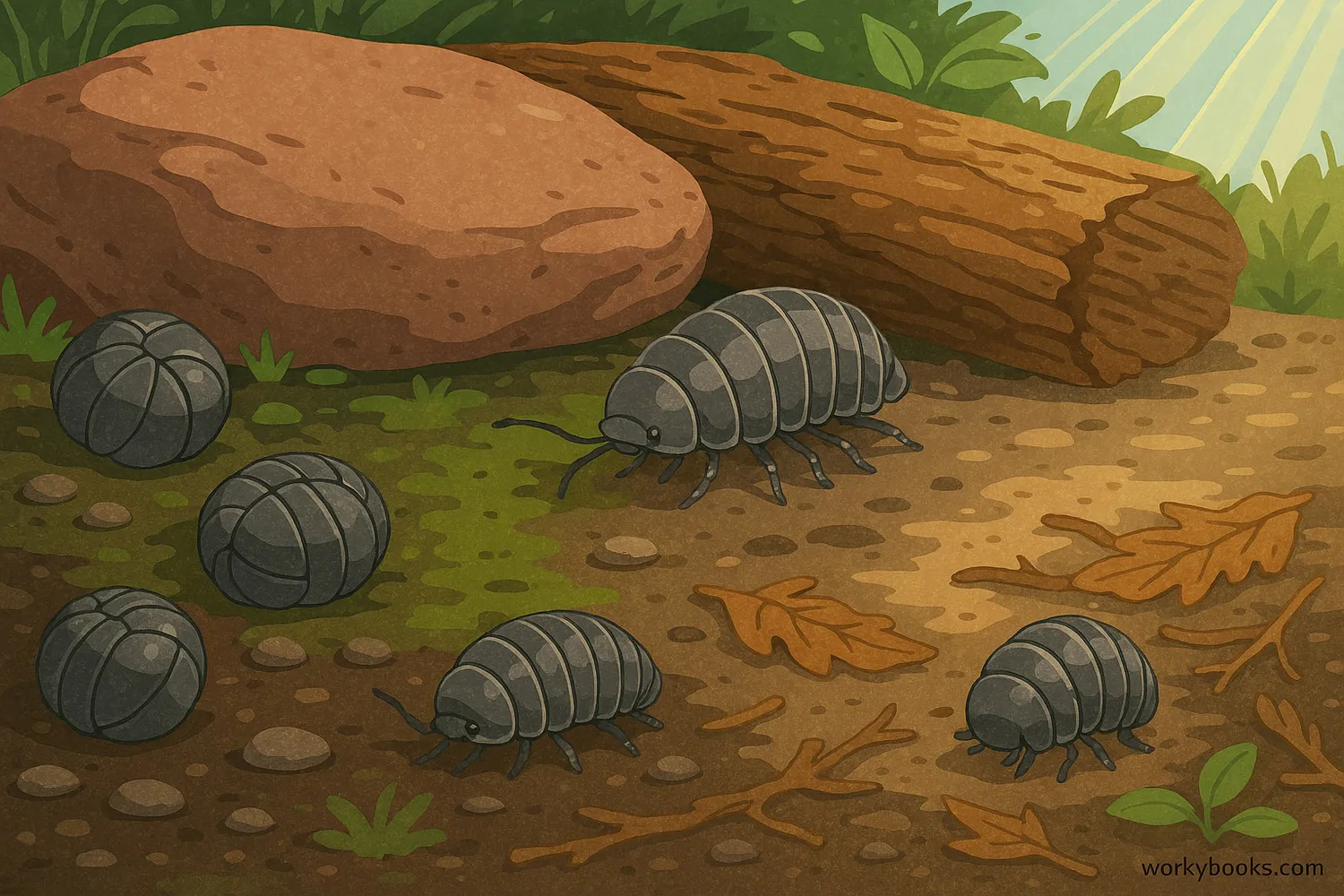
Imagine tiny armored creatures, rolling into a perfect ball when startled. These fascinating little animals are called isopods, though you might know them better as pill bugs or roly polies. They are not insects; they are actually crustaceans, like crabs and lobsters, but they live on land! Isopods are common in many habitats, especially in places that are dark and damp, such as under rocks, logs, or leaf litter.
Why do isopods prefer these specific environments? Their choices are a great example of isopod behavior influenced by environmental factors. Environmental factors are things in their surroundings that affect them. For isopods, moisture and light are incredibly important. They breathe through gills, which need to stay wet. If they are in a dry place for too long, they will dry out and cannot survive. This is why you often see them scuttling away from bright, open areas and towards shadows and moisture. Their survival depends on finding the right conditions.
Scientists study isopod behavior to understand how organisms interact with their world. For instance, an experiment might involve giving isopods a choice between a wet side and a dry side, or a dark side and a light side. You would likely observe that most isopods move towards the wet and dark areas. This consistent movement shows a clear preference. This behavior isn't just a random choice; it's a built-in response that helps them survive and grow.
Beyond environmental factors, genetic factors also play a role in isopod behavior. Genetic factors are the traits inherited from their parents, coded in their DNA. For example, some isopods might be naturally more sensitive to light than others, making them even quicker to seek out dark places. Over many generations, isopods with behaviors that help them survive better in their ecosystem are more likely to pass on those genes. So, their natural preferences for damp, dark places are a result of both what their environment offers and what their genes tell them to do. These two factors work together to shape how isopods live and grow.
Interesting Fact: Isopods are one of the few land crustaceans, and they actually drink water by absorbing it through tiny tube-like structures on their rear end!
Comprehension quiz (10 questions)
1. Isopods are most commonly known as?
2. Isopods breathe using?
3. Isopods are considered what type of animal?
4. Which is an environmental factor for isopods?
5. Isopods roll into a ball for protection. True or False?
6. Why do isopods seek out damp places?
7. What does 'preference' mean in the passage?
8. Genetic factors affect isopod behavior by influencing:
9. If an isopod could choose, which environment would it likely avoid?
10. Why is it beneficial for isopods to have behaviors that help them survive?
Perfect for the way you teach
- Build comprehension skills
- Auto-graded quiz
- Differentiated reading
- Read together at home
- Improve fluency
- Quiet reading time
- Reading curriculum support
- Independent practice
- Track Lexile growth