Teepees: Homes on the Great Plains
Interactive passage with audio narration, comprehension questions, and printable PDF.
By completing this purchase you agree to our Terms of Use and Privacy Policy. Your subscription renews automatically until you cancel. You can cancel anytime from your account settings. All sales are final and non-refundable. Digital content is available for download in your account immediately upon purchase.
What's included
Part of this bundle

Teepees: Homes on the Great Plains preview and details
About this printable Teepees: Homes on the Great Plains reading passage (Grades 3-5)
Sample passage and quiz from Teepees: Homes on the Great Plains
Reading passage and comprehension quiz preview
Native American Teepees
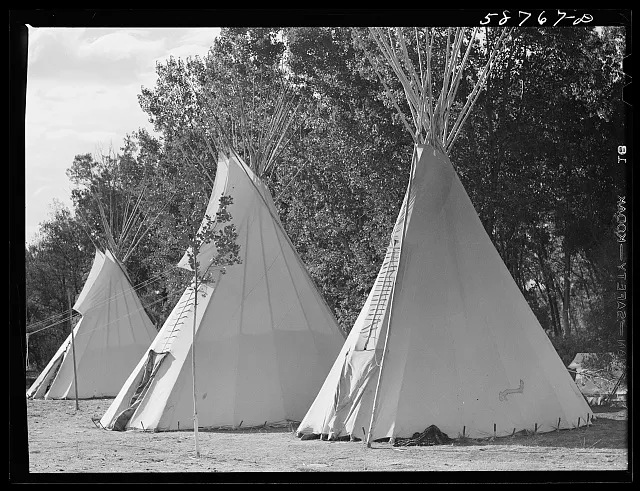
Source: Library of Congress - Wolcott, Marion Post, 1910-1990
Native American teepees were cone-shaped homes used by Plains tribes in the United States. These homes were made from strong wooden poles and covered with buffalo hides. The design was clever and helped people live on the open grasslands, called the Great Plains.
Plains Indians lived in a place where summers were hot and winters could be very cold. They needed a home that could protect them from the weather and be easy to move. This is why they built teepees. The poles formed the frame of the teepee. Each pole was tall and straight. The poles were tied together at the top and spread out at the bottom to make a wide, round base.
Buffalo were very important to the Plains Indians. They hunted buffalo for meat, clothing, and tools. The hide from the buffalo was strong and waterproof. Families stretched the buffalo hides over the wooden frame of the teepee, making a sturdy wall. The door faced east to catch the morning sun.
One special thing about teepees was how easy they were to move. Plains tribes followed the buffalo herds, so they needed homes that could travel with them. Teepees could be packed up in just 15 minutes. The hides and poles were tied to horses or dogs. Then the tribe could move to a new place and quickly set up their homes again.
The cone shape of the teepee helped it stand strong against strong winds common on the plains. A smoke hole at the top allowed people to have a fire inside for warmth and cooking. The hides could be lifted at the bottom to let in cool air or dropped down to keep out rain and snow.
Families worked together to build and care for their teepees. Children helped gather wood and prepare the buffalo hides. Everyone knew how to set up and take down the teepee. These homes helped the Plains Indians survive and stay united as they followed the buffalo herds through the seasons.
Interesting Fact: Some large teepees could hold up to 30 people at once!
Comprehension quiz (8 questions)
1. What shape is a teepee?
2. What did Plains Indians use to cover teepees?
3. How long to pack up a teepee?
4. Why did teepees need to be portable?
5. What was the purpose of the smoke hole?
6. How did the cone shape help teepees?
7. Teepees could be moved quickly. True or false?
8. What does 'portable' mean?
Common Core standards for Teepees: Homes on the Great Plains
Perfect for the way you teach
- Build comprehension skills
- Auto-graded quiz
- Differentiated reading
- Read together at home
- Improve fluency
- Quiet reading time
- Reading curriculum support
- Independent practice
- Track Lexile growth