The Siege of Boston: Surrounding the British — Reading Comprehension
Rate this
Premium Resource
Present
Present in classroom. No work saved
Assign
Classroom with student accounts, Track progress
Quick Play
No student accounts, assign with a link
Grades
3
4
5
Standards
D2.HIS.1.4-5
D2.HIS.2.4-5
D2.HIS.14.4-5
RI.4.3
RI.4.4
W.4.2
PRINT+DIGITAL RESOURCE
This learning resource is available in interactive and printable formats. The interactive worksheet can be played online and assigned to students. The Printable PDF version can be downloaded and printed for completion by hand.
This passage explores the Siege of Boston, a key event at the start of the American Revolution. Students will learn how the Patriots surrounded the British Army to force them out of Boston, using bravery and teamwork. The passage describes important figures like George Washington, explains the cause-and-effect relationships, and highlights the unity of the colonists. Activities include a timeline, multiple-choice quiz, writing prompts, and a graphic organizer. The passage is aligned with C3 Framework and Common Core standards, helping students build historical understanding and literacy skills. A Spanish translation and read aloud audio are included, making the content accessible and engaging for all learners. Keywords: Siege of Boston, American Revolution, Patriots, George Washington, British Army, timeline, reading comprehension, Spanish translation.
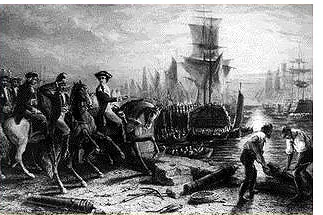
The Siege of Boston began in April 1775, soon after the battles at Lexington and Concord. British soldiers, known as Redcoats, rushed back to Boston for safety. American colonists, called Patriots, quickly surrounded the city. This was the first major action of the American Revolution.
The Patriots used a military blockade to trap the British inside Boston. They blocked all roads and paths into the city. The British could not get food or supplies easily. The Patriots built strong positions on the hills around Boston. They watched the British and waited for a chance to force them out.
For almost a year, the British soldiers and many people in Boston suffered shortages. Food became hard to find, and life was difficult. Both sides waited. The British hoped for help from their navy. The Patriots hoped for a way to break the stalemate.
In early 1776, General George Washington had a bold plan. He sent Colonel Henry Knox to bring heavy cannons from Fort Ticonderoga, far away in New York. Through snow and ice, Knox and his men dragged the cannons over hundreds of miles. These cannons were set up on Dorchester Heights, a hill overlooking the city and harbor.
The British saw the new cannons aimed at them. The Patriots could now destroy British ships in the harbor. The British leaders knew they could not stay. On March 17, 1776, the British army and many loyalists sailed away from Boston. The Patriots won the city without a major battle. This was a huge victory for the Americans and showed their clever strategy.
The Siege of Boston taught the Patriots that unity, planning, and bravery could defeat a stronger enemy. It gave hope to all the colonies fighting for independence.
Interesting Fact: The British left behind many cannons and supplies when they sailed away from Boston, which helped the Patriots in later battles.
When did the Siege of Boston begin?
April 1775July 1776May 1781September 1774
Who led the Patriots' army?
George WashingtonHenry KnoxKing GeorgePaul Revere
Where did the cannons come from?
Fort TiconderogaLexingtonConcordDorchester
Why did the Patriots use a blockade?
Trap the BritishFind goldGet foodBuild ships
What made the British leave Boston?
Cannons on the hillRainy weatherA big battleFood delivery
How did the Patriots get the cannons to Boston?
Dragged through snowCarried by trainFlew by kiteShipped by sea
The Patriots lost Boston to the British. True or false?
TrueFalse
What is a 'strategy'?
A plan to winA kind of cannonA British leaderA city in England
Perfect For:
👩🏫 Teachers
• Reading comprehension practice
• Auto-graded assessments
• Literacy skill development
👨👩👧👦 Parents
• Reading practice at home
• Comprehension improvement
• Educational reading time
🏠 Homeschoolers
• Reading curriculum support
• Independent reading practice
• Progress monitoring
Reading Features:
📖
Reading Passage
Engaging fiction or nonfiction text
❓
Comprehension Quiz
Auto-graded questions
📊
Instant Feedback
Immediate results and scoring
📄
Printable Version
Download for offline reading
🔊
Read Aloud
Voice-over with word highlighting
Reviews & Ratings
No reviews yet. Be the first to share your experience!
Related Content
Africans and Filipinos in Early California
This engaging reading passage explores the important roles Africans and Filipinos played in the early expeditions to Cal...
D2.HIS.1.4-5D2.HIS.2.4-5RI.4.3RI.4.4
The Bear Flag Revolt
This engaging U.S. History reading passage explores the Bear Flag Revolt, an important event during the time of Westward...
D2.HIS.1.4-5D2.HIS.2.4-5D2.HIS.3.4-5RI.4.3
Informational Text —Healthy Teeth and Gums
RI.4.10RI.4.3RF.4.4RF.4.4.A
Informational Text —Migratory Birds
Engage young minds with this worksheet that delves into the wonders of migratory birds. Learn about their extraordinary ...
RI.4.10RI.4.3RF.4.4RF.4.4.A
Informational Text —All About Dentists
Students read an informational text explaining what dentists do and how they are trained. Aligned to RI.4.3-2
RI.4.10RI.4.3RF.4.4RF.4.4.A
Pollination: A Crucial Ecosystem Service
Explore the vital role of pollination beyond plant reproduction, as it sustains ecosystems by ensuring food security, pr...
RI.4.2RI.4.3RI.4.4RI.5.1
The States of Matter: Solid
Discover the differences between solids, liquids and gases by exploring how their particles are arranged and move. This ...
RI.4.2RI.4.3RI.4.4RI.5.1
What is a Simple Machine
Discover the power of simple machines! This informational text explores how basic tools like levers, pulleys and incline...
RI.4.2RI.4.3RI.4.4RI.5.1
The Role of Pollinators in Nature
Learn about the fascinating world of pollinators and discover their crucial role in the reproductive process of flowerin...
RI.4.2RI.4.3RI.4.4RI.5.1
Seed Dispersal: How Plants Travel
Plants may seem stationary, but their seeds have amazing ways to travel! Explore the fascinating world of seed dispersal...
RI.4.2RI.4.3RI.4.4RI.5.1
What is Milky Way
This engaging passage introduces Grade 4-5 students to the Milky Way, our home galaxy. Students will learn that the Milk...
5-ESS1-15-ESS1-2RI.3.1RI.3.4
Andromeda Galaxy
This engaging science passage introduces Grade 4-5 students to the Andromeda Galaxy, our closest large galactic neighbor...
5-ESS1-15-ESS1-2RI.3.1RI.3.4
Bats in the Night
This informative first-grade reading passage delves into the intriguing world of bats, highlighting their nocturnal natu...
RI.3.1RI.4.4RI.4.3
Malala Yousafzai
This Grade 4-5 science reading passage introduces students to Malala Yousafzai, a courageous young woman from Pakistan w...
NGSSRI.3.1RI.3.2RI.4.3
Understanding Biological Evolution and Diversity
This passage addresses the NGSS standard 3-LS4-2 focusing on biological evolution and the unity and diversity of life. T...
RI.3.3RI.4.3RI.5.33-LS4-2
Early Life Forms and Their Adaptations
This educational passage focuses on early life forms and their basic adaptations, supporting NGSS standard 3-LS4-2 for e...
RI.3.3RI.4.3RI.5.33-LS4-2
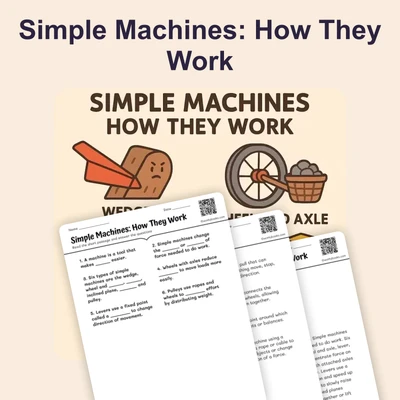
Simple Machines: How They Work
Students read an informative paragraph on simple machines and fill in key technical vocabulary terms to demonstrate unde...
RI.4.2RI.4.3RI.4.4RI.5.1
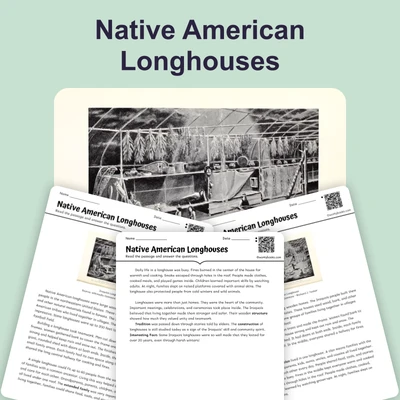
Longhouses of the Eastern Woodlands
This engaging U.S. history reading passage explores the longhouses of the Eastern Woodlands, focusing on the Iroquois an...
D2.HIS.1-6.3-5RI.4.1RI.4.3
Traditional Native American Clothing
This engaging history passage explores traditional Native American clothing and how it reflected the environment, values...