Antibiotic Resistance
Interactive passage with audio narration, comprehension questions, and printable PDF.
By completing this purchase you agree to our Terms of Use and Privacy Policy. Your subscription renews automatically until you cancel. You can cancel anytime from your account settings. All sales are final and non-refundable. Digital content is available for download in your account immediately upon purchase.
What's included
Antibiotic Resistance preview and details
About this printable Antibiotic Resistance science reading passage, NGSS-aligned (Grade 6)
Sample passage and quiz from Antibiotic Resistance
Reading passage and comprehension quiz preview
Understanding Antibiotic Resistance
Imagine tiny, living things all around us, too small to see without a microscope. These are bacteria. Many bacteria are harmless or even helpful, but some can cause sickness. When we get sick from bad bacteria, doctors often prescribe antibiotics. Antibiotics are special medicines designed to kill bacteria or stop them from growing. They've been a huge help in fighting diseases and saving lives for many years.
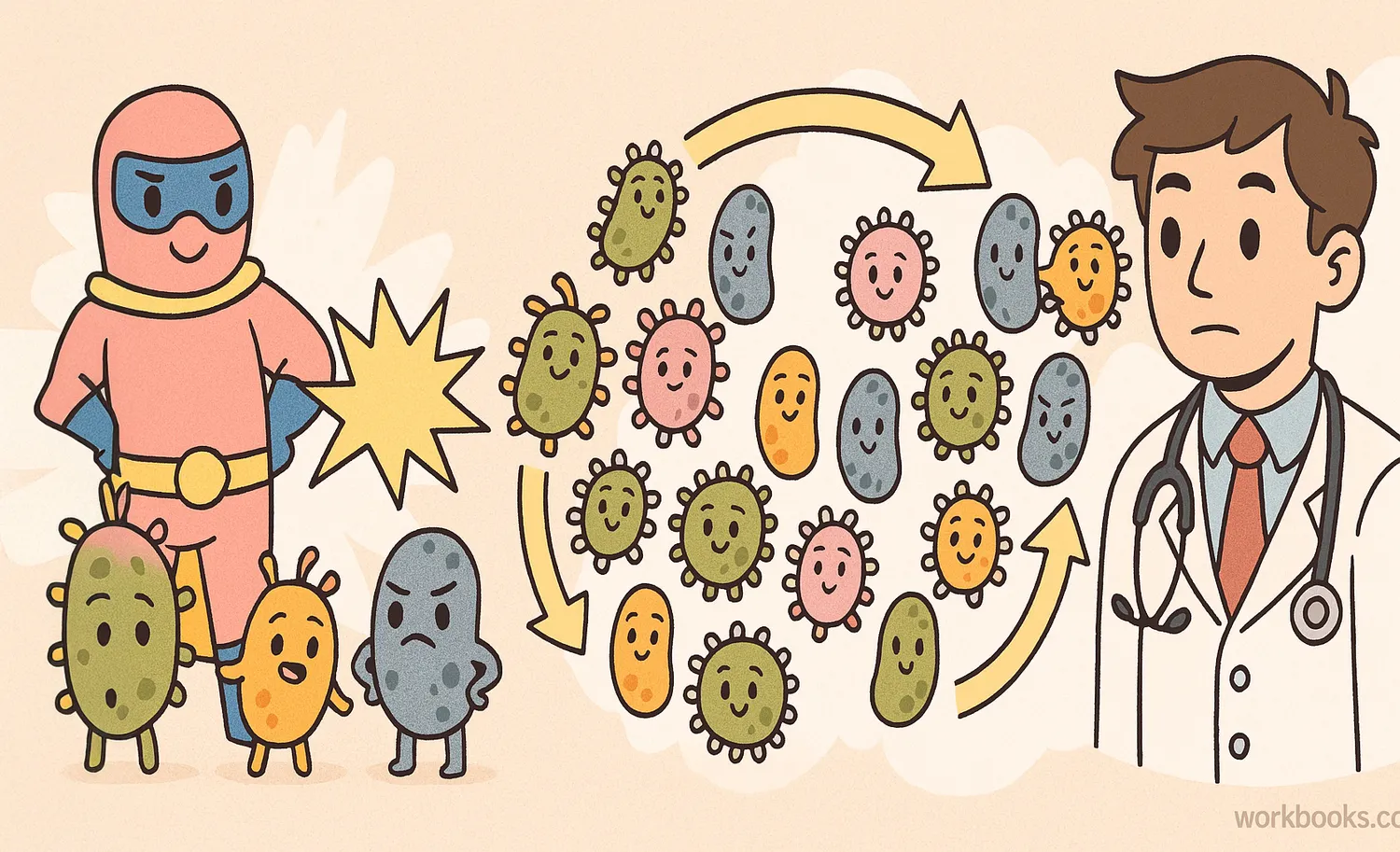
However, a big problem is growing: antibiotic resistance. This happens when bacteria change over time and become able to survive the antibiotics that were once able to kill them. Think of it like a superhero (the antibiotic) fighting a villain (the bacteria). At first, the superhero wins easily. But over time, the villain learns how to block the superhero's powers, making the superhero less effective. This is a real-world example of natural selection, a key idea in biology.
Here's how natural selection works with bacteria: In a group of bacteria, a few might have a tiny natural difference, or mutation, that makes them slightly stronger against an antibiotic. When that antibiotic is used, most of the regular bacteria die. But the few with the mutation survive. These surviving bacteria then reproduce, making many more bacteria that also have this new, stronger trait. Soon, a whole population of bacteria exists that is resistant to the antibiotic. This makes the medicine ineffective.
This process is sped up when antibiotics are used too often or not correctly. For instance, if you stop taking your antibiotics early, some stronger bacteria might survive and then multiply. This is why it's so important to only use antibiotics when a doctor says you need them and to always finish the entire prescription, even if you start feeling better. By understanding antibiotic resistance, we can help slow down this process and keep these important medicines working for the future of public health. Resisting the urge to overuse antibiotics is crucial in this global fight against superbugs.
Interesting Fact: The first antibiotic, penicillin, was discovered by accident in 1928 when scientist Alexander Fleming noticed mold killing bacteria in his lab dish.
Comprehension quiz (10 questions)
1. What are antibiotics designed to do?
2. What can cause sickness?
3. What is antibiotic resistance?
4. How does natural selection apply to bacteria?
5. What can speed up resistance?
6. Why is finishing antibiotics important?
7. If a bacteria has a mutation, it means it has a tiny natural difference.
8. Which term means the process where living things adapt to their environment to survive?
9. Why is antibiotic resistance a problem for public health?
10. What happens if resistant bacteria reproduce?
Perfect for the way you teach
- Build comprehension skills
- Auto-graded quiz
- Differentiated reading
- Read together at home
- Improve fluency
- Quiet reading time
- Reading curriculum support
- Independent practice
- Track Lexile growth