What Is Territorial Behavior In Animals?
Interactive passage with audio narration, comprehension questions, and printable PDF.
By completing this purchase you agree to our Terms of Use and Privacy Policy. Your subscription renews automatically until you cancel. You can cancel anytime from your account settings. All sales are final and non-refundable. Digital content is available for download in your account immediately upon purchase.
What's included
What Is Territorial Behavior In Animals? preview and details
About this printable What Is Territorial Behavior In Animals? science reading passage, NGSS-aligned (Grade 6)
Sample passage and quiz from What Is Territorial Behavior In Animals?
Reading passage and comprehension quiz preview
What Is Territorial Behavior In Animals?
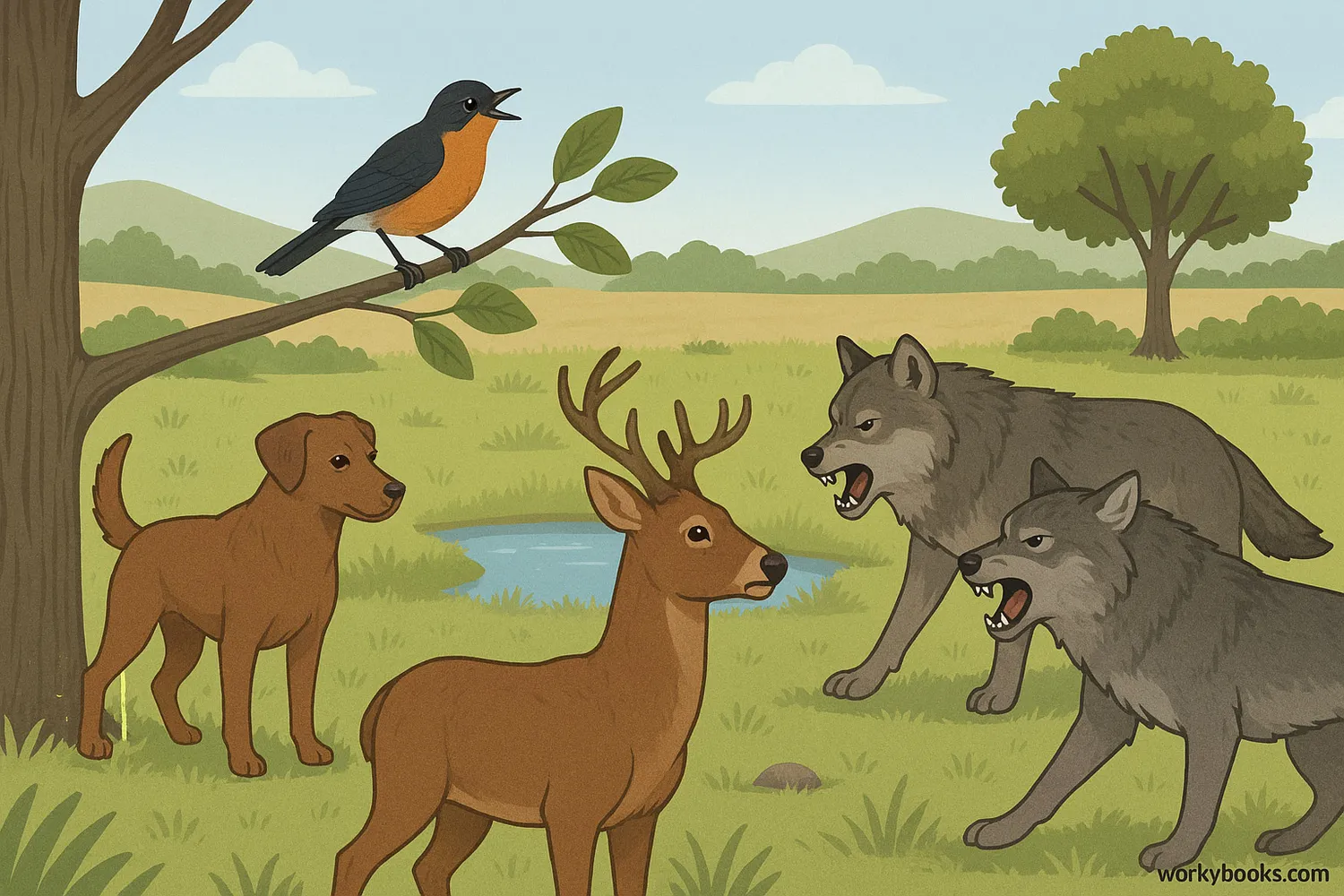
Imagine a personal space that an animal calls its own, a special area it patrols and protects. This concept is known as territorial behavior, a common survival strategy seen across many species in the animal kingdom. Animals establish a territory to secure vital resources needed for survival and reproduction. These resources include essential elements like food, water, shelter, and even mates.
Why do animals go to such lengths to claim an area? It's all about increasing their chances of survival. By defending a territory, an animal ensures it has exclusive access to the resources within it. This reduces competition from other animals of the same species, making it easier to find food, raise young, and stay safe from predators. This behavior is crucial for the animal's fitness, which means its ability to survive and pass on its genes.
Animals use various methods to mark and defend their territories. Scent marking is a popular technique; for example, dogs might urinate on trees, leaving a chemical signal that warns others. Birds often sing elaborate songs or display bright feathers to announce their presence and deter rivals. Some animals, like wolves, will use physical aggression, growling or even fighting to drive off intruders. These behaviors communicate a clear message: "This space is taken!"
The size of an animal's territory often depends on the availability of resources. If food is scarce, an animal might need a larger territory to find enough to eat. If resources are plentiful, territories might be smaller. For example, a pride of lions needs a large territory to hunt enough prey, while a small bird might defend only its nest and the immediate foraging area. This connection between territory size and resource availability is a key part of how animal populations are managed naturally within an ecosystem. Understanding territorial behavior helps us see how animals interact with their environment and each other to survive.
Interesting Fact: Prairie dogs are highly territorial and can create extensive underground tunnel systems with multiple entrance and exit points within their family group's designated area.
Comprehension quiz (10 questions)
1. What is territorial behavior?
2. Which of these is NOT a resource animals secure?
3. How does territorial behavior help animals survive?
4. What determines the size of an animal's territory?
5. What is 'fitness' in animals?
6. Scent marking is used to do what?
7. Territorial behavior helps reduce competition.
8. Which method might birds use to defend territory?
9. Why might a lion pride need a large territory?
10. What is a main benefit of having exclusive access to resources?
Perfect for the way you teach
- Build comprehension skills
- Auto-graded quiz
- Differentiated reading
- Read together at home
- Improve fluency
- Quiet reading time
- Reading curriculum support
- Independent practice
- Track Lexile growth