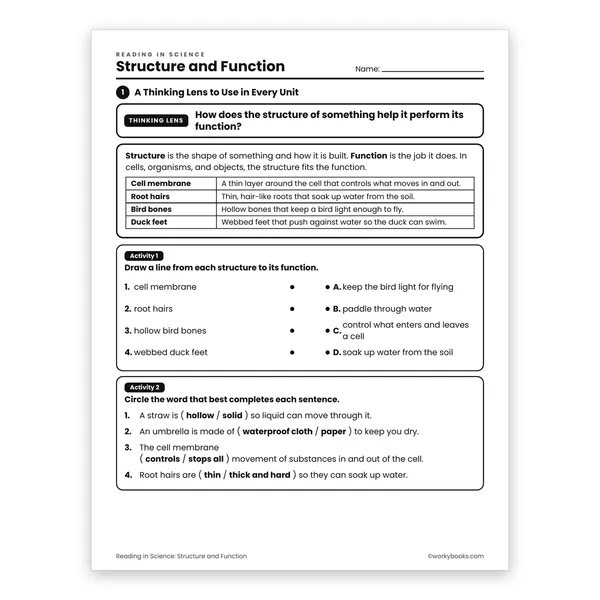
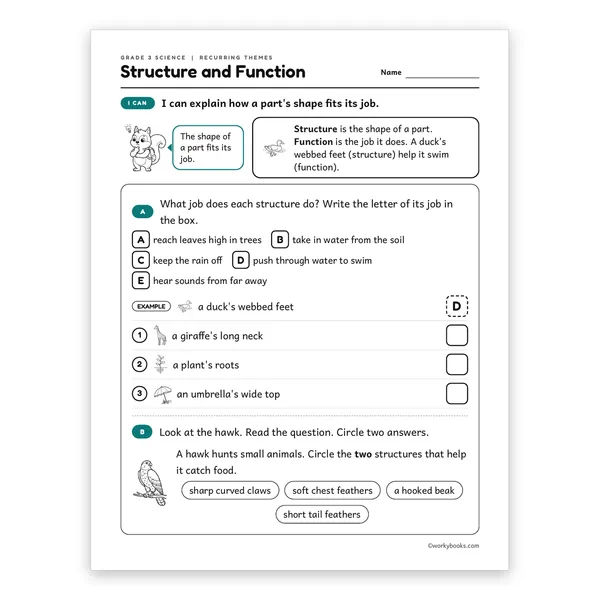
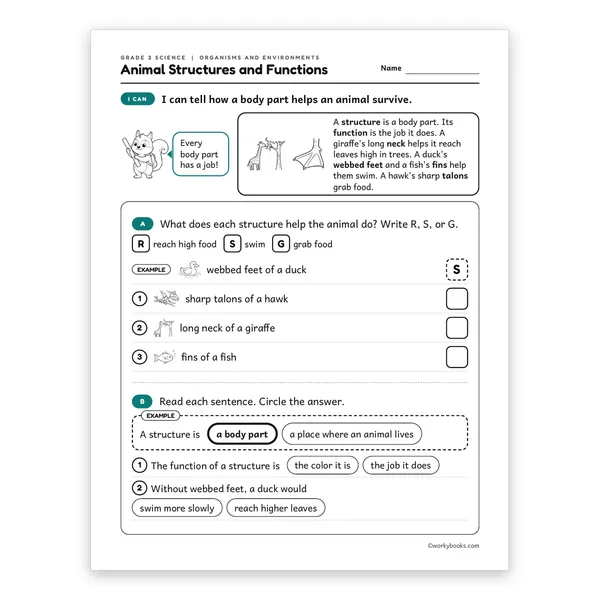
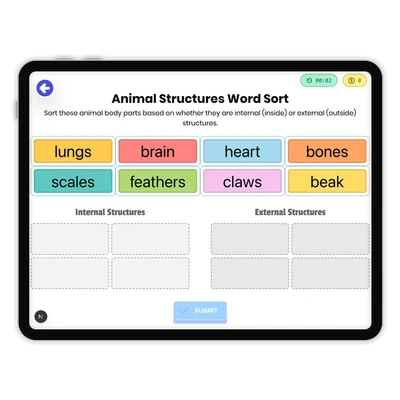
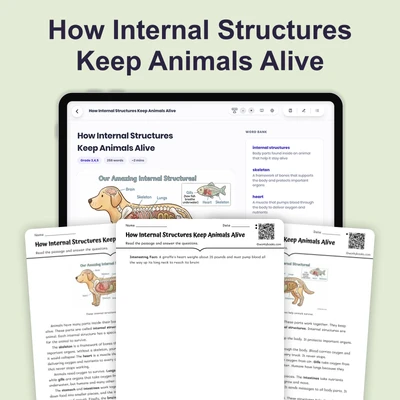
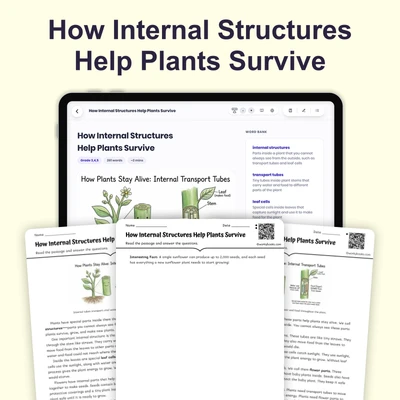
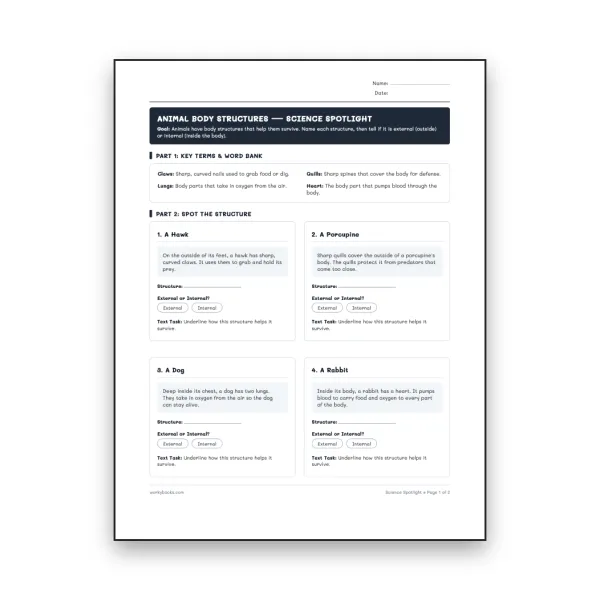
In this 'Animal Body Parts and Their Functions' word sort activity aligned with LS1.A, students learn about how different animal body parts are used for survival. This activity encourages students to categorize various parts like claws, wings, and sharp teeth based on their function, such as protection, movement, or gathering food. Through hands-on sorting, students develop an understanding of how animals are adapted to their environments and how each part plays a role in survival. This activity provides a fun and interactive way to reinforce the concept of structure and function in animal adaptations for young learners, helping them think critically about biology and anatomy.
Written by Workybooks TeamPublished by Workybooks
Who it's for
Perfect for the way you teach
Teachers
Engaging classroom centers
Auto-scored play
Use as warm-up or review
Parents
Educational screen time
Replay to build mastery
Fun, not boring drills
Homeschoolers
Hands-on practice
Self-paced challenge
Works on any device
Topics
animal body partsanimal protectionanimal movementanimal survivalNGSS LS1.Aanimal adaptations
Reviews & Ratings
No reviews yet. Be the first to share your experience!
More games and activities
19 more
Cell Structure and Function
This middle school science passage introduces the fundamental concept that cells are the basic unit of life, aligned wit...
MS-LS1-1MS-LS1-2
Claws vs. Nails: Structure and Function
This engaging, audio-integrated reading passage, "Claws vs. Nails: Structure and Function," introduces sixth-grade stude...
Plant Parts Function Sort
This classification activity helps students understand how different plant structures contribute to survival. Students c...
4-LS1-1
Animal Structures Word Sort
This engaging classification activity helps students understand the different structures that make up animal bodies. Stu...
4-LS1-1
The Nature of Life Science
This passage, aligned with NGSS MS-LS1-1, introduces students in grades 6-8 to the foundational concepts of life science...
MS-LS1-1
Science Vocabulary
This worksheet on domain-specific words will help students learn some science vocabulary. Students will be asked to matc...
L.3.6L.3.4.A
Simple Machines Science Report
This science writing task requires students to clearly explain how three simple machines work using precise domain-speci...
W.5.4
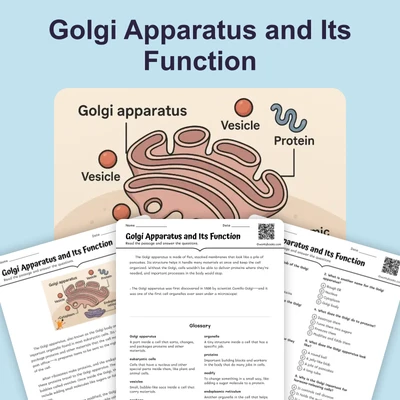
Golgi Apparatus and Its Function
This NGSS-aligned reading passage introduces middle school students to the structure and function of the Golgi apparatus...
MS-LS1-1
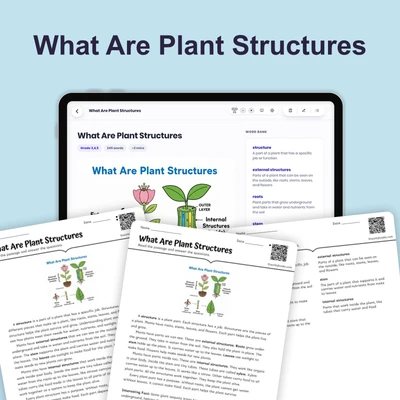
What Are Plant Structures
This engaging 250-word reading passage introduces fourth-grade students to the fundamental concept of plant structures a...
NGSS 4-LS1-1
Whale Blubber: Function and Adaptation
This engaging, audio-integrated reading passage, 'Whale Blubber Function and Adaptation,' introduces young learners to t...
Bacteria: Prokaryotic Cell Structure
This engaging and audio-integrated reading passage, 'Bacteria: Prokaryotic Cell Structure,' introduces 6th-grade student...
Citizen Science and Ecological Monitoring
This engaging passage for grades 6-8 introduces the concept of citizen science and its critical role in ecological monit...
MS-LS2-1
Tools and Technology in Earth Science
This middle school science reading passage explores the wide range of tools and technologies used in Earth science, from...
MS-ESS2-2MS-ESS3-2MS-ETS1-1MS-PS4-3
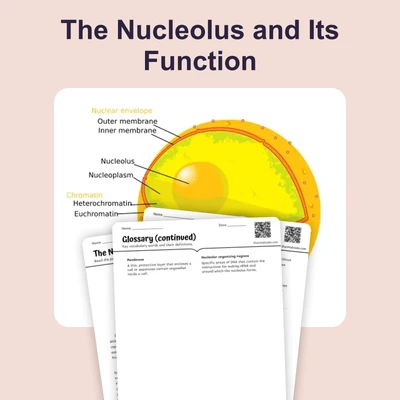
The Nucleolus and Its Function
This NGSS-aligned reading passage focuses on the nucleolus, a key structure inside the cell’s nucleus responsible for ma...
MS-LS1-1MS-LS1-2
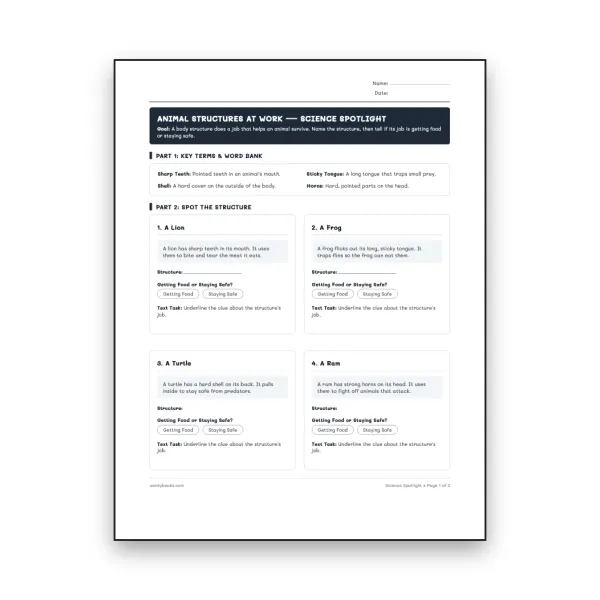
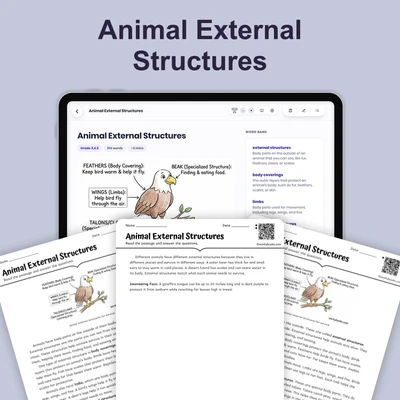
Animal External Structures
This engaging 250-word reading passage introduces fourth-grade students to the concept of animal external structures ali...
NGSS 4-LS1-1LS1.A
Blobfish Adaptations to Extreme Pressure
This engaging passage explores the fascinating world of the blobfish and its unique adaptations to the extreme pressure ...
The Pumpkin Life Cycle
This informational worksheet explores the pumpkin lifecycle, guiding students through procedural steps in a scientific t...
RI.2.3RI.2.10
What Is Earth Science?
This engaging middle school science passage introduces students to the field of Earth science, aligning with NGSS standa...
MS-ESS1MS-ESS2MS-ESS3SEP
Bonobo Behavior and Social Structure
This audio-integrated reading passage, 'Bonobo Behavior and Social Structure,' introduces Grade 6 students to the fascin...
MS-LS4-2: APPLY SCIENTIFIC IDEAS TO CONSTRUCT AN EXPLANATION FOR THE ANATOMICAL SIMILARITIES AND DIFFERENCES AMONG MODERN ORGANISMS AND BETWEEN MODERN AND FOSSIL ORGANISMS TO INFER EVOLUTIONARY RELATIONSHIPS.