1965 Immigration Act
Interactive passage with audio narration, comprehension questions, and printable PDF.
By completing this purchase you agree to our Terms of Use and Privacy Policy. Your subscription renews automatically until you cancel. You can cancel anytime from your account settings. All sales are final and non-refundable. Digital content is available for download in your account immediately upon purchase.
What's included
Part of this bundle

1965 Immigration Act preview and details
About this printable 1965 Immigration Act reading passage (Grades 3-5)
Sample passage and quiz from 1965 Immigration Act
Reading passage and comprehension quiz preview
1965 Immigration Act and California
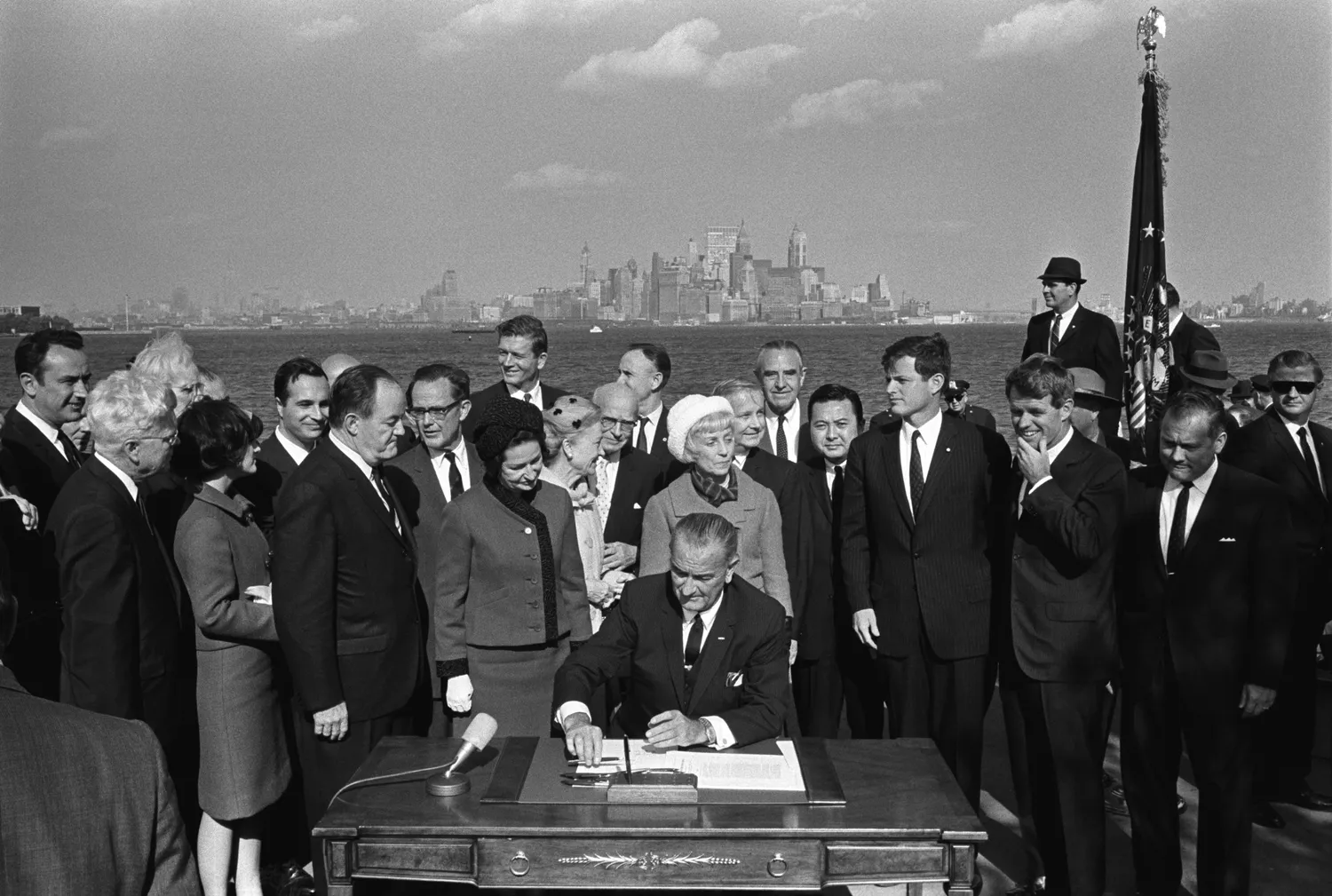
"President Lyndon B. Johnson Signing of the Immigration Act of 1965 by LBJ Library photo by Yoichi Okamoto
Source: Wikimedia Commons
The 1965 Immigration Act was a new law that changed who could come to live in the United States. Before 1965, the U.S. had rules called national-origin quotas. These rules made it hard for people from Asia, Africa, and Latin America to move to America. Most people allowed to immigrate came from Europe. Many families were separated for years because of these unfair rules.
In 1965, President Lyndon B. Johnson signed the Immigration Act into law. This law ended the national-origin quotas. It made a fair system where people from all over the world could apply to move to the United States. Now, more people from Asia, Latin America, and other parts of the world had the chance to build new lives in America.
California was greatly affected by this law. After 1965, California saw a large increase in immigration. People from China, India, Mexico, the Philippines, and many other countries arrived. They brought their cultures, languages, foods, and traditions. This made California a much more diverse place. In cities like Los Angeles and San Francisco, you can now find neighborhoods filled with people from all around the globe.
The 1965 Immigration Act changed California’s population. Children from many backgrounds went to school together. New holidays and festivals became part of California’s life. Businesses also grew because of the new ideas and skills that immigrants brought with them.
Some people worried about so many new arrivals. But over time, most Californians saw the positive effects. The state became known for its mix of cultures and opportunities for all. Today, California has people from more than 200 different countries. It is now the most diverse state in America.
The 1965 Immigration Act showed that laws can help people live better lives and make a place stronger. It inspired the United States to welcome people from all walks of life. The law helped shape modern America, especially in California, where diversity is a source of pride and strength.
Interesting Fact: The 1965 Immigration Act was signed at the foot of the Statue of Liberty, a symbol of hope for immigrants coming to America.
Comprehension quiz (8 questions)
1. Who signed the 1965 Immigration Act?
2. What did the old quotas limit?
3. Which state changed most after 1965?
4. What did immigrants bring to California?
5. How did California’s population change?
6. Why was the 1965 Act important?
7. The 1965 Immigration Act helped create diversity.
8. What does 'diverse' mean?
Perfect for the way you teach
- Build comprehension skills
- Auto-graded quiz
- Differentiated reading
- Read together at home
- Improve fluency
- Quiet reading time
- Reading curriculum support
- Independent practice
- Track Lexile growth