California's Water Challenges
Interactive passage with audio narration, comprehension questions, and printable PDF.
By completing this purchase you agree to our Terms of Use and Privacy Policy. Your subscription renews automatically until you cancel. You can cancel anytime from your account settings. All sales are final and non-refundable. Digital content is available for download in your account immediately upon purchase.
What's included
Part of this bundle

California's Water Challenges preview and details
About this printable California's Water Challenges reading passage (Grades 3-5)
Sample passage and quiz from California's Water Challenges
Reading passage and comprehension quiz preview
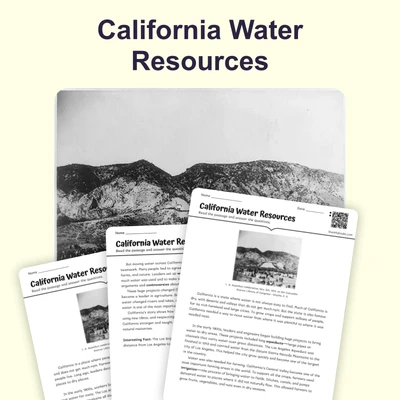
California's Water Challenges
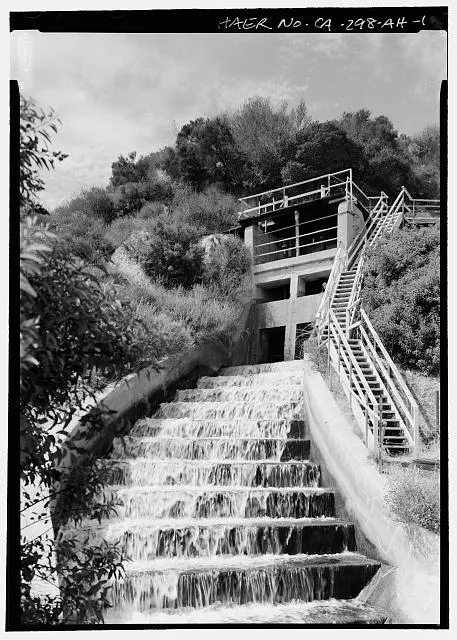
Source: Library of Congress - Lowe, Jet
California faces a major challenge: water scarcity. This means there is not enough fresh water for everyone who needs it. Drought, which is a long period of very little rain, happens often in California. These dry times make it hard for people, farms, and animals to get the water they need.
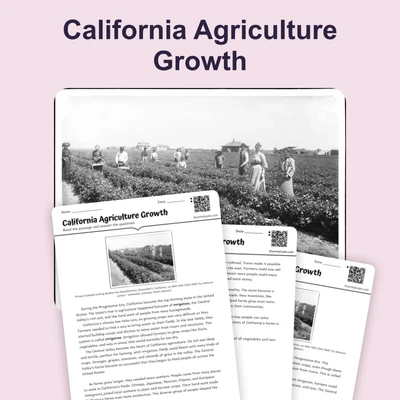
For more than 100 years, people have been moving to California. Cities like Los Angeles and San Francisco have grown very large. As more people arrived, they needed more water for drinking, washing, and growing food. Farmers also needed water for crops like fruits, vegetables, and nuts. California’s Central Valley is one of the most important farming areas in the United States. But it is also very dry, so it depends on water from rivers, lakes, and even water brought in from far away through aqueducts.
Managing water in California is a big job. The state built huge dams and long canals to move water from the mountains to farms and cities. The aqueducts are like giant water highways. They carry water across hundreds of miles. This helped farms grow and cities expand, but it also changed the natural environment. Some rivers became smaller, and some wetlands dried up. Fish and other wildlife lost important habitats.
Today, water scarcity is a bigger problem than ever. California’s population keeps growing, but there is less water because of frequent droughts and climate change. People now work hard to save water. This is called conservation. Many cities use water-saving toilets, showers, and sprinklers. Farmers use new ways to water crops without wasting as much. Everyone must think about how to use water carefully.
Resource management is another important idea. This means making plans so there is enough water for people, farms, and nature. Sometimes, people disagree about who should get the water first. The government helps decide how water is shared. Laws protect rivers and wildlife, but also help farmers and cities get the water they need.
Managing water is California’s most critical environmental challenge. By working together, people hope to solve these problems and protect the state’s future.
Interesting Fact: The California Aqueduct is over 400 miles long and delivers water to millions of people and farms every day!
Comprehension quiz (8 questions)
1. What is water scarcity?
2. Which area is important for farming?
3. What do aqueducts do?
4. Why did cities and farms grow?
5. How does water scarcity affect animals?
6. Why is conservation important?
7. Water conservation means using water carefully. True or false?
8. What is a habitat?
Perfect for the way you teach
- Build comprehension skills
- Auto-graded quiz
- Differentiated reading
- Read together at home
- Improve fluency
- Quiet reading time
- Reading curriculum support
- Independent practice
- Track Lexile growth