Revolutions of 1848
Interactive passage with audio narration, comprehension questions, and printable PDF.
By completing this purchase you agree to our Terms of Use and Privacy Policy. Your subscription renews automatically until you cancel. You can cancel anytime from your account settings. All sales are final and non-refundable. Digital content is available for download in your account immediately upon purchase.
What's included
Revolutions of 1848 preview and details
About this printable Revolutions of 1848 reading passage (Grades 5-8)
Sample passage and quiz from Revolutions of 1848
Reading passage and comprehension quiz preview
Revolutions of 1848
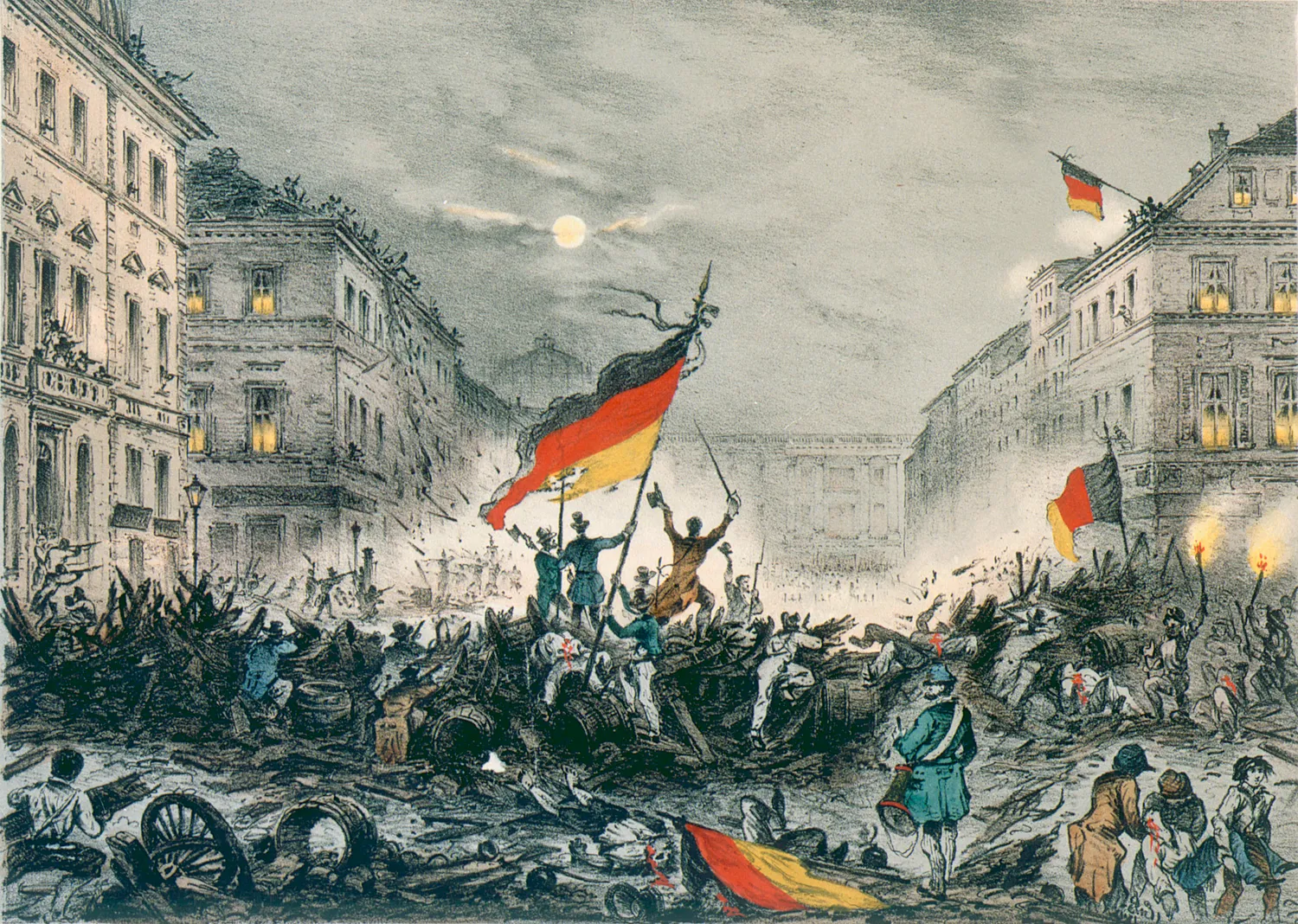
"Remembrance of the Liberation Struggle 1848" /
Source: Wikimedia Commons (Public domain).
The Revolutions of 1848 were a series of political and social uprisings that swept across Europe in that year. In countries such as France, Germany, Italy, and the Austrian Empire, people demanded more rights, freedom, and democratic reforms. These events are sometimes called the "Springtime of Nations" because so many people in different places were calling for change at the same time.
The main causes of the 1848 uprisings included economic hardship, food shortages, and a desire for political participation. Many workers and peasants were struggling due to poor harvests and rising food prices. The middle class, known as the bourgeoisie, wanted a voice in government and greater representation. Influenced by the ideals of the French Revolution and the spread of liberal ideas, people began to gather in large groups, organize protests, and build barricades in city streets. For example, in Paris, crowds filled the streets, demanding a new constitution. Eyewitness accounts from Paris in February 1848 describe how students, workers, and shopkeepers worked together to build barricades and face the army.
Revolutions quickly spread from France to other parts of Europe. In the German states, activists called for a national parliament and basic rights for all citizens. The Frankfurt Assembly met in May 1848 in an attempt to create a united German nation. In the Austrian Empire, different groups—such as Hungarians and Czechs—demanded more autonomy and cultural recognition. In Italy, revolutionaries fought for independence from foreign rule and the creation of a single Italian nation. Primary sources like the Hungarian Declaration of Independence, read aloud in April 1849, reveal the passion and determination of the revolutionaries.
Although many leaders were forced to flee and some governments changed for a short time, most of the revolutions were eventually defeated by the armies of kings and emperors. Rulers used military force to retake control of cities and restore old laws. However, some reforms did last. For example, France established universal male suffrage for a time, and the abolition of serfdom in the Austrian Empire transformed the lives of millions of peasants.
The Revolutions of 1848 showed the growing desire for democracy, national unity, and social change in Europe. Even though many of the uprisings failed in the short term, they inspired future movements for freedom and equality. These events are important for understanding the development of modern European societies and the ongoing struggle for justice and representation.
The Revolutions of 1848 connect to broader themes in world history, such as the spread of democratic ideas and the impact of social movements on government and society.
Interesting Fact: Over 50 different countries and regions experienced uprisings in 1848, making it the most widespread wave of revolutions in European history.
Comprehension quiz (8 questions)
1. Which year did the Revolutions occur?
2. Which city had barricades in 1848?
3. Who wanted more political voice?
4. What was a major cause of the revolutions?
5. What is one effect of the revolutions?
6. Why did many revolutions fail?
7. Most revolutions were successful. True or False?
8. What does 'representation' mean?
Perfect for the way you teach
- Build comprehension skills
- Auto-graded quiz
- Differentiated reading
- Read together at home
- Improve fluency
- Quiet reading time
- Reading curriculum support
- Independent practice
- Track Lexile growth