Aerobic Respiration
Interactive passage with audio narration, comprehension questions, and printable PDF.
By completing this purchase you agree to our Terms of Use and Privacy Policy. Your subscription renews automatically until you cancel. You can cancel anytime from your account settings. All sales are final and non-refundable. Digital content is available for download in your account immediately upon purchase.
What's included
Aerobic Respiration preview and details
About this printable Aerobic Respiration science reading passage, NGSS-aligned (Grade 6)
Sample passage and quiz from Aerobic Respiration
Reading passage and comprehension quiz preview
Aerobic Respiration: Your Body's Power Plant
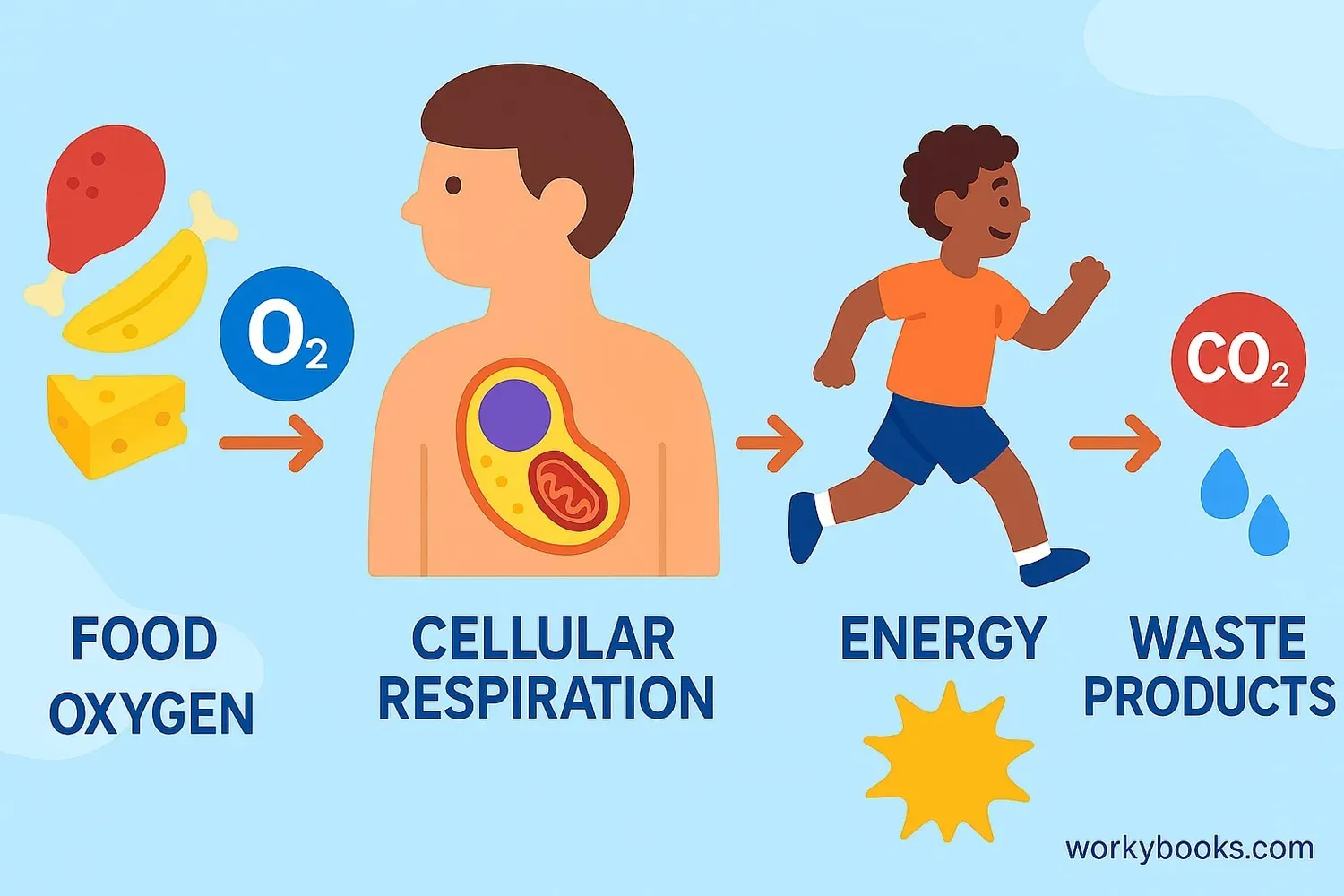
Imagine your body is a busy city, and every cell is a tiny building. For these buildings to work – to grow, move, and think – they need power! Where does this power come from? It comes from a vital process called aerobic respiration. This is how your cells get the energy they need from the food you eat, and it specifically requires oxygen.
Let's break it down. When you eat, your body digests food into tiny molecules. One very important molecule is glucose, a type of sugar. Think of glucose as the main fuel for your body. But just like a car needs gasoline, it also needs a spark to make that fuel useful. For your cells, that spark is oxygen.
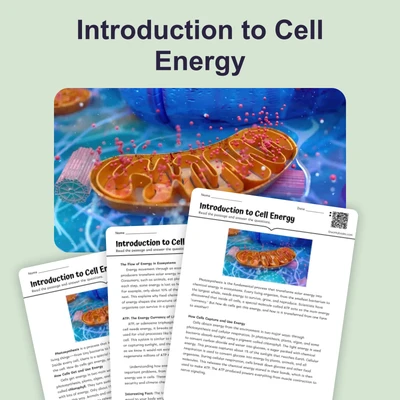
You get oxygen every time you breathe in. This oxygen travels through your bloodstream to every single cell in your body. Inside most of your cells are tiny powerhouses called mitochondria. These mitochondria are where aerobic respiration largely happens. It's like a small factory within each cell.
So, what actually happens in aerobic respiration? Glucose (from your food) and oxygen (from the air you breathe) enter the mitochondria. Inside, they undergo a series of chemical reactions. These reactions break down the glucose in a controlled way, releasing the energy stored within its bonds. This released energy is then captured in a special molecule called ATP (adenosine triphosphate). ATP is the direct source of energy that cells use to do almost everything.
What are the waste products of this process? Just like a car produces exhaust, aerobic respiration produces carbon dioxide and water. The carbon dioxide is carried by your blood back to your lungs, and you breathe it out. The water is either used by your body or also leaves as waste. So, every breath you take is not just about getting oxygen in, but also about getting carbon dioxide waste out!
Understanding aerobic respiration helps us see how our bodies are amazing machines, constantly converting food and air into the power we need for every activity, from running to thinking. It's a key part of how living things stay alive and thrive. This process of cellular energy release is happening in you right now!
Interesting Fact: Even plants perform aerobic respiration, breaking down sugars they make during photosynthesis to power their own growth and functions, though they also produce oxygen during photosynthesis.
Comprehension quiz (10 questions)
1. What is the main purpose of aerobic respiration?
2. What gas is needed for aerobic respiration?
3. Which cell part is like a 'powerhouse'?
4. Aerobic respiration primarily uses which molecule as fuel?
5. What happens to carbon dioxide produced?
6. ATP is like what for the cell?
7. If a cell cannot get enough oxygen, it cannot perform aerobic respiration efficiently.
8. Which term means the process cells use to release energy from food, using oxygen?
9. What might happen if your mitochondria stopped working?
10. Why is breathing important for aerobic respiration?
Perfect for the way you teach
- Build comprehension skills
- Auto-graded quiz
- Differentiated reading
- Read together at home
- Improve fluency
- Quiet reading time
- Reading curriculum support
- Independent practice
- Track Lexile growth