Anaerobic Respiration
Interactive passage with audio narration, comprehension questions, and printable PDF.
By completing this purchase you agree to our Terms of Use and Privacy Policy. Your subscription renews automatically until you cancel. You can cancel anytime from your account settings. All sales are final and non-refundable. Digital content is available for download in your account immediately upon purchase.
What's included
Anaerobic Respiration preview and details
About this printable Anaerobic Respiration science reading passage, NGSS-aligned (Grade 6)
Sample passage and quiz from Anaerobic Respiration
Reading passage and comprehension quiz preview
Anaerobic Respiration: Energy Without Oxygen
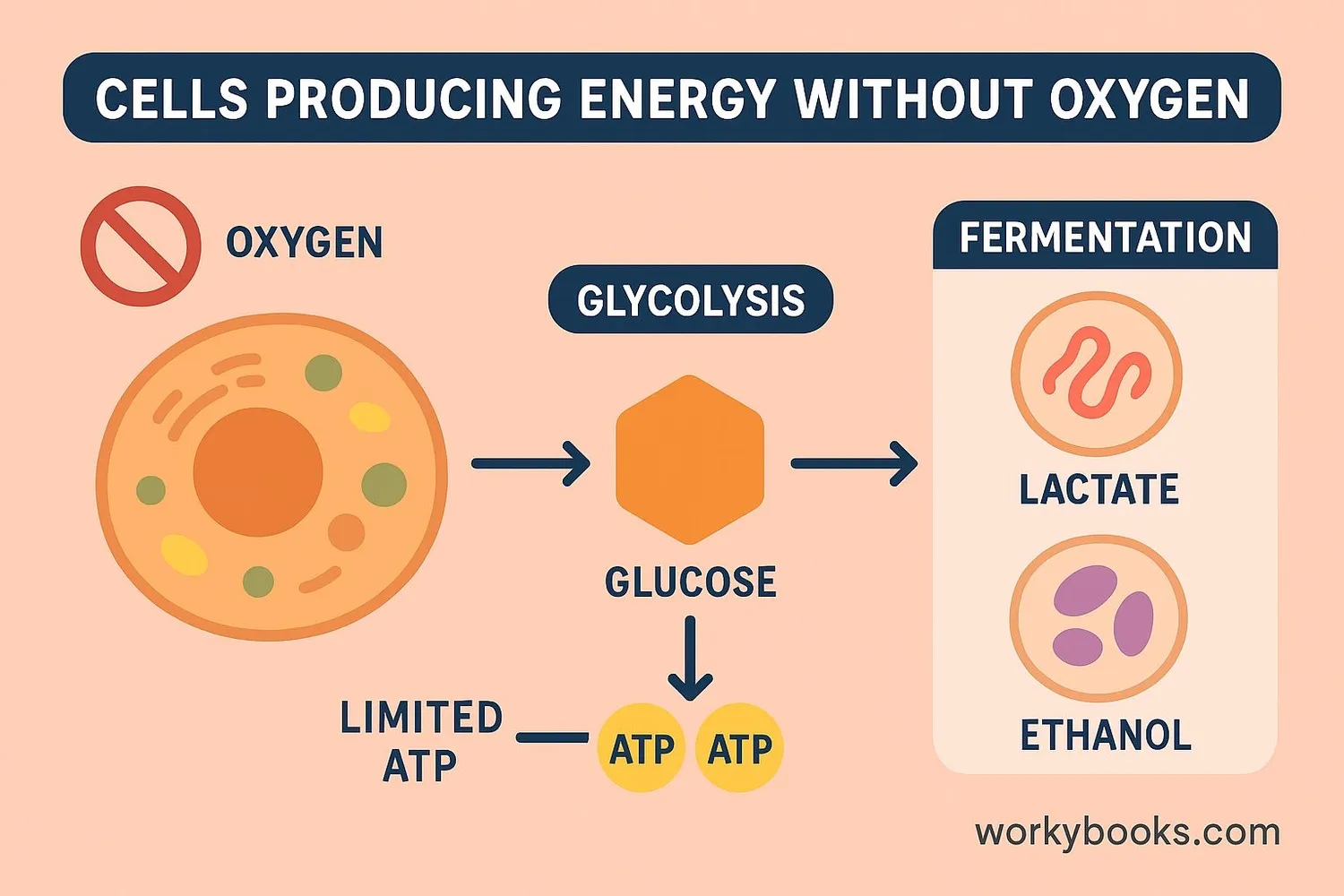
The human body functions like a highly active factory, constantly requiring energy to sustain life. This energy primarily comes from glucose, a simple sugar obtained from food. To release energy, most cells rely on a process called aerobic respiration, which uses oxygen to break down glucose. This controlled biochemical pathway is remarkably efficient, producing large amounts of ATP (adenosine triphosphate)—the universal energy currency that powers nearly all cellular activities..
But what happens when there isn't enough oxygen? Perhaps you're running a sprint, lifting heavy weights, or suddenly needing to move very fast. Your muscles need a lot of energy right away, but your body can't always deliver oxygen fast enough. This is where anaerobic respiration steps in. The word "anaerobic" means "without air" or "without oxygen." It's a backup plan for your cells to keep making energy when oxygen is scarce.
In anaerobic respiration, your cells still break down glucose, but they do it differently. Instead of using oxygen, they use other chemical reactions. This process is much faster at making energy quickly, but it's not as efficient as aerobic respiration. It produces less ATP from each glucose molecule. A common type of anaerobic respiration in humans and other animals is called lactic acid fermentation. When your muscle cells work hard without enough oxygen, they produce lactic acid as a byproduct. This lactic acid can build up in your muscles, making them feel tired or sore after intense exercise. Once oxygen is available again, your body converts the lactic acid back to glucose.
Anaerobic respiration isn't just for human muscles. Other organisms use it too. For example, yeast, a tiny fungus, uses a type of anaerobic respiration called alcoholic fermentation to produce alcohol and carbon dioxide. This process is used to make bread (carbon dioxide makes it rise) and alcoholic drinks. So, whether it's your muscles pushing hard or yeast making bread, anaerobic respiration is a vital way for cells to get energy when oxygen is not around.
Interesting Fact: Some bacteria can only survive through anaerobic respiration because oxygen is actually poisonous to them!
Comprehension quiz (10 questions)
1. What is the primary sugar cells use for energy?
2. What does 'anaerobic' mean?
3. Which process is more efficient at making ATP?
4. What builds up in muscles during intense anaerobic exercise?
5. What does yeast produce during alcoholic fermentation?
6. Why do cells use anaerobic respiration?
7. What feeling is associated with lactic acid buildup?
8. The passage suggests anaerobic respiration is a 'backup plan' for cells. True or False?
9. Which of these is a product of fermentation?
10. If a cell has plenty of oxygen, it would primarily use anaerobic respiration. True or False?
Perfect for the way you teach
- Build comprehension skills
- Auto-graded quiz
- Differentiated reading
- Read together at home
- Improve fluency
- Quiet reading time
- Reading curriculum support
- Independent practice
- Track Lexile growth