Anaerobic Respiration in Yeast
Interactive passage with audio narration, comprehension questions, and printable PDF.
By completing this purchase you agree to our Terms of Use and Privacy Policy. Your subscription renews automatically until you cancel. You can cancel anytime from your account settings. All sales are final and non-refundable. Digital content is available for download in your account immediately upon purchase.
What's included
Anaerobic Respiration in Yeast preview and details
About this printable Anaerobic Respiration in Yeast science reading passage, NGSS-aligned (Grade 6)
Sample passage and quiz from Anaerobic Respiration in Yeast
Reading passage and comprehension quiz preview
Anaerobic Respiration in Yeast
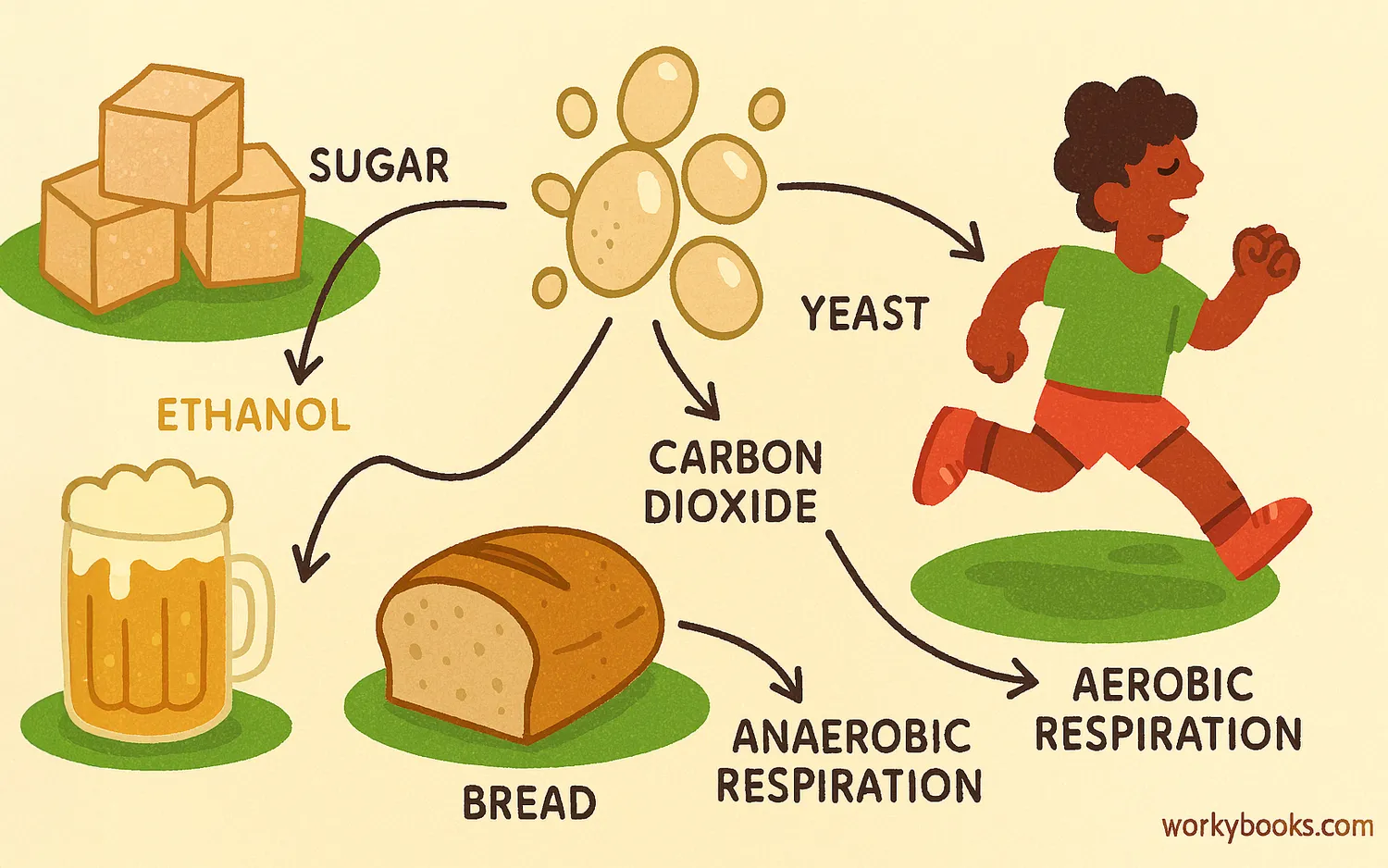
Imagine tiny, living organisms that help make some of our favorite foods and drinks, all without needing to breathe oxygen! These incredible single-celled organisms are called yeast. While many living things, including us, need oxygen to get energy from food, yeast has a special way of doing it when oxygen isn't around. This process is called anaerobic respiration, or fermentation.
Every living cell needs energy to survive and grow. For yeast, this energy usually comes from breaking down sugars. When there's plenty of oxygen, yeast uses aerobic respiration, a process similar to what happens in our own bodies, to efficiently turn sugar into a lot of energy. However, yeast is super adaptable! If oxygen is scarce or completely absent, it switches to a different method: anaerobic respiration.
During anaerobic respiration, yeast still starts by taking in sugar. But instead of fully breaking it down with oxygen, it performs a series of chemical reactions that don't require oxygen. This process releases some energy, which the yeast uses to live. Think of it like a backup plan for energy production! The amazing thing is that this backup plan creates interesting waste products that we use every day.
One of the main waste products of yeast fermentation is carbon dioxide gas. You've seen this gas at work if you've ever watched bread rise! The yeast in the dough eats sugar, produces carbon dioxide bubbles, and these bubbles get trapped, making the bread light and fluffy. Another important waste product is ethanol, which is a type of alcohol. This is why yeast is used to make alcoholic beverages like beer and wine. So, the next time you see bread or a bubbly drink, remember the tireless work of tiny yeast cells doing their anaerobic respiration!
Anaerobic respiration is a less efficient way for yeast to get energy compared to aerobic respiration, but it's crucial for their survival in environments without oxygen. It's also a powerful tool that humans have harnessed for thousands of years in food and beverage production. Understanding this process helps us appreciate the intricate ways living organisms interact with their environment and how these interactions benefit us.
Interesting Fact: Yeast cells are so small that a single gram of baker's yeast can contain billions of individual yeast cells!
Comprehension quiz (10 questions)
1. What are yeast?
2. What gas do yeast produce?
3. True or False: Yeast only use aerobic respiration.
4. What is another name for anaerobic respiration?
5. Why does bread rise?
6. What do yeast break down for energy?
7. Why is anaerobic respiration a 'backup plan'?
8. Which is NOT a waste product?
9. How do humans use yeast fermentation?
10. If yeast had lots of oxygen, what process would it likely use?
Perfect for the way you teach
- Build comprehension skills
- Auto-graded quiz
- Differentiated reading
- Read together at home
- Improve fluency
- Quiet reading time
- Reading curriculum support
- Independent practice
- Track Lexile growth