This learning resource is available in interactive and printable formats. The interactive worksheet can be played online and assigned to students. The Printable PDF version can be downloaded and printed for completion by hand.
This reading passage explores the unique military society of Sparta, an influential city-state in Ancient Greece. Students will learn how geography, government, and culture shaped Sparta’s focus on discipline, warfare, and social structure. Using primary and archaeological evidence, the passage examines Spartan education, the role of helots, and the impact of the Lycurgan reforms. Activities include a multiple-choice quiz, writing prompts, graphic organizers, and a timeline to deepen historical understanding. The content aligns with California HSS 6.4 and CCSS RH.6-8.1 standards, making it ideal for developing critical reading and history skills. Features include a Spanish translation, read aloud audio, and vocabulary support to ensure accessibility. Keywords: Sparta, Ancient Greece, military society, city-state, helots, Lycurgus, Peloponnesian War, Greek history.
CONTENT PREVIEW
Expand content preview
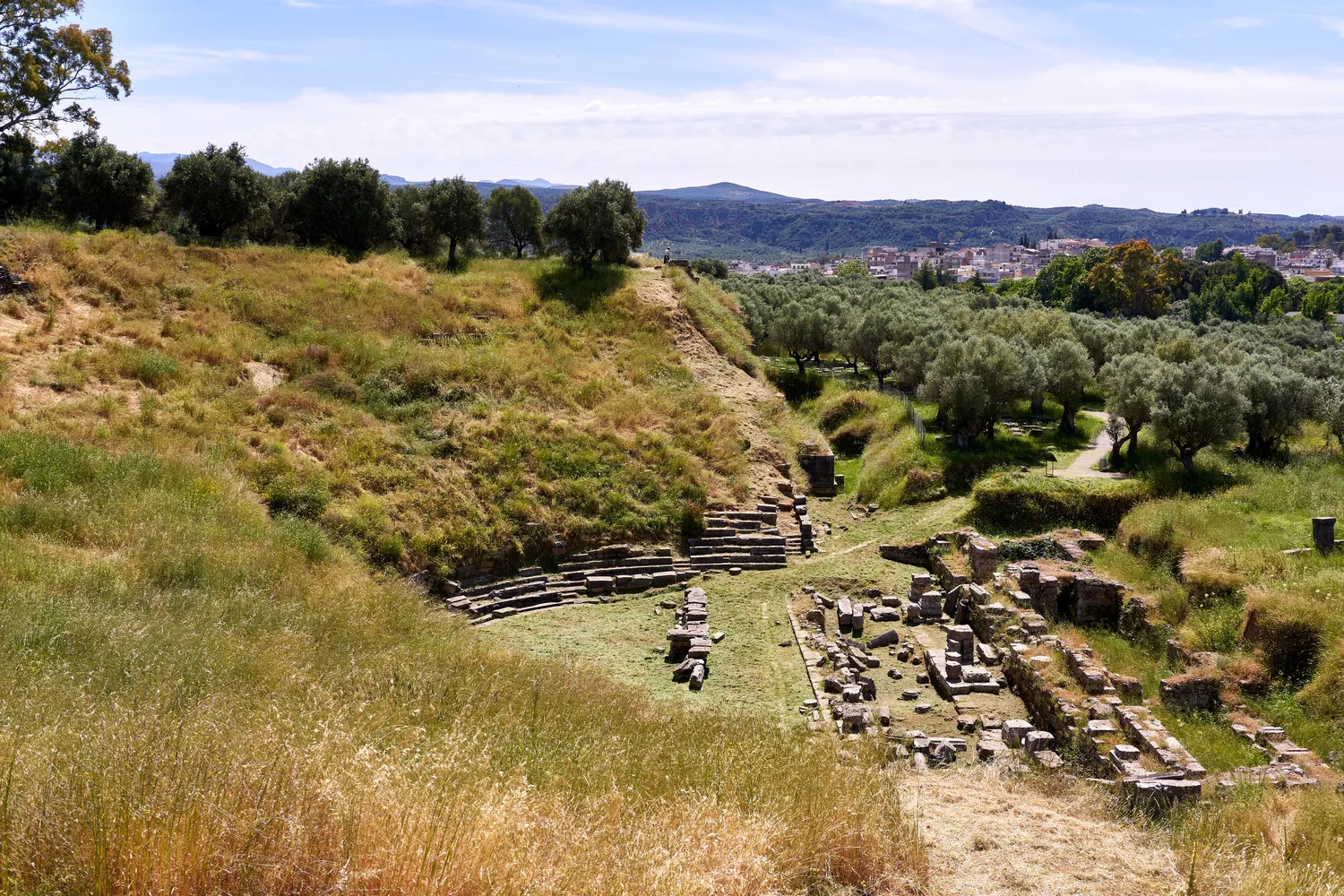
"The ruins of the ancient Theatre of Sparta on May 15, 2019" by George E. Koronaios / Wikimedia Commons
Sparta was a powerful city-state in Ancient Greece, located in the region of Laconia on the Peloponnesian Peninsula. From the 8th century BCE, Sparta became known for its strong military traditions and unique social system. Unlike Athens, which valued education and the arts, Sparta prioritized discipline, obedience, and warfare.
Spartan society was organized around preparing for war. Boys left their families at age seven to enter the agoge, a state-run training program. This harsh system taught them survival skills, physical fitness, and loyalty to Sparta. According to the ancient historian Xenophon, boys were given little food and had to steal to learn resourcefulness. Archaeological evidence, such as bronze armor and weapons found in Spartan graves, supports the importance of military training in daily life.
The government of Sparta was an oligarchy, ruled by two kings and a council of elders called the Gerousia. This structure allowed for stability and quick decision-making in times of war. The lawgiver Lycurgus is credited with creating many of these laws, though historians debate whether he was a real person or a legendary figure. Under these laws, Spartan men served as soldiers until age 60, while women managed households and owned property, which was unusual in Greece.
Sparta depended heavily on the labor of the helots, people they had conquered and forced to farm the land. The helots outnumbered Spartans and were often treated harshly to prevent rebellion. This system enabled Spartans to focus on military training, but also created constant tension. To maintain control, Spartans held secret police and regular inspections. Despite its strictness, Spartan society remained stable for centuries and played a leading role in the Peloponnesian War (431–404 BCE), eventually defeating Athens and shaping Greek history.
Sparta's legacy is significant because it demonstrates how geography and society can shape a civilization's values and priorities. The militaristic focus of Sparta led to both remarkable achievements and harsh inequalities. Understanding Sparta helps us see the diversity within the ancient Greek world and the long-term effects of power, discipline, and social organization.
This topic connects to larger themes in world history, such as the impact of geography on societies and the ways different cultures organize power and daily life.
Interesting Fact: Spartan soldiers were famous for their red cloaks and long hair, which they believed made them look more fearsome in battle.
Where was Sparta located?
Peloponnesian PeninsulaItalian PeninsulaNile River ValleyAsia Minor
At what age did Spartan boys enter agoge?
7101418
What group did most farm work in Sparta?
HelotsKingsPriestsWomen
Why did Sparta focus on military training?
To defend against rebellionTo support the artsTo trade with EgyptTo build temples
What was unusual about Spartan women?
They could own propertyThey were soldiersThey were kingsThey were priests
Who is credited with Spartan laws?
LycurgusXenophonSocratesPericles
Sparta won the Peloponnesian War. True or false?
TrueFalse
What is the best meaning of 'oligarchy'?
Rule by a fewRule by oneRule by everyoneRule by priests
Perfect For:
👩🏫 Teachers
• Reading comprehension practice
• Auto-graded assessments
• Literacy skill development
👨👩👧👦 Parents
• Reading practice at home
• Comprehension improvement
• Educational reading time
🏠 Homeschoolers
• Reading curriculum support
• Independent reading practice
• Progress monitoring
Reading Features:
📖
Reading Passage
Engaging fiction or nonfiction text
❓
Comprehension Quiz
Auto-graded questions
📊
Instant Feedback
Immediate results and scoring
📄
Printable Version
Download for offline reading
🔊
Read Aloud
Voice-over with word highlighting
Reviews & Ratings
No reviews yet. Be the first to share your experience!
Related Content
Geography of Ancient Greece
This rigorous history reading passage explores 'The Geography of Ancient Greece,' examining how the region’s mountains, ...
Homer: Epic Poet of Ancient Greece
This history reading passage explores the life and historical significance of Homer, the legendary epic poet of Ancient ...
Greek Polis
This in-depth history reading passage explores the rise and development of the Greek polis, or city-state, a foundationa...
Ancient Greek City-States
This history reading passage explores the development and significance of city-states in ancient civilizations, focusing...
Greece's Lasting Legacy
This engaging history reading passage explores the enduring legacy of Ancient Greece and its profound influence on the m...
Evidence in Ancient History
This engaging history reading passage investigates how archaeologists and historians discover clues about how ancient pe...
Ancient Philosophy
This reading passage takes students on a journey through the philosophical traditions of ancient Greece, India, and Chin...
Euripides and Greek Drama
This engaging passage introduces students to Euripides, one of the greatest ancient Greek playwrights, known for his exp...
Women in Ancient Societies
This reading passage explores the complex roles of women in the ancient world, focusing on civilizations such as Mesopot...
Sophocles and Greek Tragedy
This passage explores the life and legacy of Sophocles, one of the most influential playwrights of ancient Greece, whose...
Ancient Literature
This passage explores the importance of ancient stories and poems from civilizations such as Greece, India, and Israel. ...
Ancient Science and Medicine
This comprehensive reading passage explores the development of science and medicine in ancient civilizations, including ...
Slavery in Ancient World
This passage explores the complex history of slavery in the ancient world, examining its presence in societies such as M...
Ancient Theocracy
This engaging history reading passage explores the concept of theocracy in ancient civilizations, where priests and reli...
Ancient Mathematics
This passage explores the essential role of mathematics in ancient civilizations, including Mesopotamia, Egypt, Greece, ...
Ancient Canaan
This educational passage explores the land of Canaan, the historical homeland of the ancient Israelites. Students will l...
Geography of Ancient Israel
This passage explores the rich geography of Ancient Israel, focusing on how landforms, climate, and natural resources sh...
Ancient Writing Systems
This engaging history reading passage explores the origins and evolution of ancient writing systems, including cuneiform...
Ancient Agriculture Farming
This passage explores the transformative impact of farming on ancient societies, examining how the Neolithic Revolution ...