This learning resource is available in interactive and printable formats. The interactive worksheet can be played online and assigned to students. The Printable PDF version can be downloaded and printed for completion by hand.
This engaging passage introduces students to Euripides, one of the greatest ancient Greek playwrights, known for his exploration of human emotions and psychological drama. Students will discover how Euripides transformed Greek theater by focusing on realistic characters and complex feelings, using specific examples from his plays and ancient sources. The passage highlights the historical context of 5th century BCE Athens, the significance of theater in Greek society, and Euripides’ lasting impact on literature and drama. Activities include comprehension questions, writing prompts, and graphic organizers to deepen historical thinking. This history reading passage comes with read aloud audio and a full Spanish translation, and aligns with CA HSS 6.4.4, 6.4.7 and CCSS RI.6-8.1, RI.6-8.2, W.6-8.2. Perfect for integrating ancient history and ELA standards in the classroom.
CONTENT PREVIEW
Expand content preview
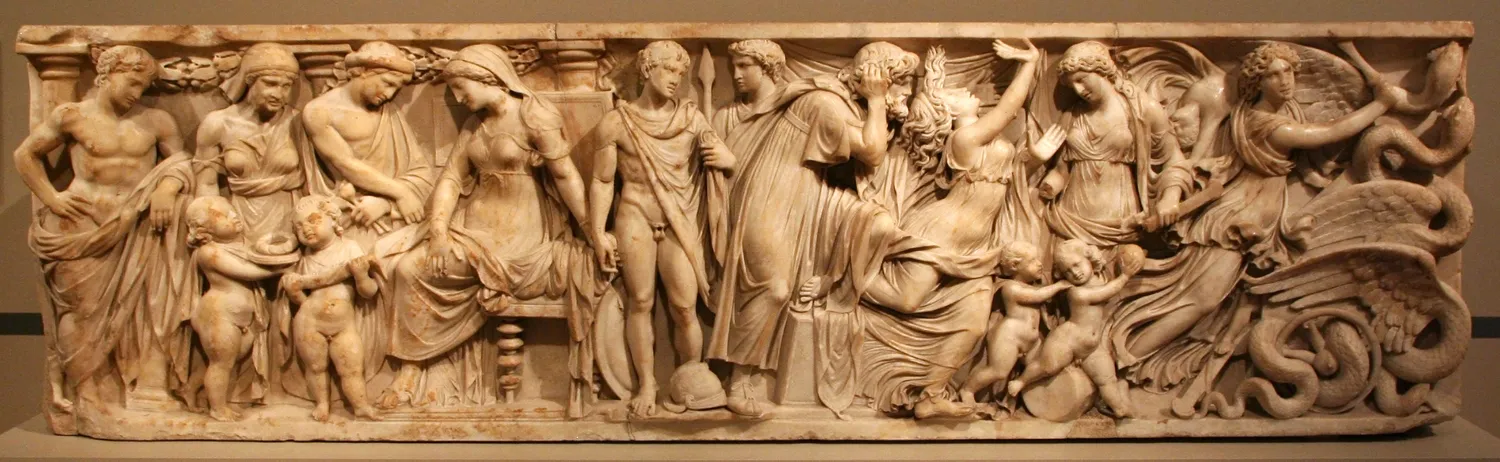
Roman sarcophagus showing the story of Medea and Creusa. Ca 150 AD. Altes Museum, Berlin. Photo by Mont Allen Wikimedia Commons (Public domain).
Euripides was one of the most famous playwrights in ancient Greece, active during the 5th century BCE in Athens. He wrote over 90 plays, many of which focused on exploring human emotions and the inner lives of his characters. Euripides is often remembered as the most psychological of the three great Greek tragedians, alongside Aeschylus and Sophocles. His works show how people struggle with love, anger, jealousy, and loss.
The city-state of Athens was a center for intellectual and artistic life during Euripides’ time. Large outdoor theaters, such as the Theater of Dionysus, hosted competitions during religious festivals. These festivals honored Dionysus, the god of wine and theater. Playwrights would present their tragedies and win prizes for the best performances. Euripides won at least four first prizes, although he was sometimes less popular than his rivals because his plays questioned traditional beliefs and featured strong, complex women.
Unlike earlier playwrights, Euripides used realistic dialogue and focused on the motivations of ordinary people. In his play "Medea" (431 BCE), a woman struggles with betrayal and seeks revenge against her unfaithful husband, Jason. Another play, "The Trojan Women," shows the suffering of women after the fall of Troy, highlighting the costs of war. Archaeological evidence, such as ancient theater masks and papyrus scripts, shows how his plays were performed and copied for later audiences. The philosopher Aristotle even discussed Euripides' work in his influential book "Poetics," describing him as the most tragic of the poets.
Over time, the influence of Euripides grew. His works were studied in schools and performed throughout the Greek world and later in Rome. Unlike many ancient authors, many of Euripides’ plays survived because they were copied by scribes on scrolls and later in books. The emotional depth and critical thinking in his plays affected not just Greek theater, but also modern drama and literature. His stories brought attention to the feelings of people from all backgrounds, including slaves, foreigners, and women, challenging the social hierarchy of Athens.
Euripides' focus on psychological drama changed the way people wrote and watched plays. He showed that even heroes and gods have doubts, fears, and complicated feelings. Through his stories, audiences learned to see others’ perspectives and to question their own values. His legacy continues today in theater and literature around the world.
This study of Euripides connects to broader themes in ancient history, such as the role of art in society and the development of new ideas through cultural exchange.
Interesting Fact: Euripides was so popular after his death that later Greeks called him “the philosopher of the stage.”
Where did Euripides live?
AthensRomeSpartaBabylon
What kind of plays did Euripides write?
TragediesComediesHistoriesEpics
Which play shows the pain of war for women?
The Trojan WomenOedipus RexThe OdysseyAntigone
Why did some people dislike Euripides’ plays?
Questioned beliefsToo many battlesNo women charactersWritten in Latin
How did Euripides change Greek theater?
Focused on emotionsUsed only male actorsNo dialogueShortened plays
What did Aristotle call Euripides?
Most tragicBest comicStrongest rulerGreatest singer
Euripides’ plays were copied and studied. True or false?
TrueFalse
What is 'social hierarchy'?
Organization of society by powerA kind of foodA type of maskA Greek god
Perfect For:
👩🏫 Teachers
• Reading comprehension practice
• Auto-graded assessments
• Literacy skill development
👨👩👧👦 Parents
• Reading practice at home
• Comprehension improvement
• Educational reading time
🏠 Homeschoolers
• Reading curriculum support
• Independent reading practice
• Progress monitoring
Reading Features:
📖
Reading Passage
Engaging fiction or nonfiction text
❓
Comprehension Quiz
Auto-graded questions
📊
Instant Feedback
Immediate results and scoring
📄
Printable Version
Download for offline reading
🔊
Read Aloud
Voice-over with word highlighting
Reviews & Ratings
No reviews yet. Be the first to share your experience!
Related Content
Geography of Ancient Greece
This rigorous history reading passage explores 'The Geography of Ancient Greece,' examining how the region’s mountains, ...
Homer: Epic Poet of Ancient Greece
This history reading passage explores the life and historical significance of Homer, the legendary epic poet of Ancient ...
Ancient Sparta
This reading passage explores the unique military society of Sparta, an influential city-state in Ancient Greece. Studen...
Greek Polis
This in-depth history reading passage explores the rise and development of the Greek polis, or city-state, a foundationa...
Ancient Greek City-States
This history reading passage explores the development and significance of city-states in ancient civilizations, focusing...
Greece's Lasting Legacy
This engaging history reading passage explores the enduring legacy of Ancient Greece and its profound influence on the m...
Evidence in Ancient History
This engaging history reading passage investigates how archaeologists and historians discover clues about how ancient pe...
Ancient Philosophy
This reading passage takes students on a journey through the philosophical traditions of ancient Greece, India, and Chin...
Women in Ancient Societies
This reading passage explores the complex roles of women in the ancient world, focusing on civilizations such as Mesopot...
Sophocles and Greek Tragedy
This passage explores the life and legacy of Sophocles, one of the most influential playwrights of ancient Greece, whose...
Ancient Literature
This passage explores the importance of ancient stories and poems from civilizations such as Greece, India, and Israel. ...
Ancient Science and Medicine
This comprehensive reading passage explores the development of science and medicine in ancient civilizations, including ...
Slavery in Ancient World
This passage explores the complex history of slavery in the ancient world, examining its presence in societies such as M...
Ancient Theocracy
This engaging history reading passage explores the concept of theocracy in ancient civilizations, where priests and reli...
Ancient Mathematics
This passage explores the essential role of mathematics in ancient civilizations, including Mesopotamia, Egypt, Greece, ...
Ancient Canaan
This educational passage explores the land of Canaan, the historical homeland of the ancient Israelites. Students will l...
Geography of Ancient Israel
This passage explores the rich geography of Ancient Israel, focusing on how landforms, climate, and natural resources sh...
Ancient Writing Systems
This engaging history reading passage explores the origins and evolution of ancient writing systems, including cuneiform...
Ancient Agriculture Farming
This passage explores the transformative impact of farming on ancient societies, examining how the Neolithic Revolution ...