This learning resource is available in interactive and printable formats. The interactive worksheet can be played online and assigned to students. The Printable PDF version can be downloaded and printed for completion by hand.
This engaging history reading passage explores the enduring legacy of Ancient Greece and its profound influence on the modern world. Students will learn how the Greek city-states, especially Athens and Sparta, developed unique systems of government, philosophy, and cultural achievements. Key contributions such as democracy, the Olympic Games, and advances in art and science are discussed, using primary sources and archaeological evidence. The passage highlights how Greek ideas about citizenship, debate, and rational thought continue to shape societies today. Aligned with CA HSS 6.4 and CCSS RH.6-8.2, this resource supports critical thinking and literacy skills. It includes a glossary, read aloud audio, Spanish translation, differentiated reading level, multiple-choice quiz, writing prompts, graphic organizers, and timeline. This comprehensive set of activities is ideal for students exploring ancient civilizations and their impact on world history.
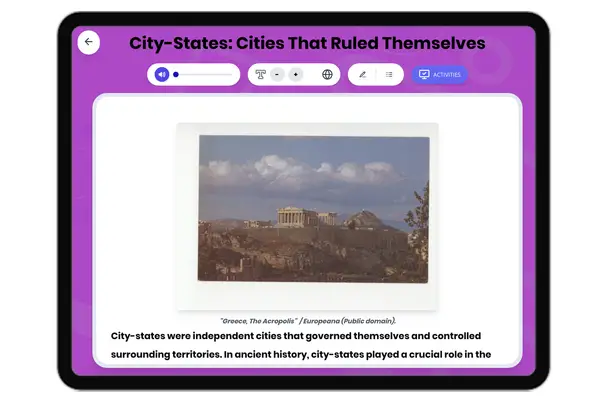
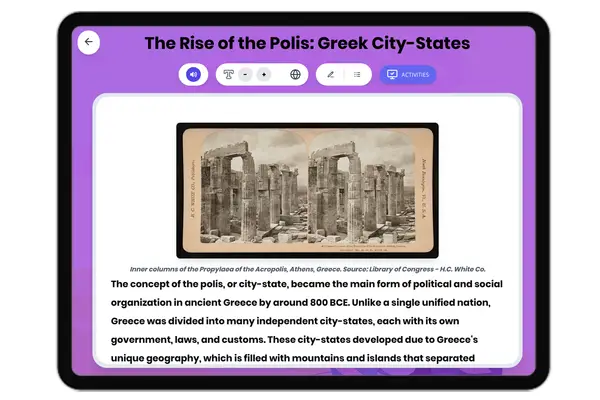
Ancient Greece has had a lasting influence on the modern world. The region known as Greece today was once home to a collection of independent city-states, such as Athens, Sparta, and Corinth, each with its own government and customs. These city-states developed around the Aegean Sea during the first millennium BCE, and their achievements continue to inspire societies across the globe.
One of the most important contributions of Ancient Greece is the concept of democracy. In the fifth century BCE, Athens introduced a form of government in which free male citizens could vote on laws and decisions. This system was different from monarchies or oligarchies, where only a few held power. While Athenian democracy excluded women, slaves, and foreigners, the idea that ordinary people could participate in government was revolutionary. Ancient Greek historians, such as Herodotus, described these political gatherings in detail, and archaeological evidence, like the remains of the Pnyx assembly area, shows where citizens met to discuss important matters.
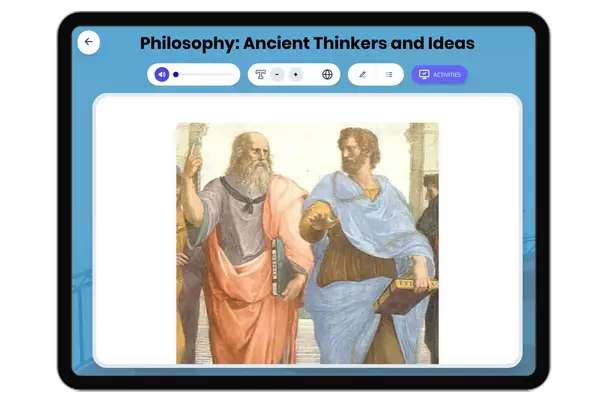
Ancient Greece was also a center for philosophy and learning. Thinkers such as Socrates, Plato, and Aristotle questioned the world around them and developed new ways to seek truth through reason and debate. Their writings, recorded on scrolls and later copied in libraries like Alexandria, explored topics from ethics to science. For example, Aristotle’s work on biology and logic shaped Western thought for centuries. The Greeks also made advances in mathematics, with figures like Euclid and Pythagoras laying the groundwork for geometry and mathematical reasoning.
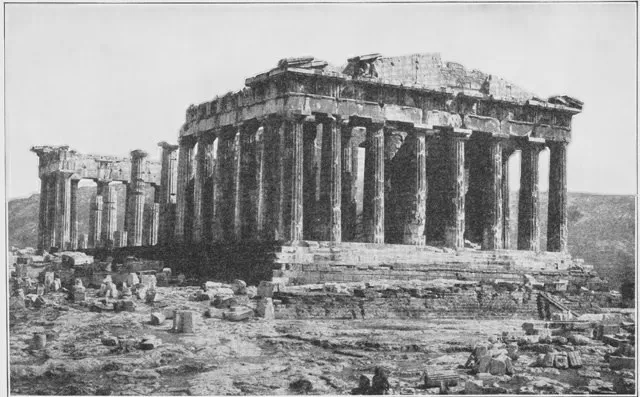
Cultural achievements were another hallmark of Greek civilization. The Olympic Games, first held in Olympia in 776 BCE, brought together athletes from different city-states to compete in honor of the god Zeus. Architectural wonders such as the Parthenon, built in Athens around 447 BCE, display the Greeks’ skill in art and design. Pottery and sculpture from the era reveal stories of daily life, religion, and mythology. Archaeologists have uncovered these artifacts, providing a window into Greek society and social hierarchy.
The ideas and practices of Ancient Greece continue to shape modern society. Concepts of citizenship, rational debate, and artistic expression have endured through the ages. Philosophical texts and democratic ideals have influenced governments, educational systems, and cultural traditions worldwide. Through the study of primary sources and archaeological discoveries, historians trace the enduring legacy of Ancient Greece and its human impact on the world.
This legacy connects directly to the broader themes of cultural exchange, change over time, and the development of political systems that students study in world history.
Interesting Fact: The word "marathon" comes from a legendary run by a Greek messenger, Pheidippides, who is said to have run from the battlefield of Marathon to Athens to announce a military victory in 490 BCE.
Which city-state started democracy?
AthensSpartaCorinthOlympia
When were the first Olympic Games held?
776 BCE500 BCE447 BCE490 BCE
Who was a famous Greek philosopher?
AristotleHerodotusPheidippidesEuclid
Greek democracy allowed all people to vote.
TrueFalse
What was the Parthenon?
A temple in AthensA philosophy schoolAn Olympic stadiumA city-state
How did Greeks impact modern society?
Through democracy and ideasBy building city-statesWith only artNone at all
Who described Greek political gatherings?
HerodotusZeusPythagorasAristotle
What does 'hierarchy' mean?
A ranking systemA buildingA city-stateA game
Perfect For:
👩🏫 Teachers
• Reading comprehension practice
• Auto-graded assessments
• Literacy skill development
👨👩👧👦 Parents
• Reading practice at home
• Comprehension improvement
• Educational reading time
🏠 Homeschoolers
• Reading curriculum support
• Independent reading practice
• Progress monitoring
Reading Features:
📖
Reading Passage
Engaging fiction or nonfiction text
❓
Comprehension Quiz
Auto-graded questions
📊
Instant Feedback
Immediate results and scoring
📄
Printable Version
Download for offline reading
🔊
Read Aloud
Voice-over with word highlighting
Reviews & Ratings
No reviews yet. Be the first to share your experience!
Related Content
Geography of Ancient Greece
This rigorous history reading passage explores 'The Geography of Ancient Greece,' examining how the region’s mountains, ...
Homer: Epic Poet of Ancient Greece
This history reading passage explores the life and historical significance of Homer, the legendary epic poet of Ancient ...
Ancient Sparta
This reading passage explores the unique military society of Sparta, an influential city-state in Ancient Greece. Studen...
Greek Polis
This in-depth history reading passage explores the rise and development of the Greek polis, or city-state, a foundationa...
Ancient Greek City-States
This history reading passage explores the development and significance of city-states in ancient civilizations, focusing...
Evidence in Ancient History
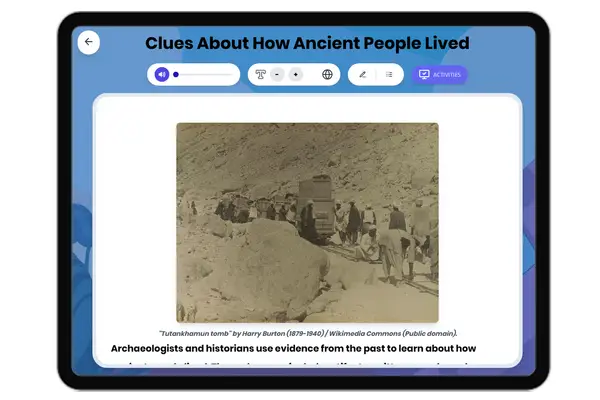
This engaging history reading passage investigates how archaeologists and historians discover clues about how ancient pe...
Ancient Philosophy
This reading passage takes students on a journey through the philosophical traditions of ancient Greece, India, and Chin...
Euripides and Greek Drama
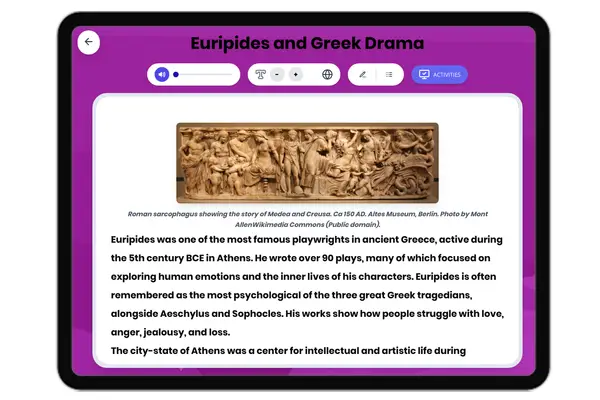
This engaging passage introduces students to Euripides, one of the greatest ancient Greek playwrights, known for his exp...
Women in Ancient Societies
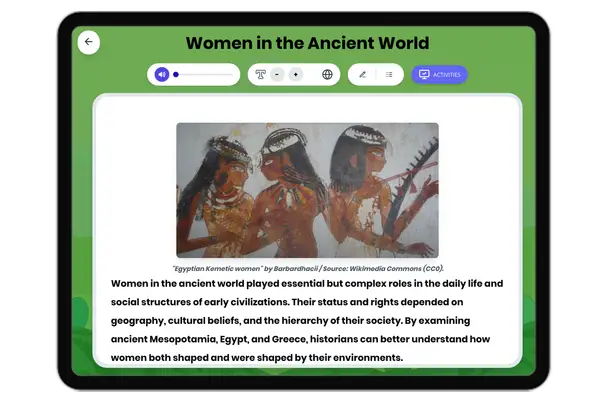
This reading passage explores the complex roles of women in the ancient world, focusing on civilizations such as Mesopot...
Sophocles and Greek Tragedy
This passage explores the life and legacy of Sophocles, one of the most influential playwrights of ancient Greece, whose...
Ancient Literature
This passage explores the importance of ancient stories and poems from civilizations such as Greece, India, and Israel. ...
Ancient Science and Medicine
This comprehensive reading passage explores the development of science and medicine in ancient civilizations, including ...
Slavery in Ancient World
This passage explores the complex history of slavery in the ancient world, examining its presence in societies such as M...
Ancient Theocracy
This engaging history reading passage explores the concept of theocracy in ancient civilizations, where priests and reli...
Ancient Mathematics
This passage explores the essential role of mathematics in ancient civilizations, including Mesopotamia, Egypt, Greece, ...
Ancient Canaan
This educational passage explores the land of Canaan, the historical homeland of the ancient Israelites. Students will l...
Geography of Ancient Israel
This passage explores the rich geography of Ancient Israel, focusing on how landforms, climate, and natural resources sh...
Ancient Writing Systems
This engaging history reading passage explores the origins and evolution of ancient writing systems, including cuneiform...
Ancient Agriculture Farming
This passage explores the transformative impact of farming on ancient societies, examining how the Neolithic Revolution ...