Sophocles and Greek Tragedy — Reading Comprehension
Rate this
Premium Resource
Present
Present in classroom. No work saved
Assign
Classroom with student accounts, Track progress
Quick Play
No student accounts, assign with a link
Grades
6
7
8
PRINT+DIGITAL RESOURCE
This learning resource is available in interactive and printable formats. The interactive worksheet can be played online and assigned to students. The Printable PDF version can be downloaded and printed for completion by hand.
This passage explores the life and legacy of Sophocles, one of the most influential playwrights of ancient Greece, whose works like Oedipus Rex shaped the history of theater and literature. Students will learn about the context of Athenian society, the role of drama festivals, and the significance of tragedy in civic life. The passage provides insight into historical evidence, cause-and-effect relationships, and the changes in Greek drama over time. It is accompanied by a glossary, timeline, comprehension quiz, writing activities, and two graphic organizers to deepen historical understanding. Spanish translation and read aloud audio are included. This resource aligns with CA HSS 6.4 and CCSS RI.6-8 standards, making it ideal for history and literacy skill development.
CONTENT PREVIEW
Expand content preview
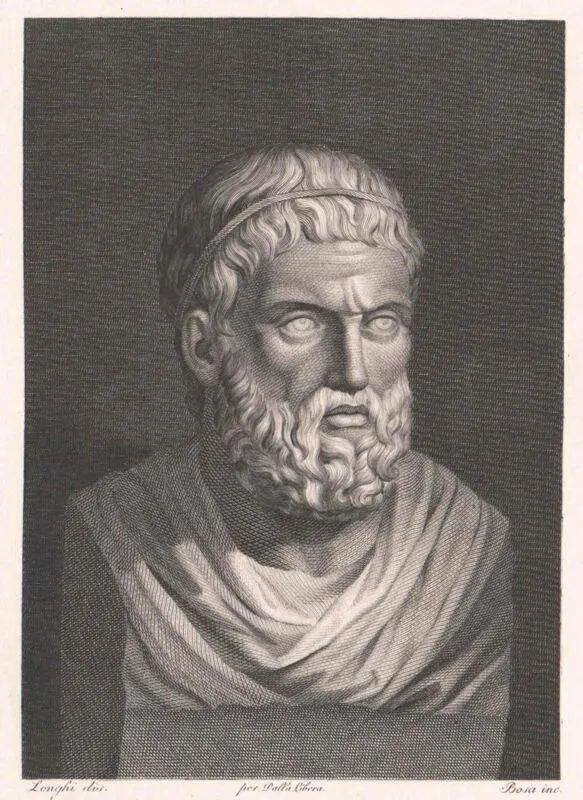
"Sophocles" by Austrian National Library / Europeana (Public domain).
Sophocles was one of the most important playwrights of ancient Greece, living from about 496 BCE to 406 BCE in the city-state of Athens. He is best known for writing tragedies, a form of drama that explores serious themes such as fate, justice, and the struggles of humans against powerful forces. Sophocles' most famous work, Oedipus Rex, is still performed and studied today.
The city of Athens was a center of cultural and political life during Sophocles’ time. Each year, Athenians held dramatic festivals like the Dionysia to honor the god Dionysus. Playwrights competed by presenting plays, and winning these competitions brought fame and respect. Sophocles entered many of these festivals and won first prize more than 18 times, according to ancient records. Archaeological discoveries, such as inscriptions listing victors of dramatic contests, confirm his success. The open-air theater of Dionysus, built into the slope of the Acropolis, was where thousands gathered to watch his plays.
Sophocles introduced several innovations to Greek drama. He increased the number of actors on stage from two to three, which allowed for more complex dialogue and character development. He also reduced the role of the chorus, giving individual characters more importance. Sophocles' plays often dealt with themes of moral choice and the limits of human knowledge, reflecting the beliefs and values of Athenian society. In Oedipus Rex, for example, the main character tries to escape a dreadful prophecy but ends up fulfilling it, showing the power of fate in Greek thought.
Primary sources, such as fragments of ancient manuscripts and references by later writers like Aristotle, help historians reconstruct Sophocles’ achievements. Aristotle praised Oedipus Rex as a perfect example of tragic structure in his work Poetics. Over time, Greek tragedy influenced Roman, Renaissance, and even modern drama. The tradition of examining human flaws and moral choices continues in theater and literature today.
Sophocles' life and works reveal much about the role of art, religion, and civic duty in ancient Greece. His tragedies helped people reflect on justice, leadership, and the consequences of personal actions. Through his innovations, Sophocles shaped the development of Western theater and left a legacy that endures across centuries.
Learning about Sophocles connects to broader themes of how societies use storytelling and performance to express values and challenge beliefs.
Interesting Fact: Only seven of the over 120 plays Sophocles wrote have survived to modern times.
Where did Sophocles live?
AthensRomeSpartaAlexandria
What type of plays did Sophocles write?
TragediesComediesEpicsHistories
How many of Sophocles' plays survive today?
SevenTwentyOneThirty
Why was the Dionysia festival important?
Plays were performed thereIt honored the goddess AthenaIt was a sports competitionPeople sold goods
How did Sophocles change Greek drama?
Added a third actorWrote about daily lifeUsed only one actorMade plays shorter
What theme did Oedipus Rex explore?
Fate and prophecyWealthTradeTravel
Sophocles was a Roman playwright.
TrueFalse
What does 'chorus' mean in Greek drama?
Group commenting on the actionMain actorStage directorAudience
Perfect For:
👩🏫 Teachers
• Reading comprehension practice
• Auto-graded assessments
• Literacy skill development
👨👩👧👦 Parents
• Reading practice at home
• Comprehension improvement
• Educational reading time
🏠 Homeschoolers
• Reading curriculum support
• Independent reading practice
• Progress monitoring
Reading Features:
📖
Reading Passage
Engaging fiction or nonfiction text
❓
Comprehension Quiz
Auto-graded questions
📊
Instant Feedback
Immediate results and scoring
📄
Printable Version
Download for offline reading
🔊
Read Aloud
Voice-over with word highlighting
Reviews & Ratings
No reviews yet. Be the first to share your experience!
Related Content
Geography of Ancient Greece
This rigorous history reading passage explores 'The Geography of Ancient Greece,' examining how the region’s mountains, ...
Homer: Epic Poet of Ancient Greece
This history reading passage explores the life and historical significance of Homer, the legendary epic poet of Ancient ...
Ancient Sparta
This reading passage explores the unique military society of Sparta, an influential city-state in Ancient Greece. Studen...
Greek Polis
This in-depth history reading passage explores the rise and development of the Greek polis, or city-state, a foundationa...
Ancient Greek City-States
This history reading passage explores the development and significance of city-states in ancient civilizations, focusing...
Greece's Lasting Legacy
This engaging history reading passage explores the enduring legacy of Ancient Greece and its profound influence on the m...
Evidence in Ancient History
This engaging history reading passage investigates how archaeologists and historians discover clues about how ancient pe...
Ancient Philosophy
This reading passage takes students on a journey through the philosophical traditions of ancient Greece, India, and Chin...
Euripides and Greek Drama
This engaging passage introduces students to Euripides, one of the greatest ancient Greek playwrights, known for his exp...
Women in Ancient Societies
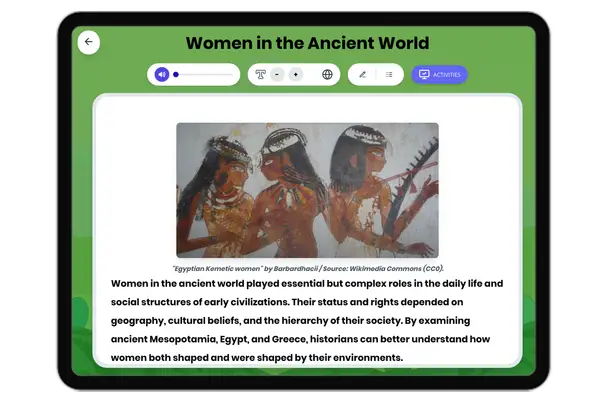
This reading passage explores the complex roles of women in the ancient world, focusing on civilizations such as Mesopot...
Ancient Literature
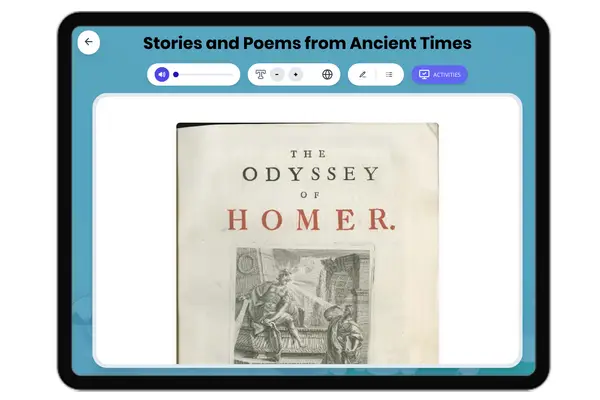
This passage explores the importance of ancient stories and poems from civilizations such as Greece, India, and Israel. ...
Ancient Science and Medicine
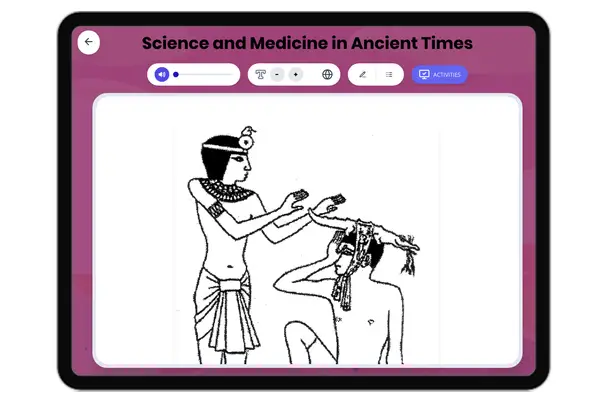
This comprehensive reading passage explores the development of science and medicine in ancient civilizations, including ...
Slavery in Ancient World
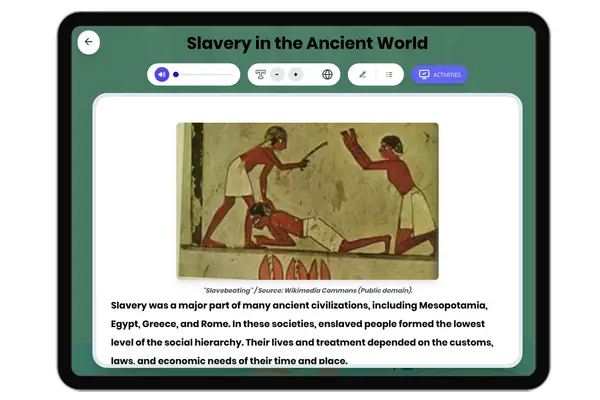
This passage explores the complex history of slavery in the ancient world, examining its presence in societies such as M...
Ancient Theocracy
This engaging history reading passage explores the concept of theocracy in ancient civilizations, where priests and reli...
Ancient Mathematics
This passage explores the essential role of mathematics in ancient civilizations, including Mesopotamia, Egypt, Greece, ...
Ancient Canaan
This educational passage explores the land of Canaan, the historical homeland of the ancient Israelites. Students will l...
Geography of Ancient Israel
This passage explores the rich geography of Ancient Israel, focusing on how landforms, climate, and natural resources sh...
Ancient Writing Systems
This engaging history reading passage explores the origins and evolution of ancient writing systems, including cuneiform...
Ancient Agriculture Farming
This passage explores the transformative impact of farming on ancient societies, examining how the Neolithic Revolution ...